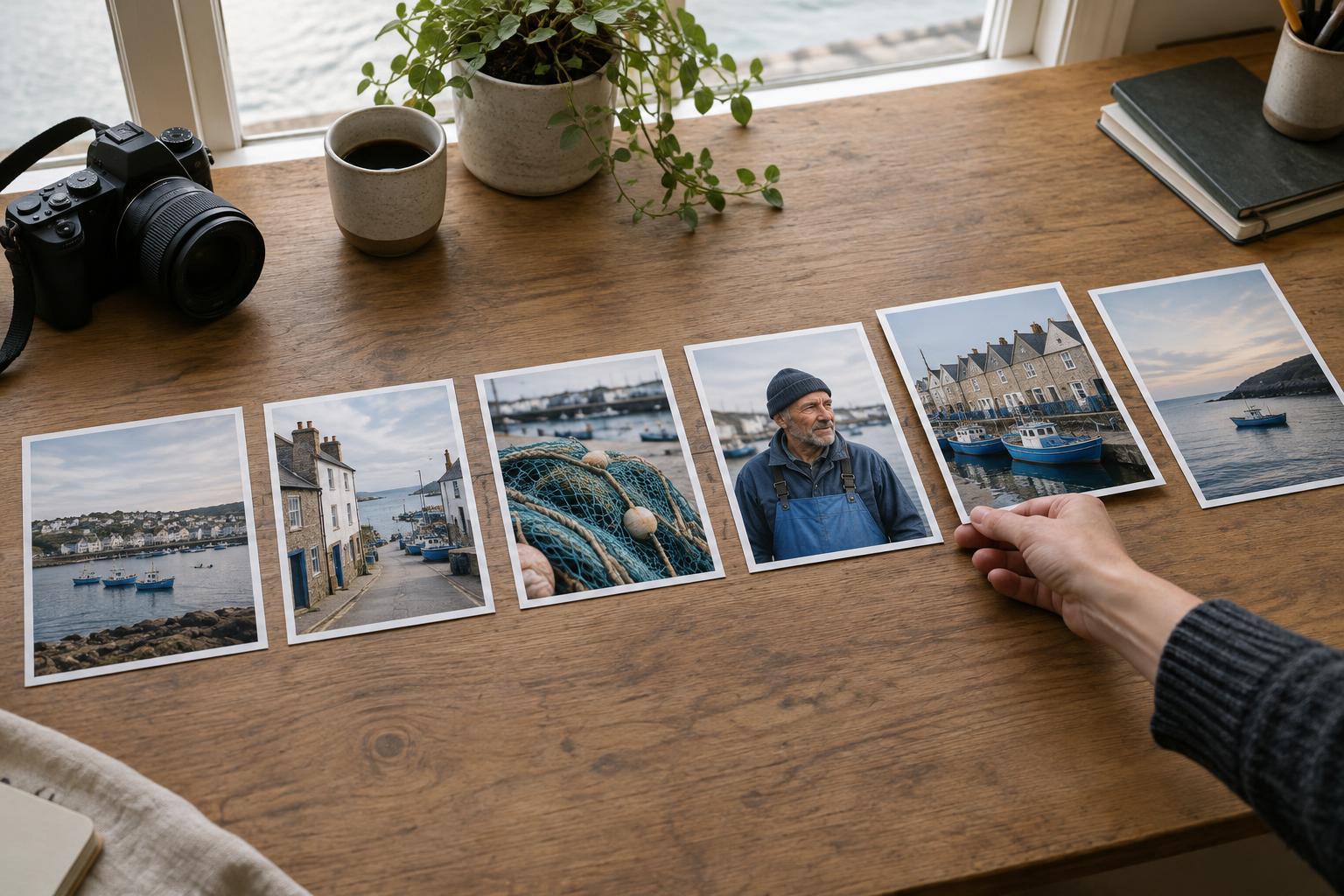
CompositionA photo series needs more than several good individual frames. Learn how to choose a visual idea, vary your compositions, build connections between images, and arrange them in an order that holds attention.
Read article · 4 min↗

CompositionWhen two shapes barely touch in a photograph, their relationship can become confusing. Learn to spot visual tangencies, adjust your position, and make overlaps look intentional.
Read article · 3 min↗

CompositionA simple way to improve composition is to keep your subject still and move yourself. This ten-position exercise helps you notice how camera height, distance, angle, and background change a photograph.
Read article · 4 min↗
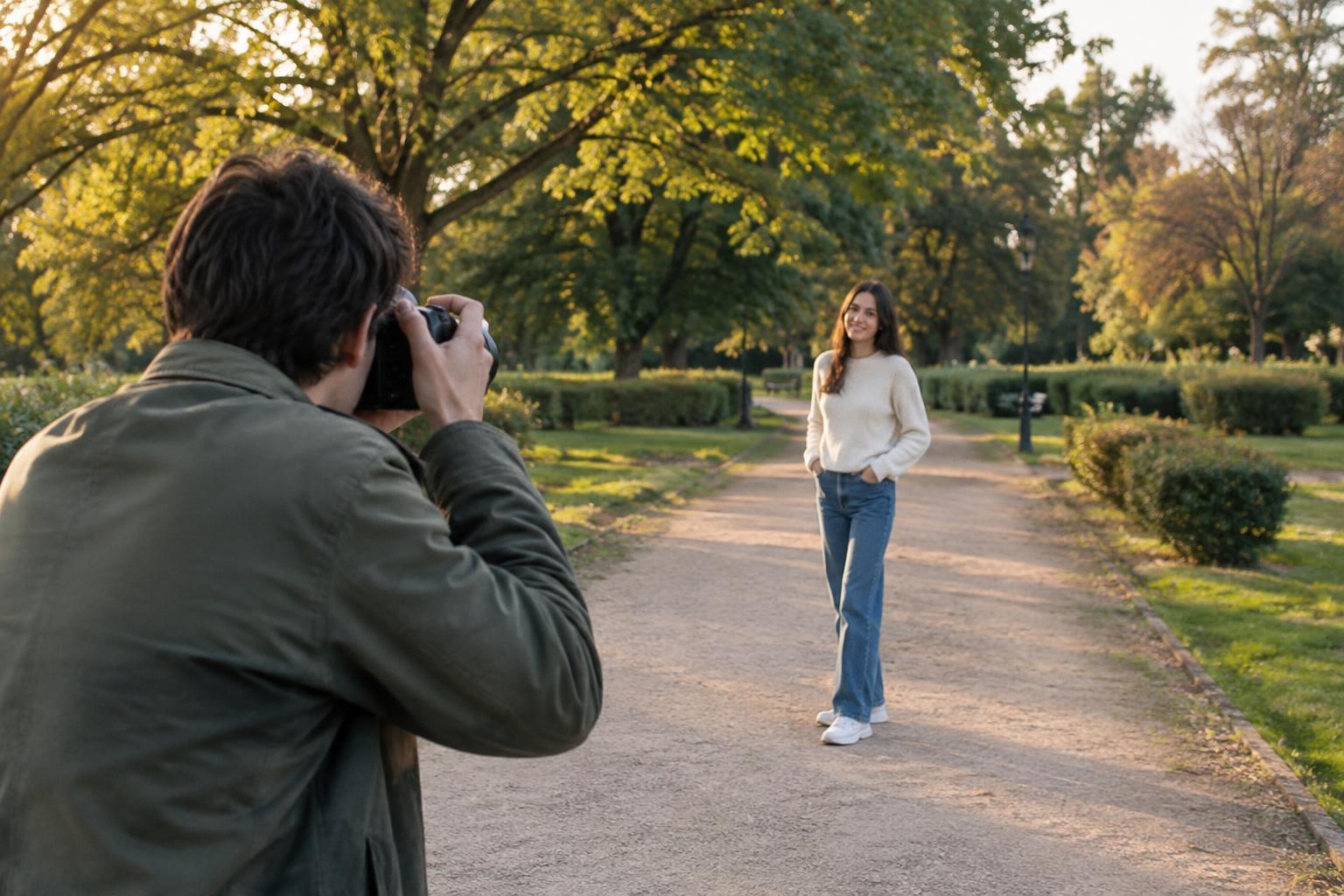
CompositionThe edges of a photograph can quietly weaken an otherwise strong composition. Learn a quick pre-shutter scan for partial objects, bright patches, awkward crops, and background lines, plus a simple exercise for building the habit.
Read article · 4 min↗

CompositionA tighter frame can make a photograph clearer, but it can also remove the details that explain the scene. Learn how to identify essential visual information, check the edges, and choose a crop that supports your subject.
Read article · 4 min↗

CompositionThe shape of a photograph can make a scene feel expansive, intimate, balanced, or restless. Learn how common aspect ratios affect composition, what to watch for when cropping, and how to practice seeing a scene in more than one frame.
Read article · 4 min↗

CompositionA mountain can look small in a photograph, while a seashell can fill the frame. Learn how to use familiar objects, camera position and framing to make a subject’s size easier to understand.
Read article · 4 min↗

CompositionA strong photograph does not always begin with an interesting subject. Learn to notice triangles, curves, blocks and empty space, then arrange them to make everyday scenes more compelling.
Read article · 4 min↗

CompositionColor does more than set a mood. Where a color appears in the frame can help a subject stand out, connect separate elements, or pull attention away from the story you meant to tell. Learn how to use placement, contrast, and a few simple exercises to make color work for your composition.
Read article · 4 min↗

CompositionRepeated windows, shadows, chairs, or waves can give a photograph a visual beat. Learn how to spot patterns, choose a viewpoint, introduce variation, and practice making stronger compositions with the equipment you already have.
Read article · 4 min↗

CompositionA quiet street, a still-life arrangement, or an empty room can feel more dynamic when diagonal lines guide the eye. Learn how to find, strengthen, and balance diagonals in the frame, then practice with a simple shooting exercise.
Read article · 4 min↗

CompositionThe horizon does more than divide sky from land. Learn how a high, low, or centered horizon changes the emphasis of a landscape, and try a simple field exercise to choose deliberately.
Read article · 4 min↗

CompositionA strong photograph is shaped not only by what it shows, but by what it leaves out. Learn to spot distractions, simplify backgrounds, use the frame edge deliberately, and practice making clearer compositions before you press the shutter.
Read article · 4 min↗

CompositionA photograph can feel layered even though it is flat. Learn how to place a subject among foreground, middle-ground, and background elements, then use position, focus, and light to make those layers work together.
Read article · 4 min↗

CompositionMoving the camera up or down changes more than the viewpoint. Learn how camera height affects foreground, background, horizon placement and the relationships between subjects, then try a simple exercise to see the differences.
Read article · 4 min↗

CompositionDoorways, windows, branches, and other shapes can guide attention toward your subject while adding depth and context. Learn how to choose a frame, place your subject within it, control distractions, and practice the technique with a simple exercise.
Read article · 4 min↗

CompositionCentered photographs can feel calm, formal, playful, or dramatic. Learn how to find a visual axis, position your camera, handle imperfect symmetry, and use simple exercises to make centered frames more intentional.
Read article · 4 min↗
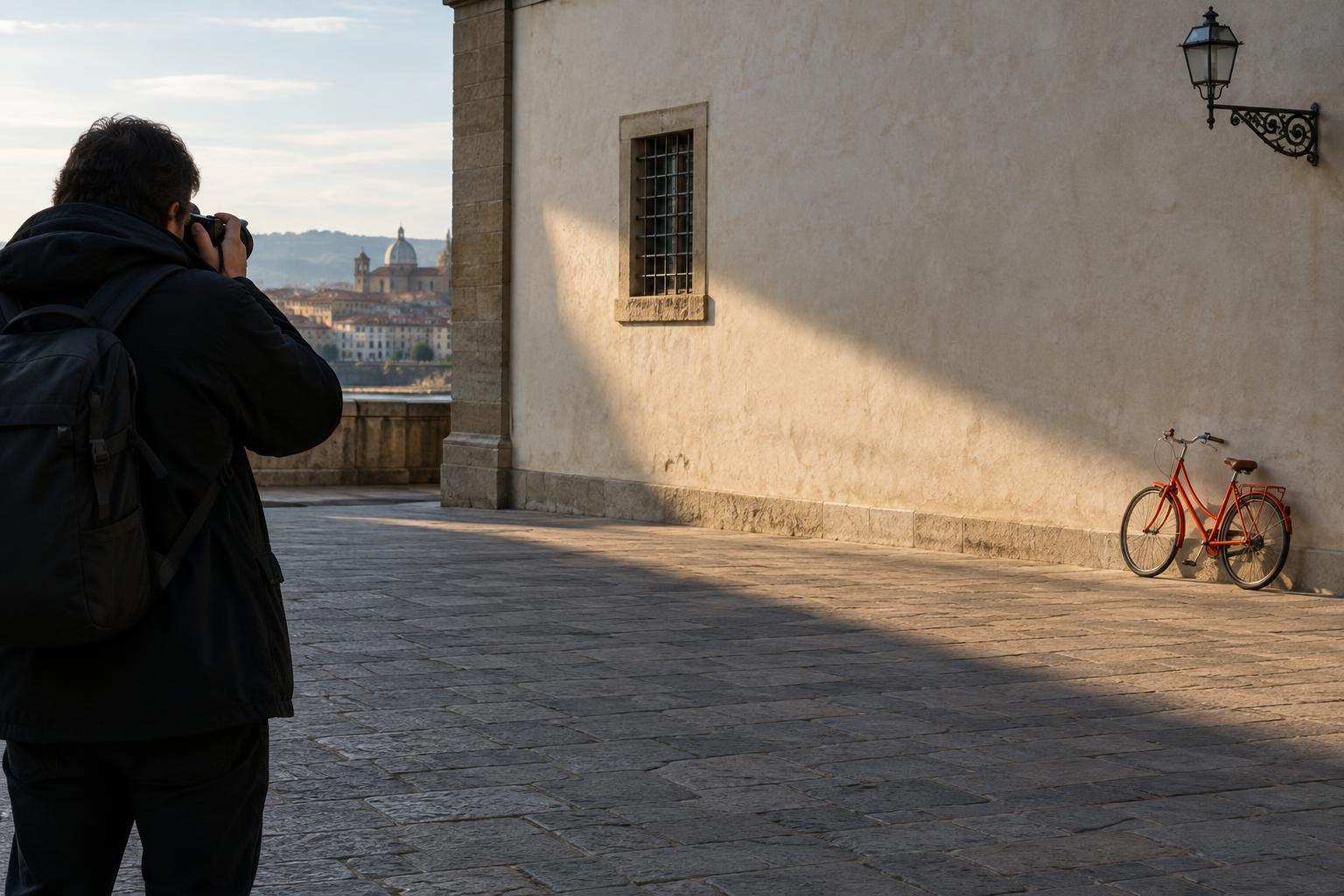
CompositionA photograph does not need matching subjects on either side of the frame to feel balanced. Learn how size, contrast, color, space, and direction affect visual weight, then practice making deliberate asymmetrical compositions.
Read article · 4 min↗

CompositionNegative space is the area around a subject, but it does more than fill the frame. Learn how to use open space to direct attention, suggest mood, and make stronger compositions with the camera you already have.
Read article · 4 min↗

CompositionPaths, shadows, railings, and shorelines can give a photograph a clear visual route. Learn how to find leading lines, connect them to your subject, and use simple exercises to make your compositions more intentional.
Read article · 4 min↗

CompositionThe rule of thirds is a useful starting point, not a requirement. Learn how to use the grid to place subjects and horizons, when a centered composition works better, and how to practice making intentional choices in the frame.
Read article · 4 min↗

CompositionA clear focal point gives viewers somewhere to begin. Learn how to choose a subject, reduce distractions, use light and framing to guide attention, and practice the skill in everyday scenes.
Read article · 4 min↗