What negative space does
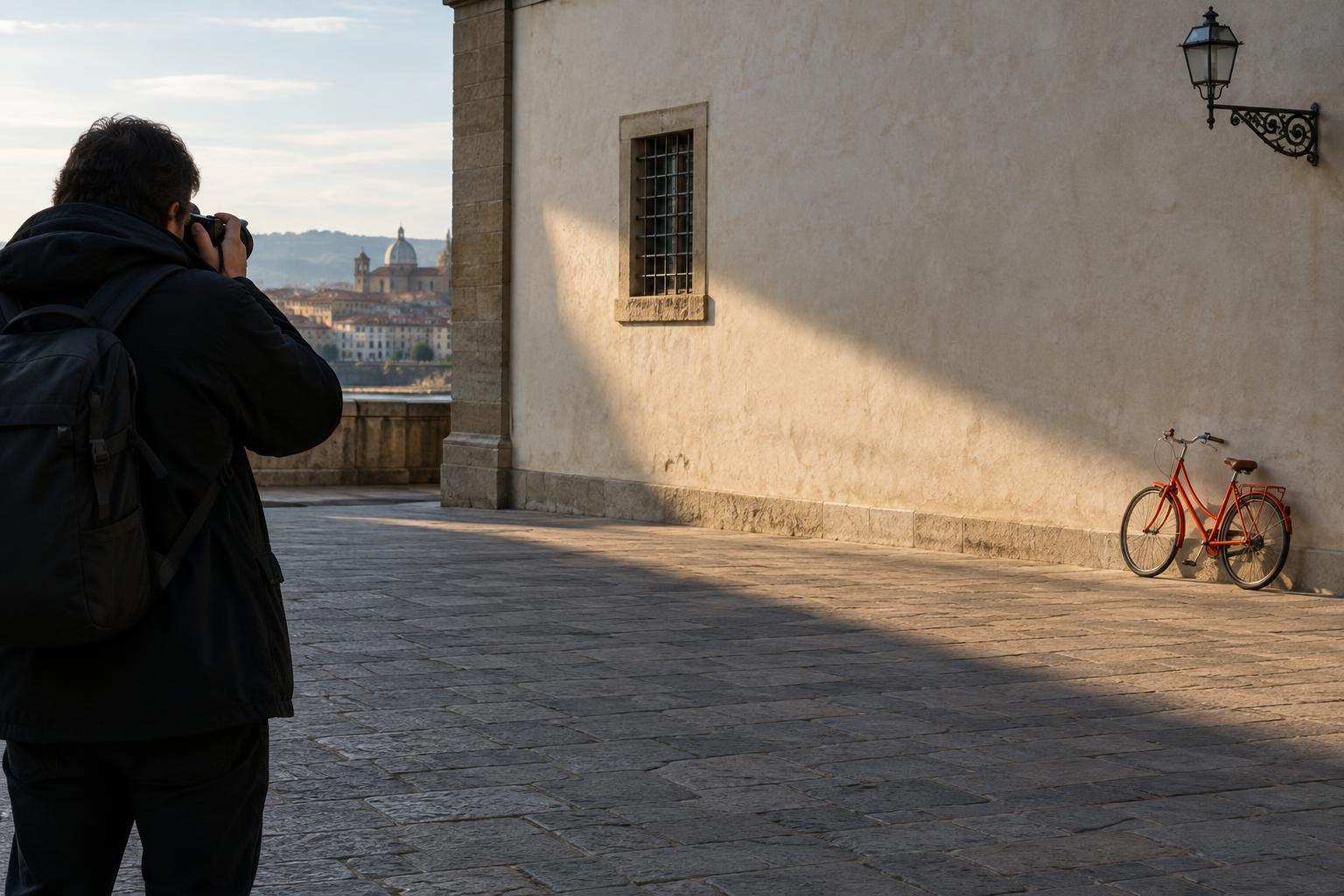
Negative space is the relatively quiet area surrounding the main subject of a photograph. It might be a clear sky, a plain wall, still water, soft shadow, or an out-of-focus background. It does not have to be empty. What matters is that it asks for less attention than the subject, giving your eye an easy place to rest.
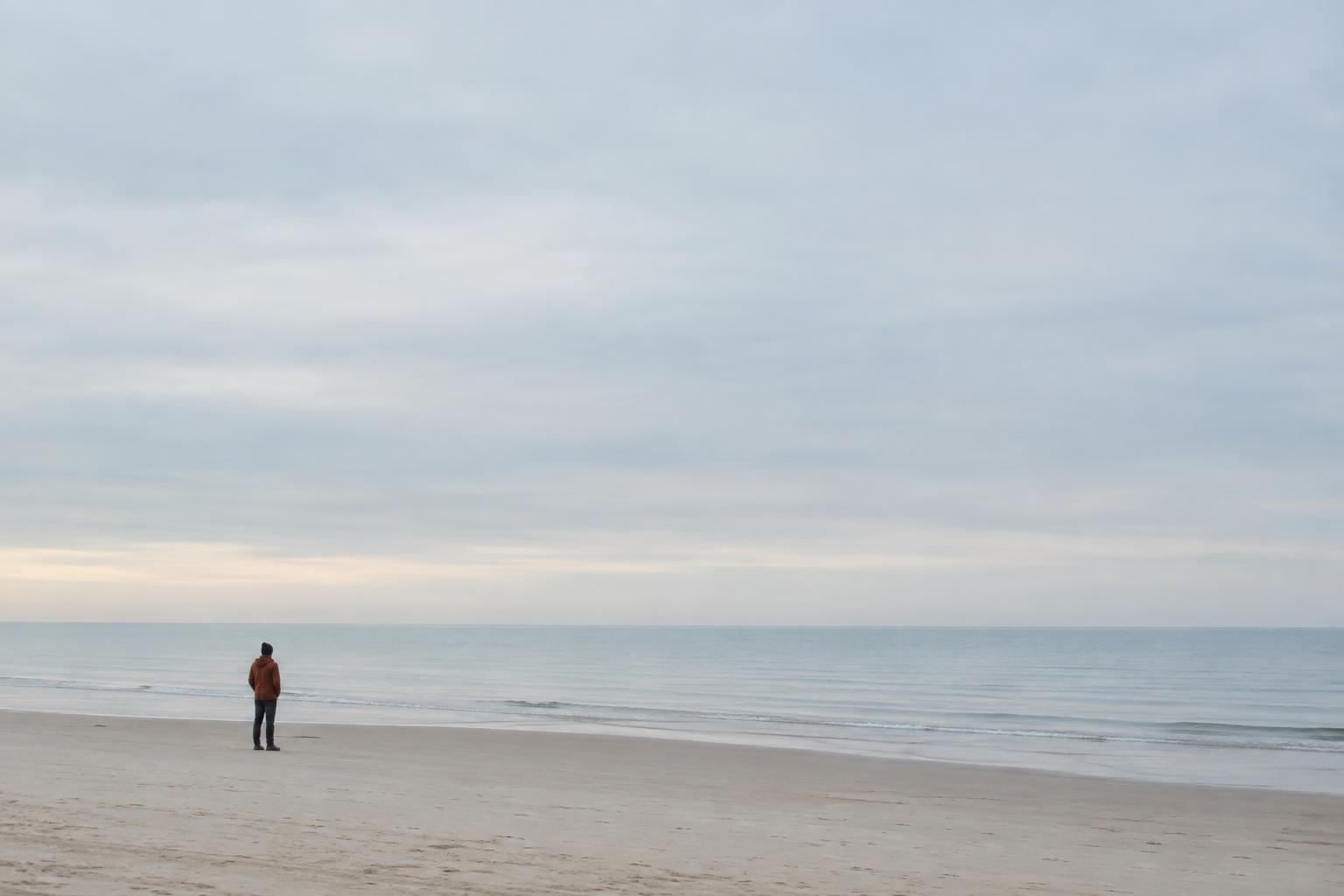
A small person against a broad stretch of sand can feel isolated; the same person filling the frame may feel immediate and energetic. Neither approach is inherently better. Negative space is a way to decide what the viewer notices first and how much context or breathing room the scene needs. Before you shoot, ask: What is my subject, and which parts of this frame help it stand out?
Find a quiet background before moving the subject
It is tempting to look only at the subject, but the simplest improvement often comes from changing your position. Take a step sideways to place a person against a plain patch of wall rather than a doorway. Lower the camera so a flower sits against distant sky instead of busy foliage. In a street scene, wait for a passerby to enter an uncluttered area. Small changes in viewpoint can create space without changing lenses or moving anything in the scene.
Scan the edges and corners as carefully as the center. A bright sign, a stray branch, or a high-contrast object can compete with a subject even when it is small. If you cannot remove a distraction by moving, try changing your distance or angle. You can also let a background fall out of focus, but blur alone will not always quiet a bright or strongly colored shape.
Choose how much room to leave
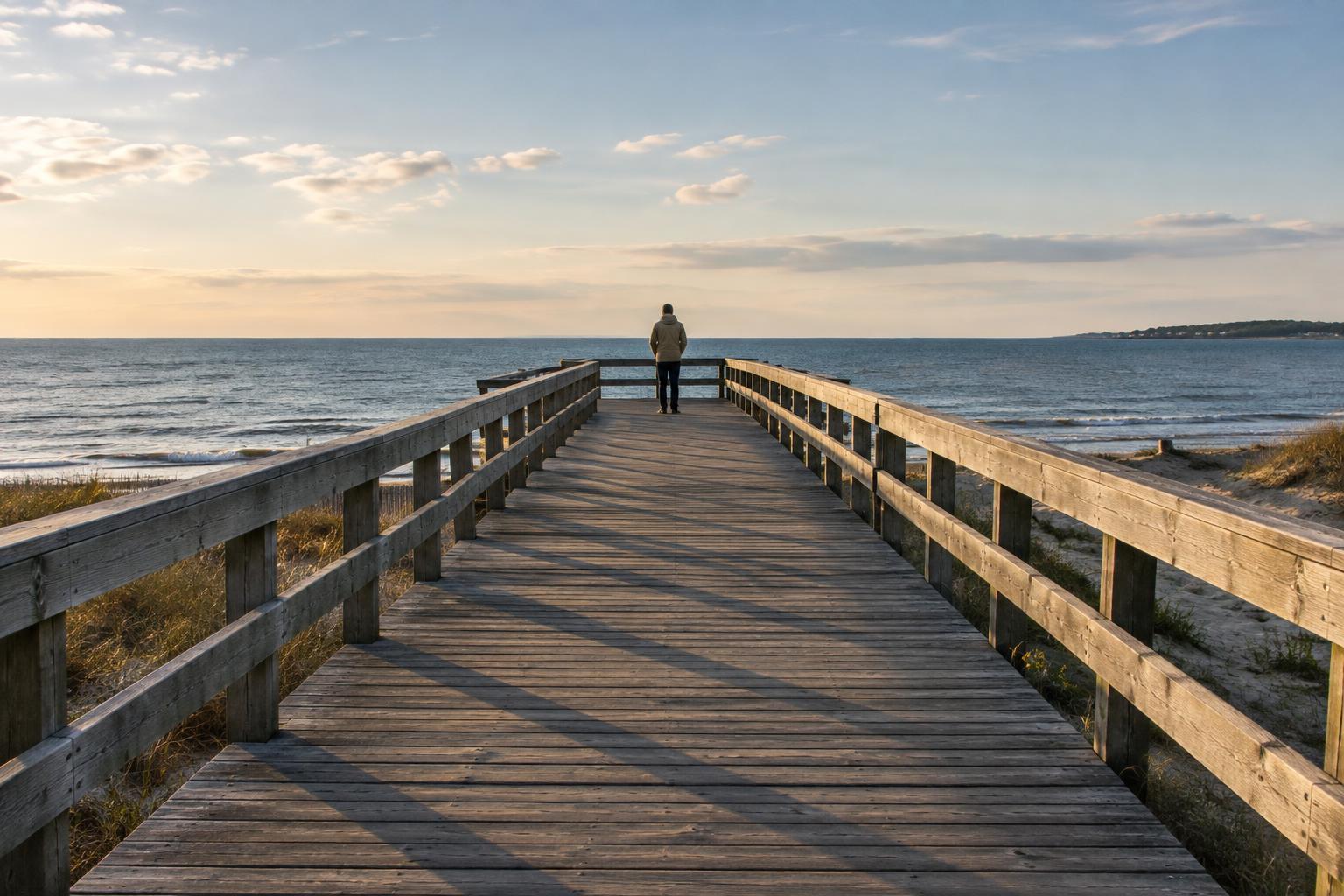
There is no fixed amount of negative space that makes a photograph work. Start by placing your subject where it can be recognized easily, then examine what the surrounding area contributes. A little space can make a portrait feel relaxed. A great deal can emphasize scale or solitude, especially when the subject remains distinct from the background.
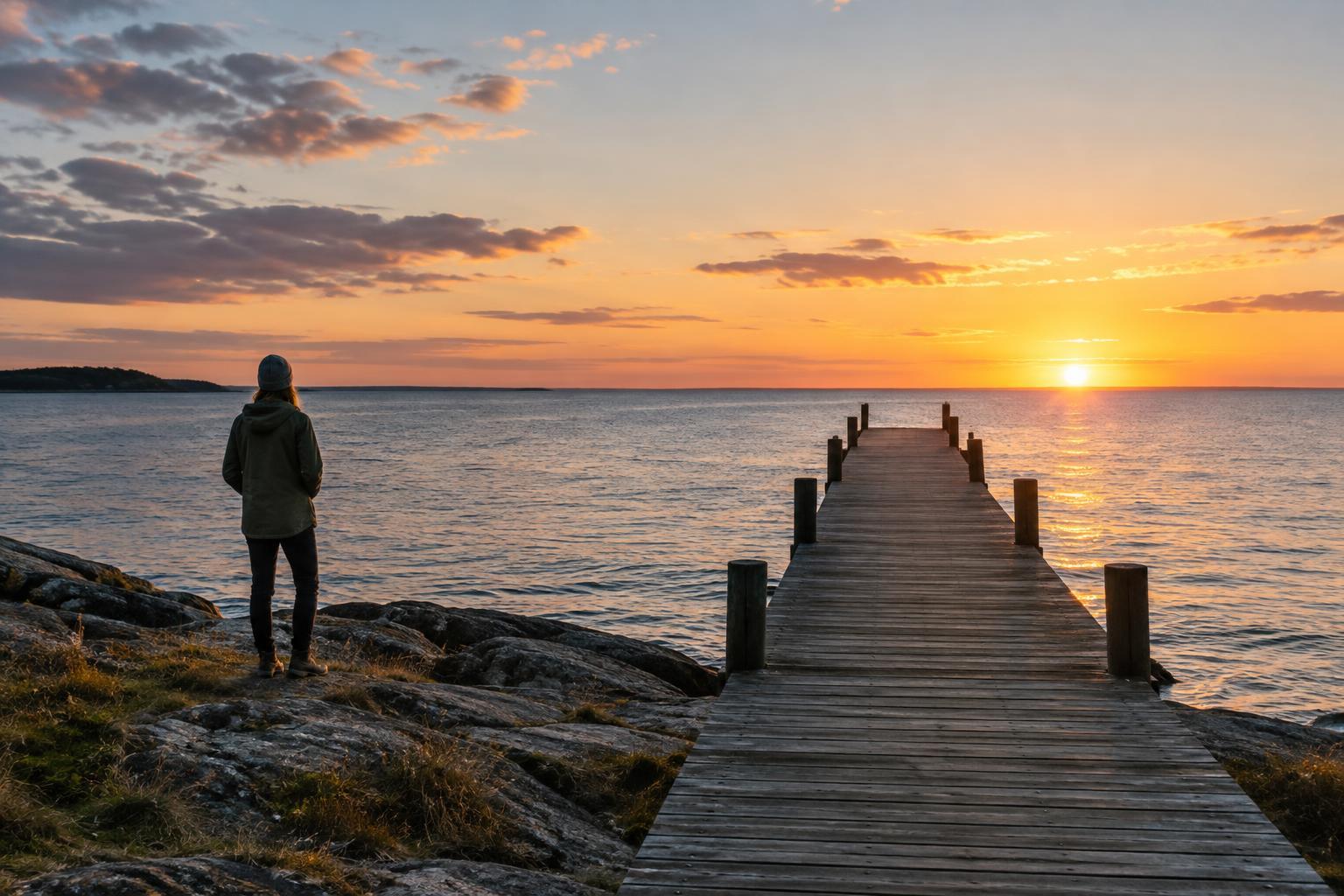
Direction matters too. If someone is looking or walking toward one side of the frame, leaving room in front of them can give their gaze or movement somewhere to go. Space behind them may create a different feeling, as though they are leaving something behind. These are possibilities, not rules: try both and compare the effect.
Watch for a subject that becomes so small it loses its visual hold. Separation helps. A dark silhouette against pale sky, for example, may remain clear at a small size, while a similarly colored subject against a textured field may disappear. Check the image on your camera screen at a modest size, where a viewer is likely to see it first.
Use light, color, and texture to keep space quiet
Negative space can have character without becoming busy. A softly lit wall adds warmth; an even patch of shade feels subdued; rippled water gives a frame texture and a sense of place. Look for a difference in brightness, color, sharpness, or shape between subject and surroundings. That difference helps establish a clear visual hierarchy.
Be wary of assuming that plain always means effective. A large white sky may feel blank if the subject has no strong outline or connection to it. Likewise, patterned space can work if its repetition is gentle enough to support the subject. When reviewing a photo, notice where your eye goes after it finds the subject. If it keeps jumping to an unintended detail, consider reframing or simplifying.
Equipment choices can support the idea, but they are secondary to placement. A wider view can include more environment, while a longer focal length can make it easier to isolate a subject against a small, clean portion of the background. Either can produce negative space. Use the camera or phone you have and concentrate first on what falls inside the frame.
Practice with one subject and three frames
Choose an ordinary subject such as a chair, a plant, or a friend willing to stand still. Make three photographs without changing the subject: one tight frame, one with a moderate amount of open space, and one with the subject occupying only a small part of the image. Move yourself and change camera height as needed, but keep the subject easy to identify. Compare the frames for mood, clarity, and any distractions you missed while shooting.
For a second exercise, photograph a moving subject and leave space first in front of it, then behind it. Do not worry about making a perfect image; look for how each arrangement changes your sense of motion. When editing, try a few crops before making other adjustments. Remove space only when it weakens the composition. Negative space earns its place when it helps the viewer understand what matters and how the photograph should feel.