Balance is about attention, not symmetry
Imagine a portrait with a person near the left edge and a small, bright window on the right. The person occupies far more space, yet the window may draw the eye strongly enough that the frame feels balanced. This is asymmetrical balance: different elements contribute different amounts of visual weight without matching in size or position.
Visual weight is a way to describe how strongly something attracts attention. A large subject often feels heavy, but size is only one factor. Brightness, contrast, saturated color, sharp detail, recognizable faces, and isolation can make a smaller element feel prominent. Balance is not a rule that every photograph must follow. It is a useful tool when you want the viewer’s eye to move through the frame rather than settle on one side unintentionally.
Identify what pulls the eye first
Before moving your camera, glance at the scene and ask what you notice first, second, and third. A face may take priority over a larger wall. A red bag may stand out against muted surroundings. A dark doorway in a pale building may be more noticeable than several nearby architectural details. These reactions give you a working map of the frame’s visual weight.
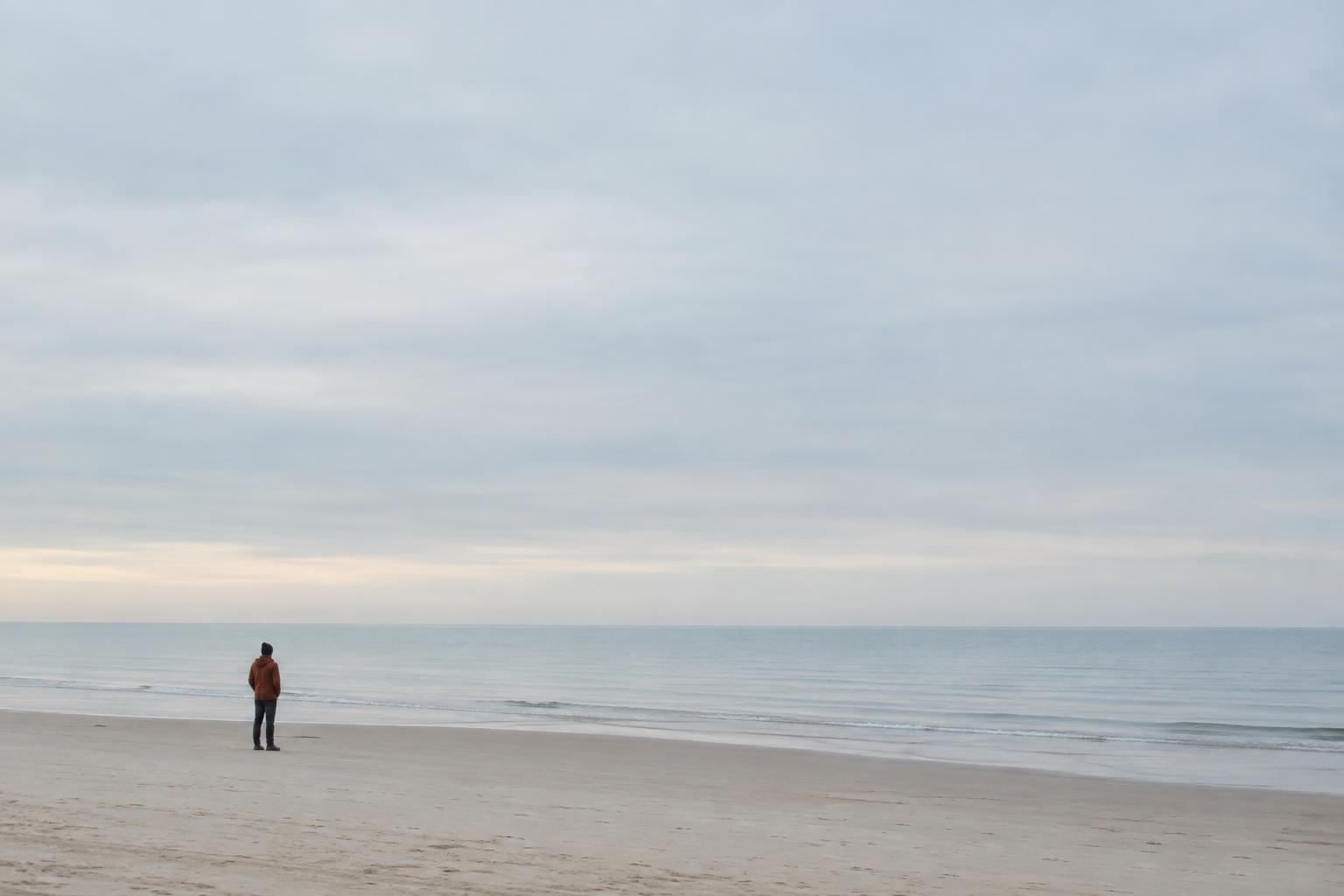
Distance from the center matters, too. A subject near an edge can create more tension than the same subject placed centrally, especially if it appears to look or move out of the picture. Empty space is not weightless: it gives a prominent subject room to breathe and can make that subject feel intentionally placed. If one side seems too busy, first check whether a background object is competing with your main subject. Taking a step sideways may separate overlapping shapes or remove a distraction more effectively than changing lenses.
Use contrast and space to offset a dominant subject
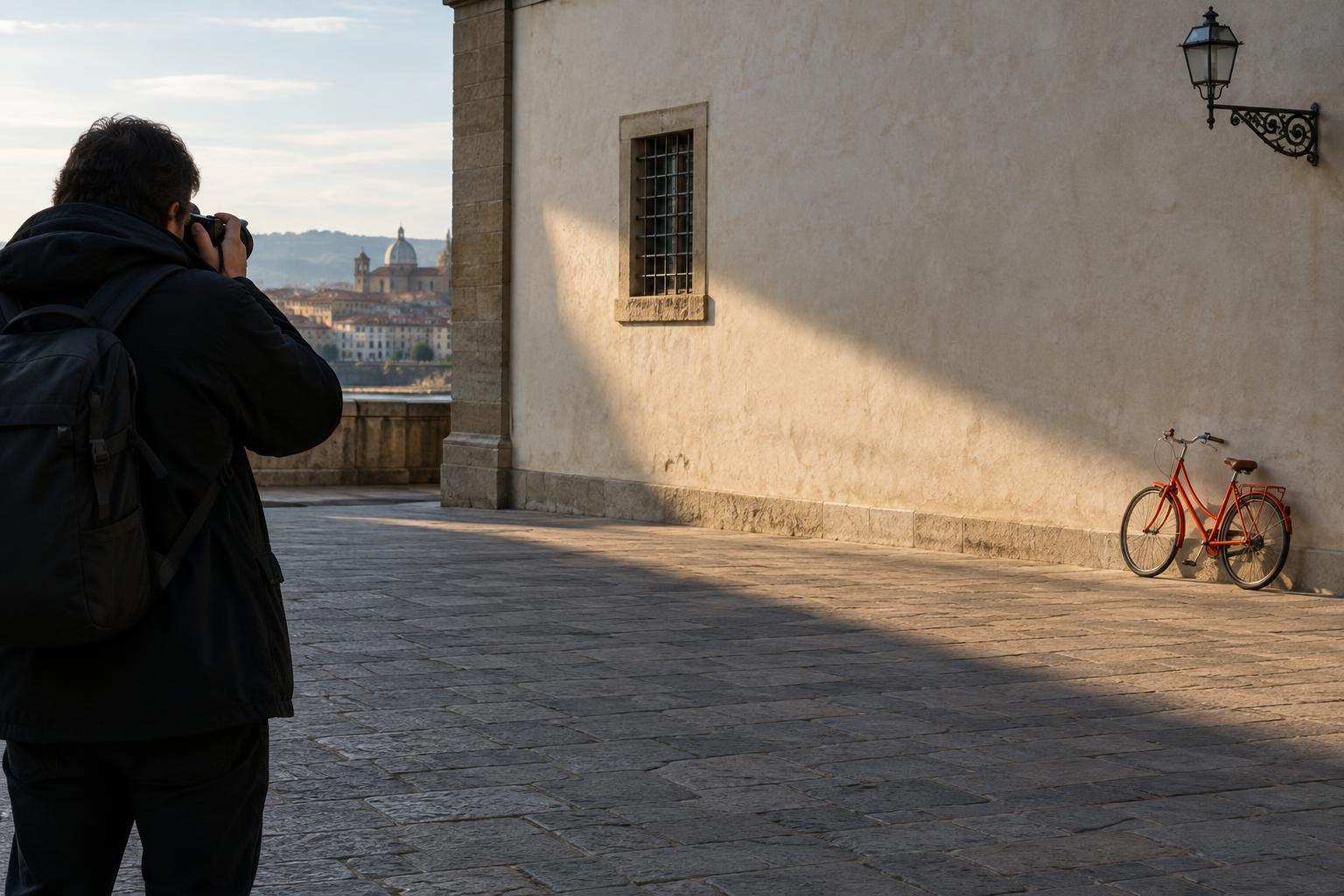
To balance a large subject, look for a smaller element with a strong visual signal. A lone person in a bright coat can counter a broad, dark building. A patch of sunlight can hold its own against a shaded foreground object. You do not need to place these elements at equal distances from the center. Try shifting your position until the gap between them feels purposeful and neither is crowded against the frame.
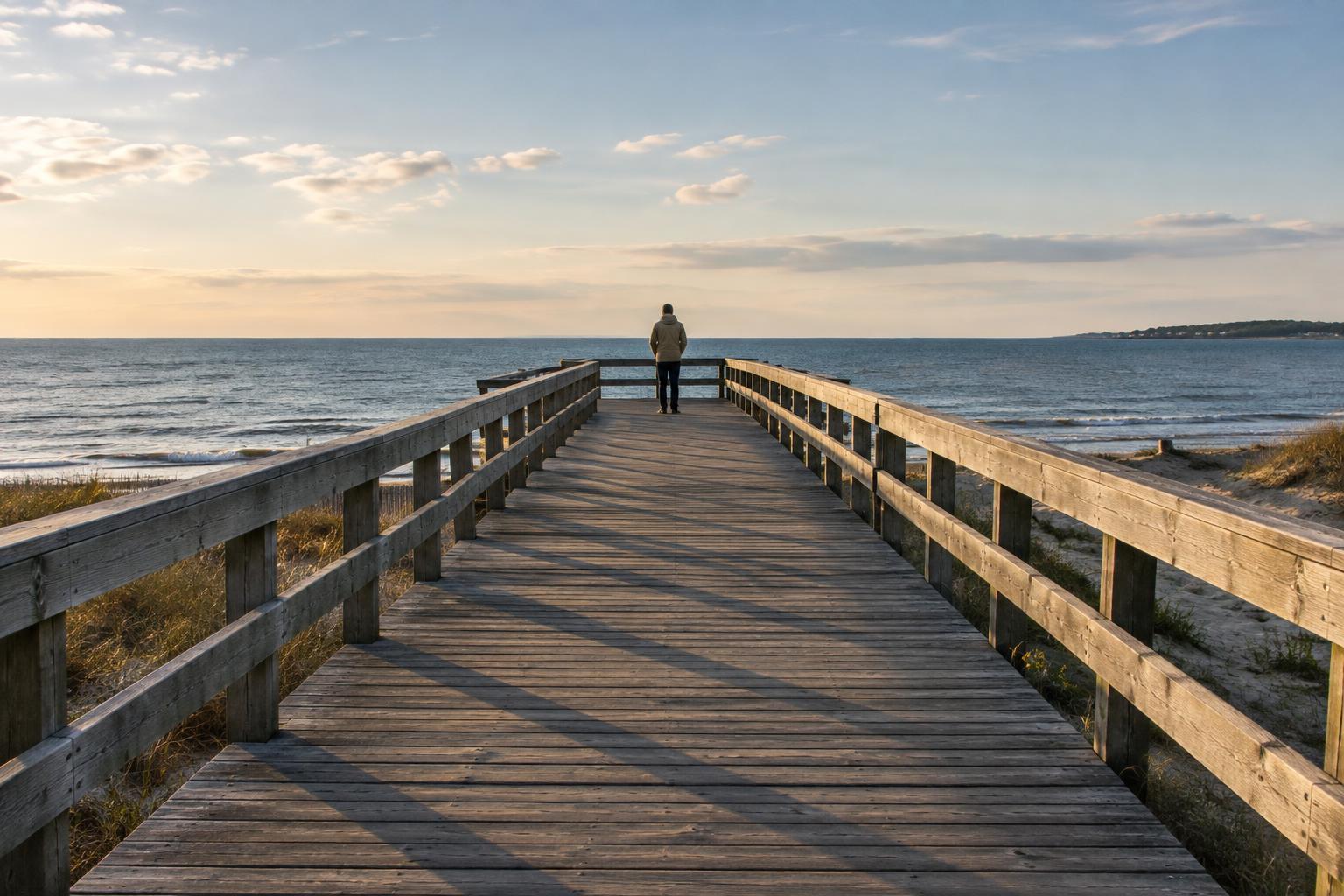
Space can also provide a counterweight without adding another object. If a cyclist travels toward the right, leaving open space ahead gives the movement somewhere to go. If a portrait subject looks across the frame, space in the direction of their gaze can create a calm balance despite the person being off-center. Reverse the arrangement, with little space ahead, and the image may feel compressed or urgent. Both choices can work; decide which feeling supports the photograph.
Balance the background as carefully as the subject
Unequal subjects often become difficult to balance because the background has its own competing shapes. A lamp growing out of a person’s shoulder, a bright sign at the border, or a high-contrast line slicing through the frame can redirect attention. Scan all four edges before pressing the shutter. Then make small adjustments: raise or lower the camera, move closer, or wait for a passerby to leave the scene.
If your camera or phone allows a grid overlay, use it as a reference rather than a placement command. Put the main subject off-center, then inspect the remaining area for a counterpoint or useful negative space. Make a second frame with a different amount of space, not just a slightly different crop. Comparing the two later can reveal whether the smaller element genuinely balances the subject or merely fills an empty corner.
Practice with controlled variations
Choose one large, simple subject, such as a chair, tree, or standing person, and one smaller element that attracts attention. Make three photographs without changing the subjects. In the first, place them on opposite sides. In the second, move closer so the large subject becomes more dominant. In the third, change your viewpoint so the smaller element gains contrast against a cleaner background. Review the images as small thumbnails; at that size, broad relationships are often easier to see than fine details.
For a second exercise, photograph the same scene once with generous empty space and once with a tight frame. Ask where your eye lands first and whether it has a reason to travel elsewhere. If the composition feels lopsided, change one variable at a time: position, brightness, background, or spacing. The goal is not a perfectly even frame. It is to make the imbalance, or the balance, feel chosen.