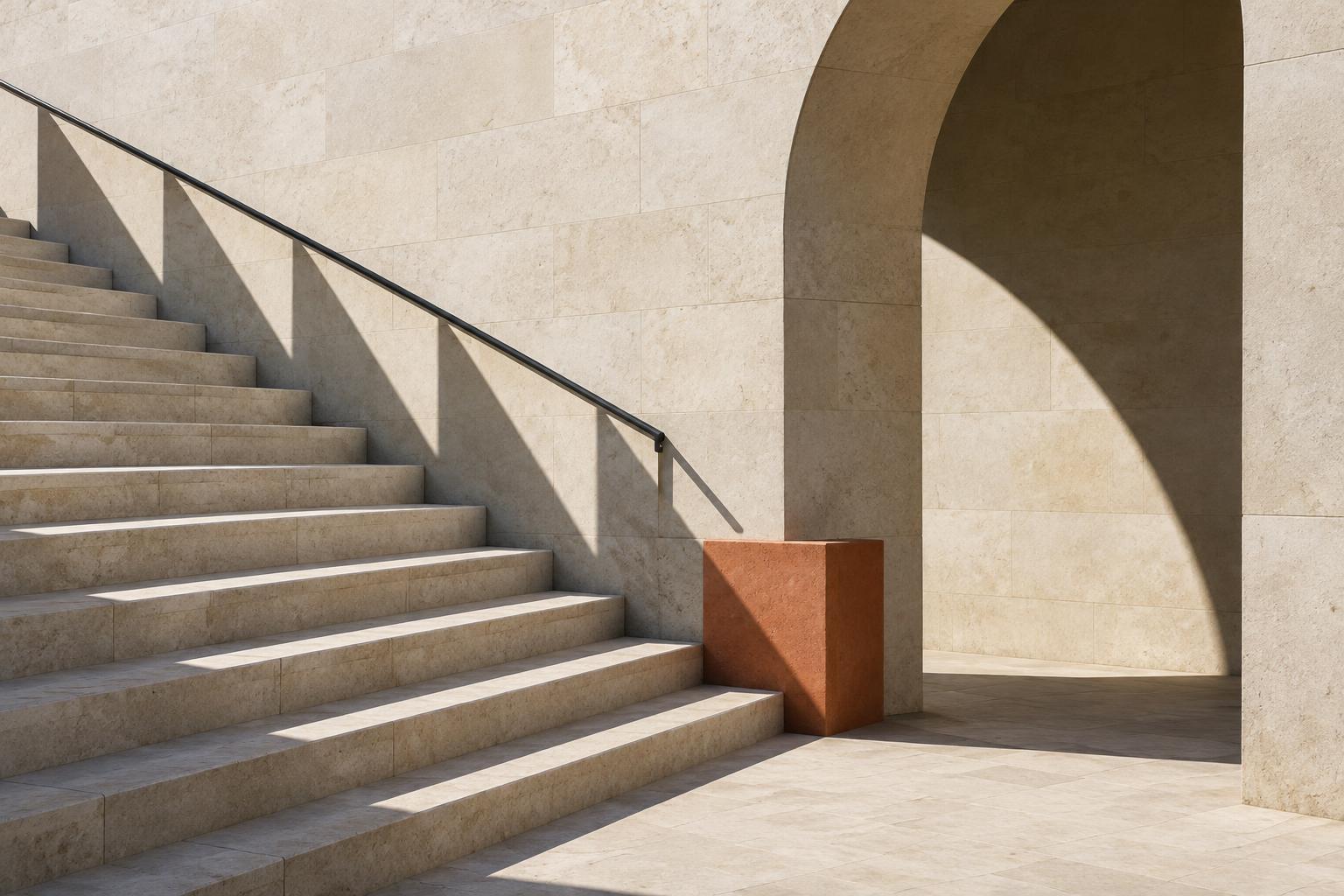
Why a diagonal feels different
A horizontal line often feels settled, while a vertical line can make a subject feel upright and steady. A diagonal suggests a route across the frame. Even when nothing in the scene is moving, the viewer’s eye may follow that route, giving the photograph a sense of momentum. You can use this effect in a quiet landscape, an empty hallway, or a tabletop scene without trying to make the subject itself look dramatic.
The line does not have to run from corner to corner. A short sloping shadow, a row of chairs, or the edge of a folded cloth can create direction. What matters is where the line leads and what the viewer encounters along the way. Before taking the picture, trace the likely path with your eyes. If it carries you toward the subject, the diagonal is helping. If it pulls you out of the frame, try a different position or crop.
Find diagonals before changing your camera settings
Start with edges that already exist: paths, fences, stair rails, rooflines, shorelines, or the sides of a table. Repeated objects can form an implied diagonal even when no continuous line connects them. Light provides another option. A beam crossing a wall or a long afternoon shadow can give an otherwise plain scene a strong direction.
Your position affects the line as much as the subject does. A path viewed straight on may appear nearly vertical in the frame; step to one side and it may cut across the image. Crouching can make the near end of a railing feel more prominent. Moving farther away may quiet the same line. Make these small changes while checking what happens to the background, not just to the diagonal. A cleaner background often does more for the composition than a steeper angle.
Lead the eye somewhere worth looking
A useful diagonal gives the viewer a destination. You might place a person near the far end of a sloping walkway, frame a vase where the edge of a table points toward it, or let a shadow guide the eye to a patch of color. The destination need not sit at the exact endpoint. Leaving a little space around it can keep the image from feeling cramped.
Watch the visual weight at both ends of the line. A bright object near the edge of the frame can compete with a quieter subject deeper in the scene. If the diagonal leads to an unimportant distraction, shift your viewpoint, wait for the distraction to leave, or frame more tightly. You can also let two diagonals meet near the subject, but check whether their intersection clarifies the picture or makes it busy.
Not every line needs to be forceful. A gentle slope can introduce movement while preserving the calm of the scene. If you want a more unsettled feeling, a steeper diagonal and an off-center subject may help. Choose the degree of tension to suit what you are photographing rather than treating the steepest possible line as the goal.
Keep perspective and balance under control
Tilting the camera is a quick way to turn level edges into diagonals, but it also tilts everything else. That can work when the whole frame is meant to feel playful or uneasy. In a scene with a clear horizon or obvious architecture, though, an accidental-looking tilt may draw attention away from your subject. Try changing your camera position or aiming along a naturally sloping edge before rotating the camera.
Diagonals can also pull attention toward a corner. Give the eye a reason to return: a contrasting shape, an area of light, or some breathing room around the main subject. Look at the edges of the frame for awkward cutoffs, particularly where a strong line enters or exits. Sometimes a small adjustment keeps the line energetic without making the composition feel crowded.
Practice with one scene, then review
Choose a stationary scene with at least one clear line, such as a bench beside a path or a cup on a table. Make three photographs without moving the objects. For the first, keep the main line level or upright. For the second, move your camera until that line becomes a subtle diagonal. For the third, make the diagonal more pronounced while keeping the same subject recognizable. A phone or any camera you already use is enough for this exercise.
Compare the frames at the same size. Notice where your eye goes first, whether it reaches the subject, and where it leaves the picture. Check what changed in the background as you moved. If the strongest diagonal also created a distracting overlap, the quieter version may be the better photograph. Repeat the exercise with a shadow or a row of separate objects to see how an implied diagonal differs from a solid edge. The aim is not to include a diagonal in every image, but to recognize when one gives a still scene a clearer path.