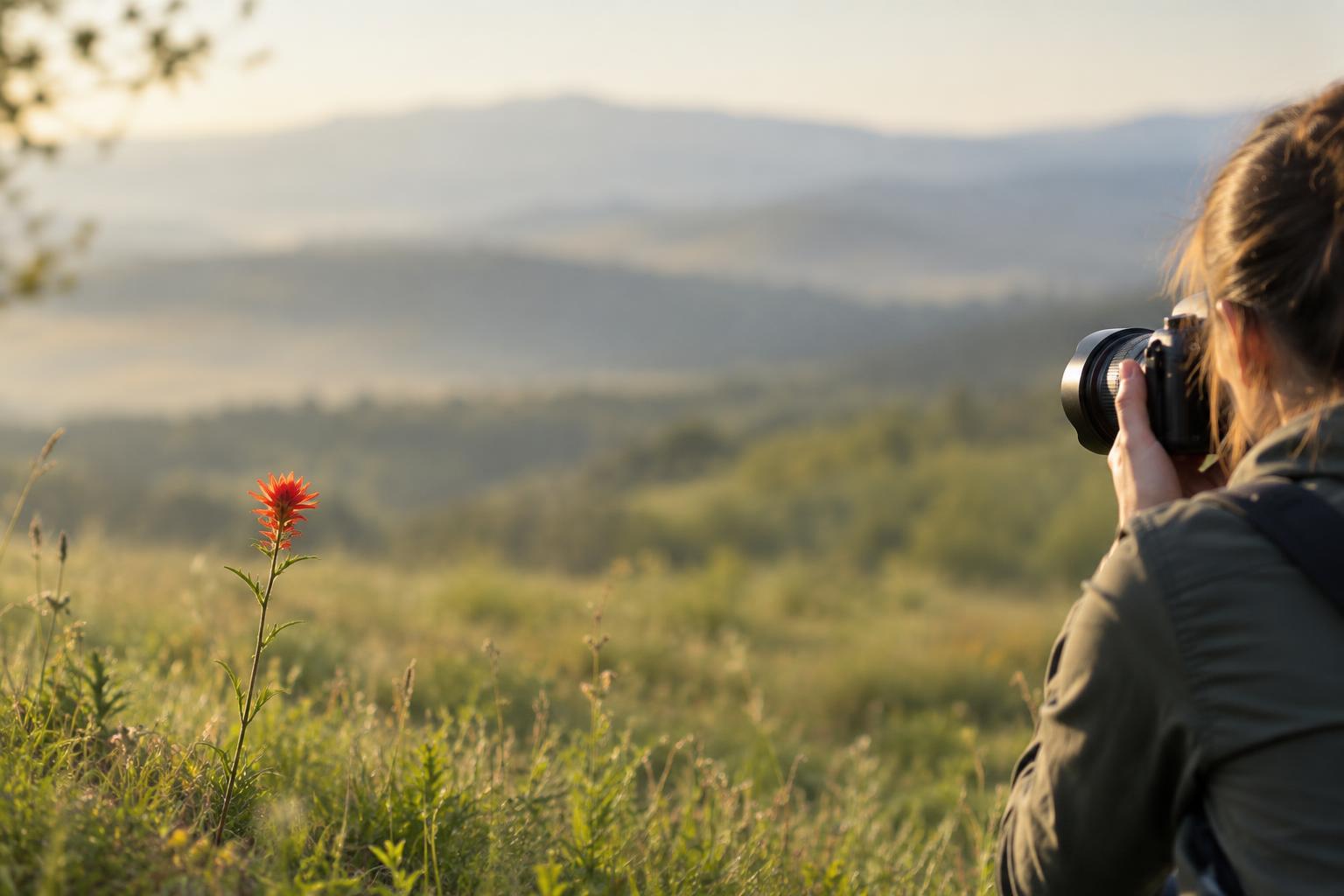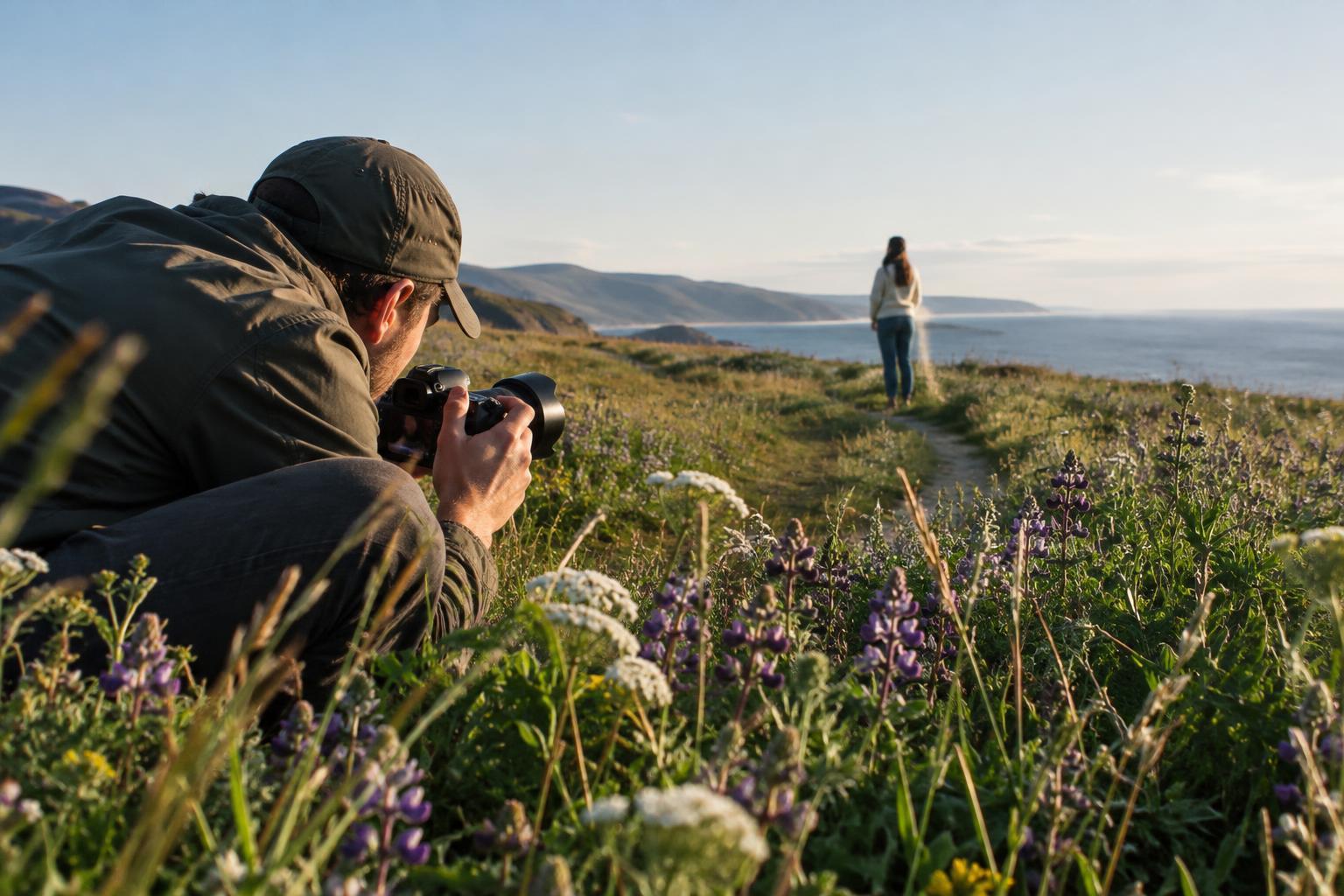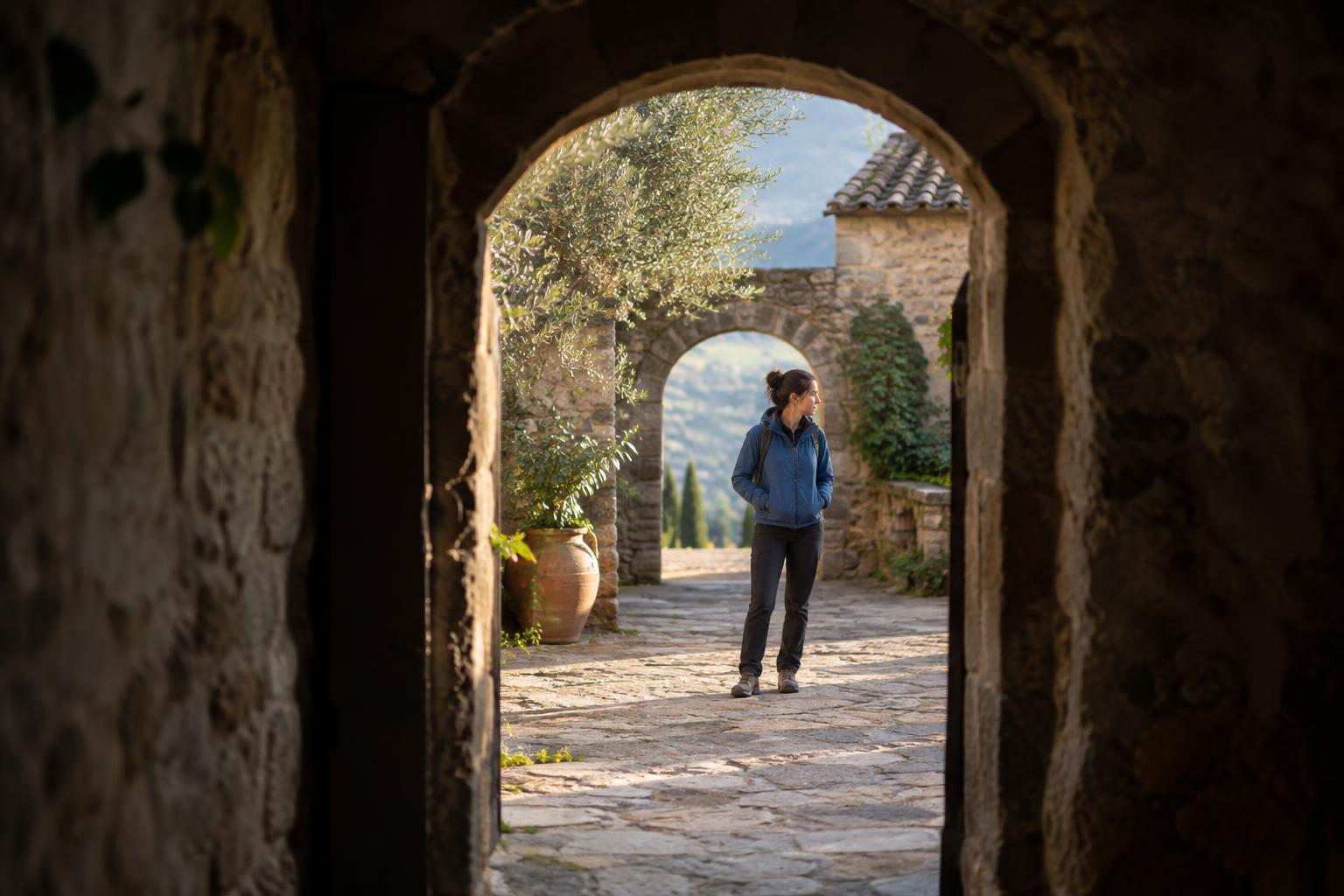
What a frame within the frame does
A doorway around a person, a window around a distant building, or an opening between tree branches can act as a frame within your photograph. The surrounding shape gives the eye a route into the picture and helps separate the subject from a busy scene. It can also tell us something about place: a café window suggests an interior viewpoint, while overhanging leaves make a garden feel more enclosed.
The frame does not need to form a complete border. A dark branch across the top and one side may be enough to direct attention. Nor does the subject have to sit perfectly in the center. Before taking the picture, decide what matters most: the subject’s expression, the shape of the opening, or the relationship between the two. That choice will help you judge how much of the surrounding frame to include.
Find a frame, then refine your position
Start with ordinary shapes around you: gates, arches, railings, gaps between buildings, mirrors, curtains, or the space beneath a tree canopy. Look through each opening rather than simply photographing it. Ask whether it leads toward a clear subject. If the opening contains several competing objects, take a small step sideways or change your height to simplify what appears inside it.
Your position often matters more than your lens. Moving closer to a doorway makes its edges larger in the picture; stepping back gives more space to the scene beyond. A low viewpoint might let a branch curve over a person’s head instead of crossing their face. Check all four edges of the viewfinder, too. A frame that nearly touches the subject can feel cramped, and a bright sliver at the edge can pull attention away.
Try making three versions before you leave: one with a generous border, one with only part of the framing shape visible, and one without it. Comparing them later is a quick way to learn whether the shape adds meaning or merely fills space.
Use depth and focus deliberately
Framing is especially useful when the surrounding shape sits at a different distance from the subject. Photograph someone standing beyond a doorway, for example, and the near doorway, the person, and the background become distinct layers. Keeping the doorway recognizable provides context; letting it fall slightly out of focus can make the person stand out. Neither treatment is automatically better.
If your camera allows aperture control, a wider aperture may soften a nearby frame when you focus on a more distant subject. A narrower aperture may keep more of the scene legible, which can suit architectural photographs. On a phone, tap the intended subject to set focus and watch what happens to the nearer edges. Depth effects vary by device and scene, so review the image rather than assuming the preview captured every edge cleanly.
A frame can also be made with light rather than an object. A person in a bright doorway against a dim room may stand out because of the contrast. Watch the brightest area in the composition: if it is an unimportant window or patch of sky, changing your angle may keep it from becoming the main attraction.
Keep the frame supportive, not distracting
Strong shapes compete for attention. A colorful door might overwhelm a small portrait, while dense leaves can break a subject into hard-to-read pieces. Look for a clear gap around important details such as eyes, hands, or a recognizable landmark. If the surrounding shape is more interesting than the subject, you can embrace that and photograph the shape itself—or choose a quieter frame.
Consider what the border implies. Photographing through a shop window can add reflections that suggest activity on both sides of the glass, but those reflections may also obscure your subject. A gate may create a sense of distance, while a soft curtain can make a portrait feel intimate. These effects depend on the rest of the image, so use them as possibilities rather than rules.
Practice with one opening
Choose a single doorway, window, or gap between trees and make a short series without changing locations. First, photograph the opening empty. Then place or wait for a subject within it. Make images from the left, center, and right; repeat from a lower or higher viewpoint. For each position, check whether the border guides your eye toward the subject and whether anything crosses an important part of it.
When you review the series, pick the image in which the frame contributes the most without taking over. Notice how small changes in position alter the background, the amount of border, and the space around the subject. Repeat the exercise with a less regular shape, such as branches or a gap between rocks. Learning to recognize useful openings—and knowing when to leave them out—will make the technique feel like a choice rather than a habit.