Decide what deserves the most space
A horizon is one of the strongest lines in a landscape photograph. Its position determines how much room you give the sky and how much you give the ground or water. Before lifting the camera, ask what made you stop: the shape of the clouds, the texture of a field, a reflection, or a distant ridge? Let that answer guide where the horizon goes.
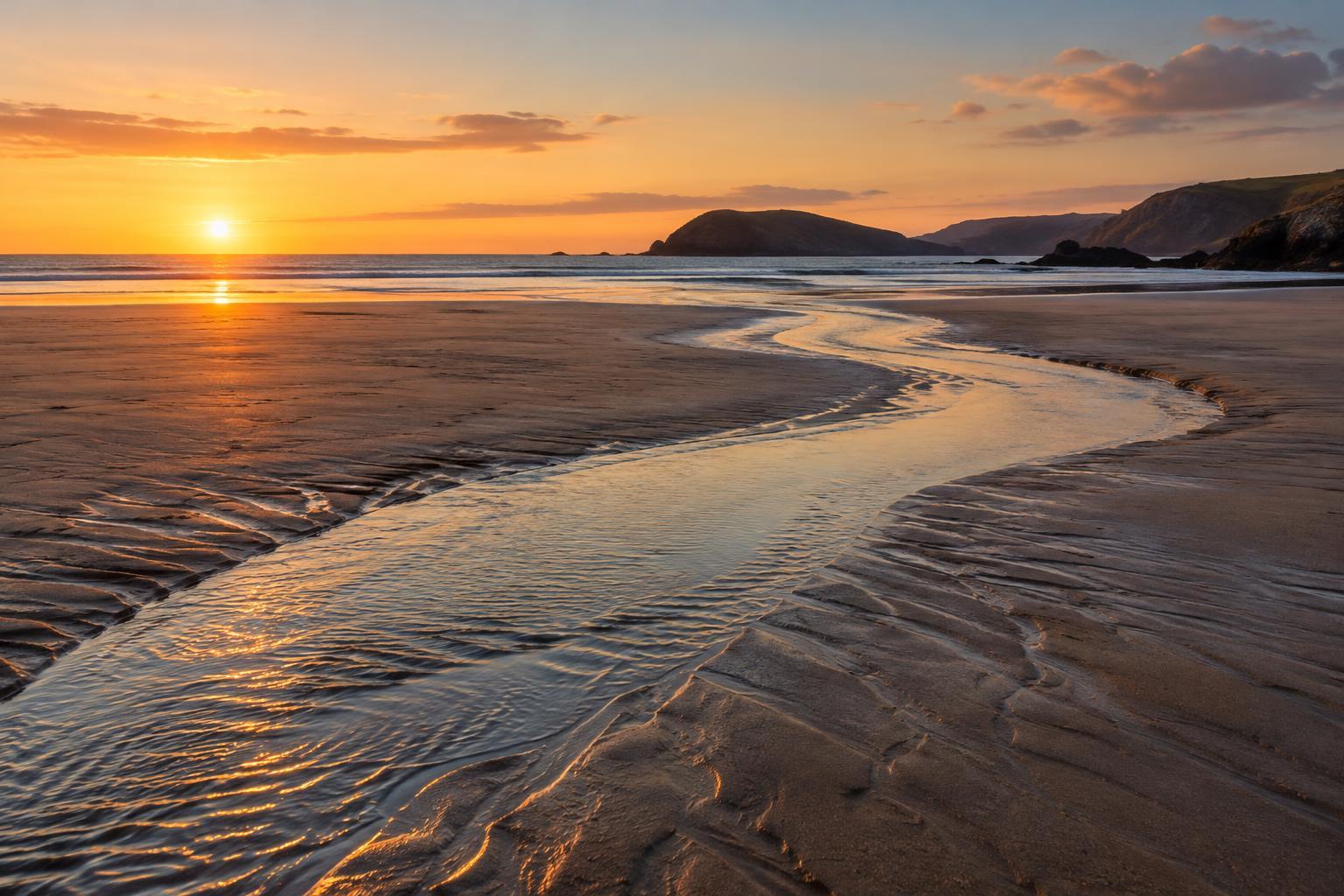
A low horizon gives the sky more room. It can work well when clouds, color, or open space carry the picture. A high horizon shifts attention toward a winding path, patterned sand, or other interesting foreground detail. Neither position is automatically stronger. The useful question is whether the larger part of the frame contains enough to hold a viewer’s attention. If it does not, try giving that space to something else.
Use the thirds as a starting point, not a rule
Imagine two horizontal lines dividing the frame into three roughly equal bands. Placing the horizon near the upper line emphasizes the land; placing it near the lower line emphasizes the sky. These positions are easy to try and often create a clear sense of priority. You do not need to measure them precisely. A small shift may help keep a mountain peak, tree, or building from touching the edge of the frame awkwardly.
A centered horizon can be just as intentional. It suits scenes where the two halves relate closely, such as a calm reflection or a contrast between a bright sky and dark water. It may also create a quiet, balanced feeling. If the frame looks static when you wanted it to feel energetic, move the horizon away from the middle and compare. Treat each placement as a choice about emphasis rather than a test of whether you followed a composition rule.
Look for a path through the foreground
Moving the horizon high makes the foreground prominent, so give the eye a reason to travel through it. A trail, shoreline, row of stones, or change in texture can lead attention toward the distance. Check the bottom corners as well as the center: a bright object clipped by the edge can compete with your intended subject. If the near ground is empty or distracting, a lower horizon and less foreground may make a cleaner photograph.
Camera position matters alongside horizon placement. Lowering the camera can make nearby shapes appear larger and separate them from the distance; raising it can reveal more of a path or pattern across the ground. Make small changes and watch how objects overlap. You may find that moving a step sideways improves the relationship between a foreground element and a distant subject more than changing the horizon alone.
Keep the line deliberate
A horizon that is slightly tilted can look accidental, particularly over open water or flat terrain. Use the camera’s grid or level display if it has one, or compare the horizon with the top and bottom edges of the frame. Leave a little space around the edges if you expect to straighten the image while editing; rotation usually requires a crop.
Not every landscape has one clean, visible horizon. Hills, trees, and buildings may interrupt it, and a sloping ridgeline should not necessarily be forced flat. Look for a reliable reference, such as distant water, while keeping nearby vertical objects believable. If there is no clear horizon at all, think instead about where the main divide between sky and land falls in the frame. The same decisions about balance and emphasis still apply.
Try a three-frame comparison
At one location, photograph the same scene three times without changing focal length: once with a low horizon, once with a centered horizon, and once with a high horizon. Keep the main subject visible in all three frames. Then try a second set after moving the camera higher, lower, or sideways. This makes it easier to see which changes come from framing and which come from viewpoint.
When reviewing the images, look first at the edges and the largest areas of empty space. Ask where your eye lands, whether it can move toward the main subject, and what each version leaves out. Choose the frame that best communicates what interested you about the scene, not the one that matches a preferred formula. Repeating this exercise in places with different skies and foregrounds will make horizon placement feel less like a rule and more like a useful decision.