Start with the photograph’s main idea
Before raising the camera, finish this sentence: “This photograph is about…” Your answer might be a person’s expression, the shape of a staircase, or a small patch of sunlight on a wall. It does not need to be profound. It needs to be specific enough to help you decide what belongs in the picture. If an object adds no context, contrast, or useful visual rhythm, consider leaving it out.
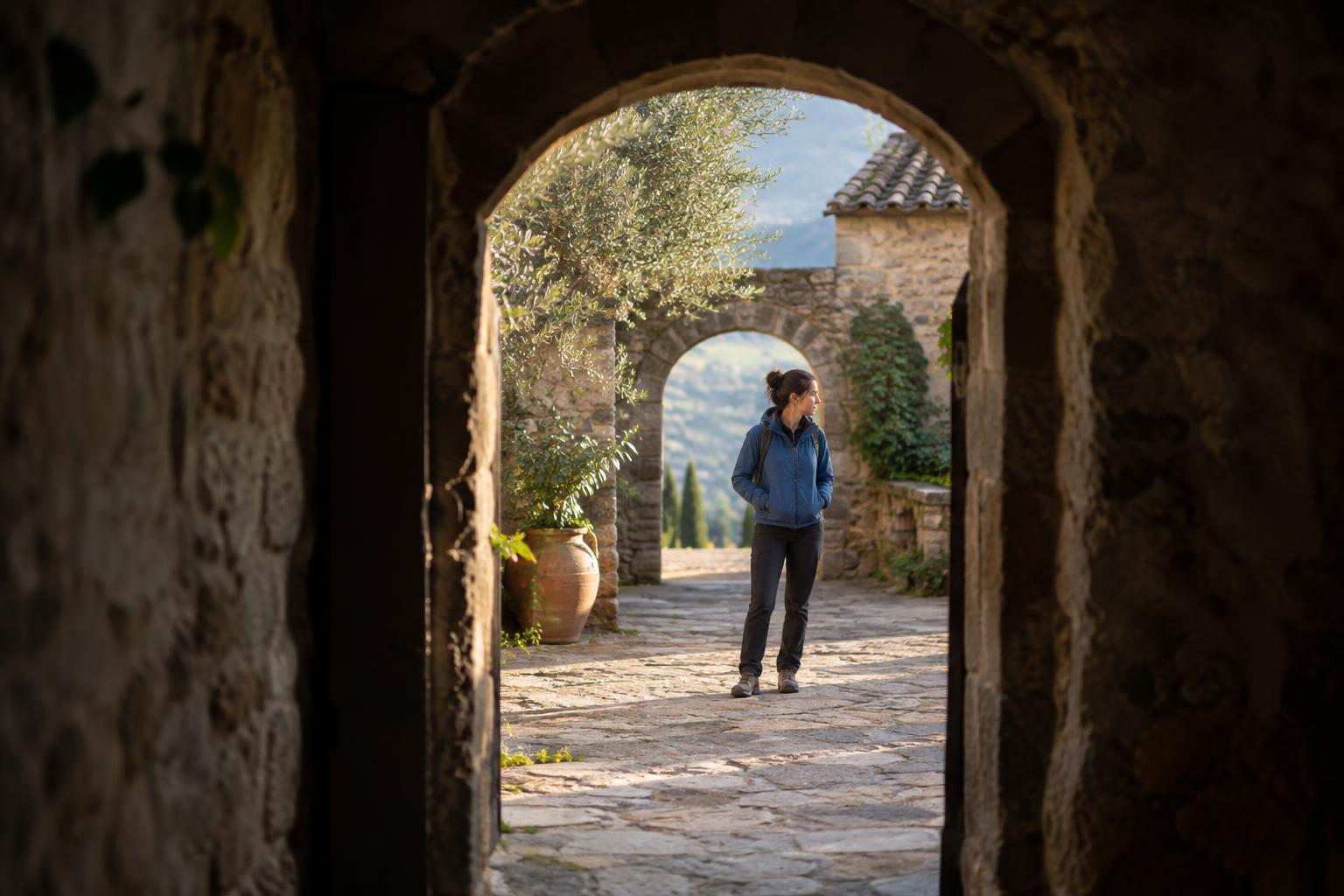
Exclusion does not always mean making the frame empty. A street portrait may need a doorway or sign to convey a sense of place; a landscape may need foreground detail to suggest scale. The question is whether each visible element supports the subject or competes with it. When you are unsure, make two versions: one with the context and one without. Comparing them later is often more revealing than trying to settle the question on the spot.
Look at the edges before you press the shutter
Attention tends to go straight to the subject, while distractions hide at the borders. Scan all four edges and corners before taking the photograph. Watch for bright patches, stray objects, and partial shapes that pull the eye away. A branch entering from a corner or a sliver of another person can feel accidental even when the center of the image is carefully arranged.
Pay particular attention to where the frame cuts through objects. A crop across a wrist, wheel, or piece of furniture can look abrupt if it shows just enough to make the viewer wonder what is missing. You can often fix this by including the object more fully or excluding it altogether. Neither choice is automatically right: a close crop can create energy and intimacy when it appears deliberate.
Simplify by changing your position
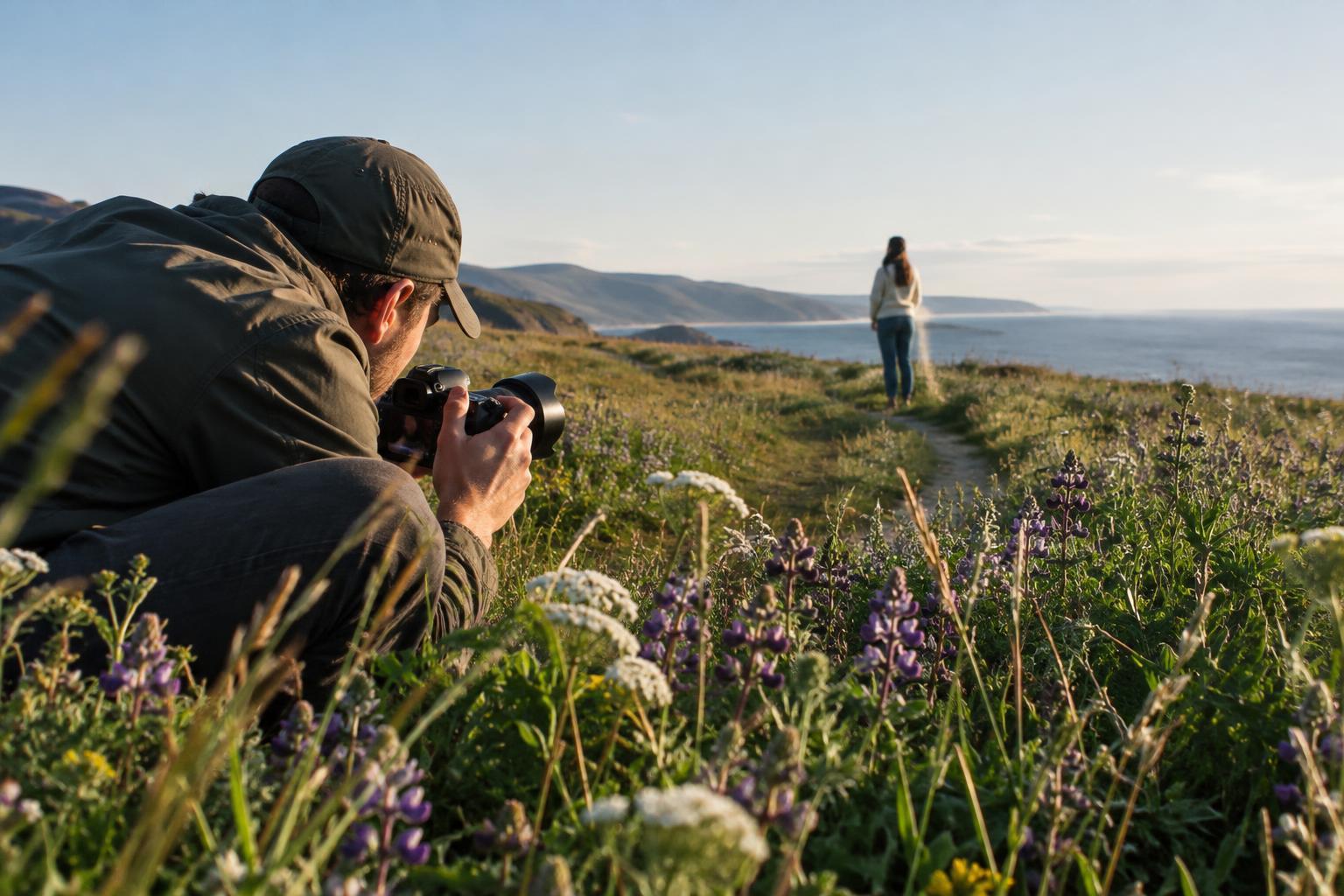
You do not have to solve every composition by zooming in. Take a step to one side to move a distracting pole away from a face. Lower the camera to replace a cluttered background with open sky, or raise it slightly to separate overlapping shapes. Moving closer can emphasize a gesture; stepping back can give the subject room to breathe. Small shifts in viewpoint often change which elements overlap, even when the subject stays in the same place.
The equipment you have also affects what you can exclude. A zoom lens makes it convenient to adjust the edges of the frame without changing position, while a fixed-focal-length lens encourages you to walk and reconsider perspective. A wider view includes more surroundings and asks you to organize them; a narrower view can isolate details, though it may lose useful context. These are creative trade-offs, not reasons to buy something new. Try the available focal lengths or phone camera settings you already use before deciding that gear is the obstacle.
Use empty space with a purpose
Space around a subject is not necessarily wasted space. A plain wall can make a small figure feel isolated, and a clear area in front of someone’s gaze can give the composition direction. Leave space when it helps the viewer understand the subject’s position, movement, or mood. Remove it when it merely delays attention from reaching what matters.
To judge the difference, notice where your eye goes first and where it goes next. If a large blank area leads toward the subject or gives a strong shape room to register, it may be doing useful work. If your eye keeps returning to an unrelated bright corner, changing your framing may help. You can also wait for a distracting person to pass or for your subject to move against a simpler background. Sometimes the best exclusion is a matter of timing rather than cropping.
Practice making the decision in camera
Choose a familiar scene, such as a kitchen table or a nearby street corner, and take five photographs of the same subject. Keep the subject recognizable, but remove one competing element in each new frame. Change only your position, camera angle, timing, or focal length. Afterward, place the images side by side and ask which omissions clarify the idea and which ones take away too much context.
For a second exercise, photograph a scene once with generous space around the subject and once with a tight frame. In editing, try one additional crop of each image, but compare those crops with the originals. Cropping is a useful way to learn what you overlooked; it need not replace careful framing. Over time, these comparisons can make exclusion feel less like a rule to follow and more like a choice you can make with confidence.