Why size can disappear in a photograph
A photograph has edges, but the world beyond them does not. When you fill the frame with a cliff, a building or a tiny flower, viewers may have few clues about its real size. An isolated rock formation can resemble a tabletop model; a close-up of a small object can feel monumental. Showing scale means giving the viewer enough context to make a reasonable comparison.
That does not mean every picture needs a ruler or a person standing beside the subject. Scale is a storytelling choice. A close crop can make a subject feel mysterious or imposing, while a wider view can show how it relates to its surroundings. Before you shoot, decide what you want the viewer to notice: the subject’s absolute size, its size relative to something nearby, or the feeling of being dwarfed by it.
Choose a reference the viewer can recognize
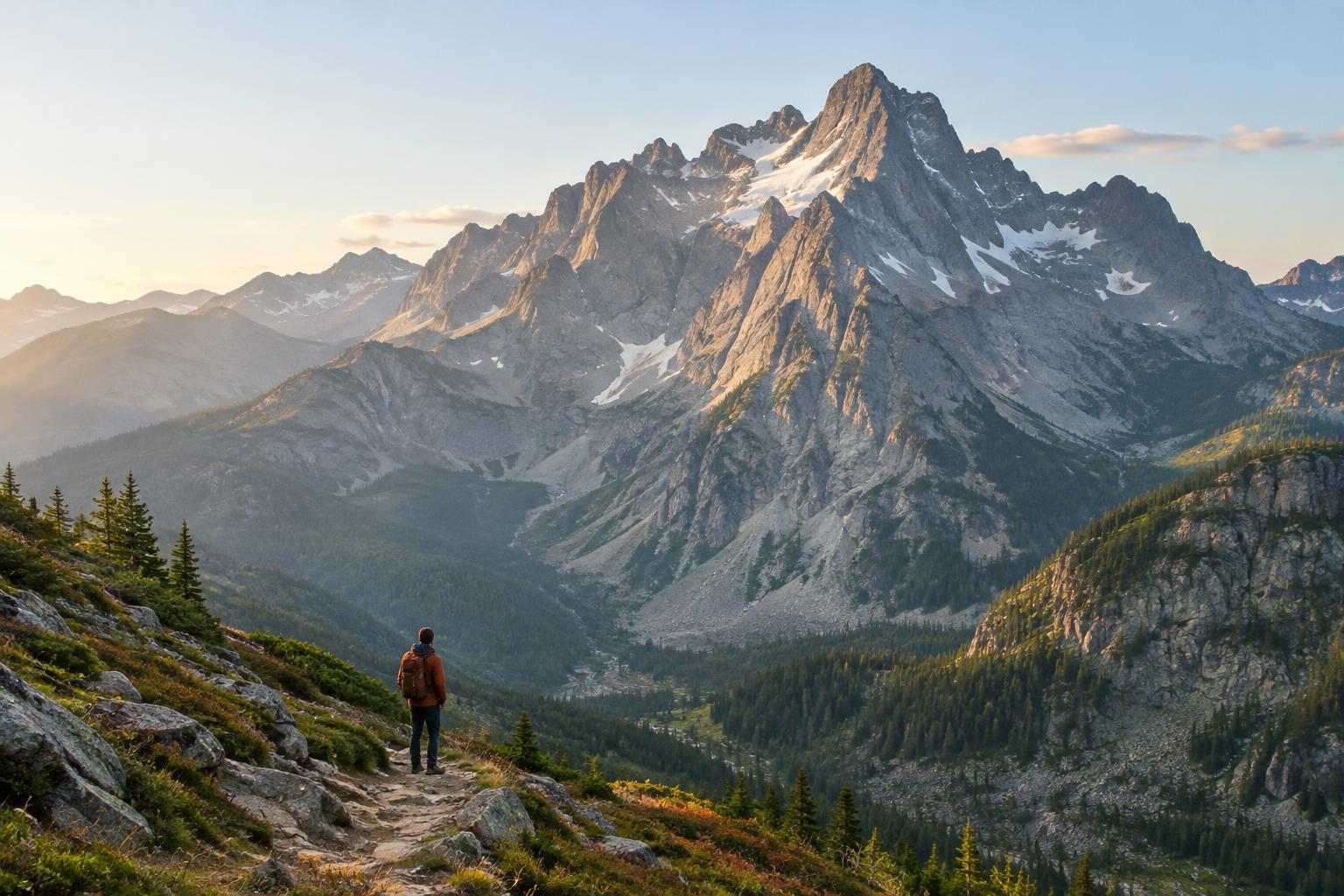
A familiar object provides a quick point of comparison. A person near a waterfall, a doorway on a broad facade or a hand holding a leaf can help the viewer estimate size. Choose a reference whose dimensions feel predictable. A lone tree may look striking beside a mountain, but trees vary so much that it may not communicate scale as clearly as a trail with walkers on it.
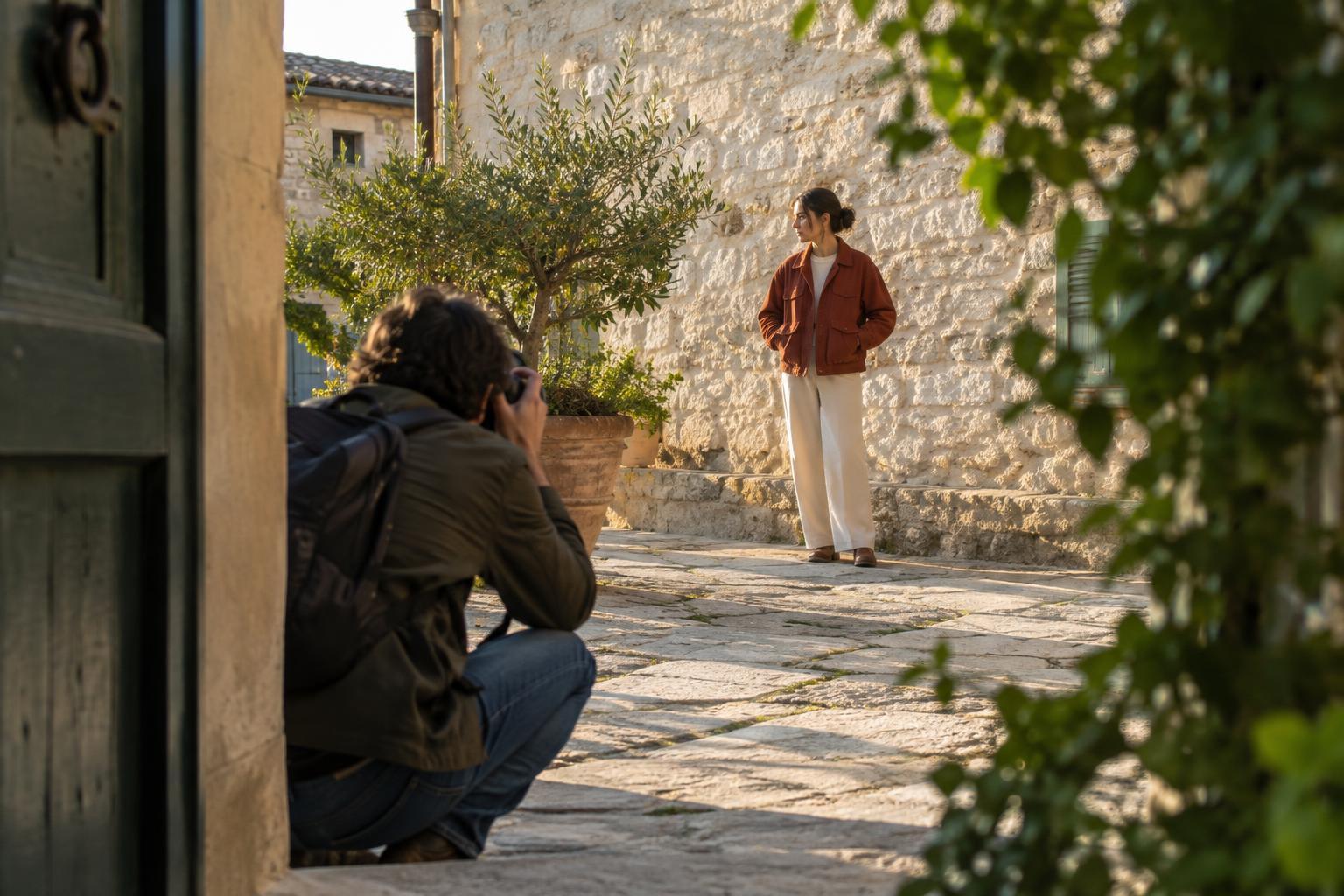
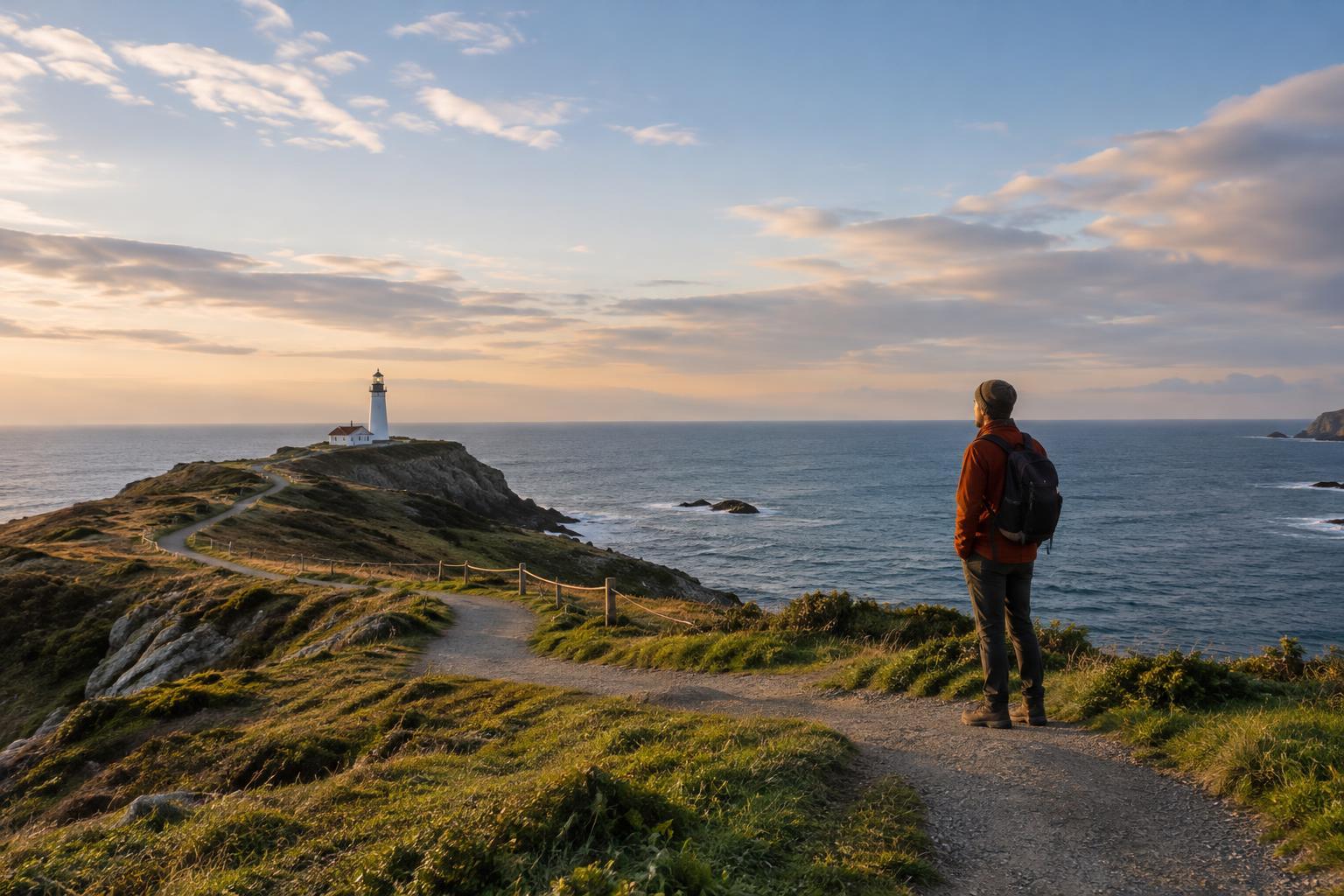
The reference should be visible without becoming a distraction. Look for a position that separates its outline from the background, then check the frame’s edges to make sure it will not be cropped awkwardly. If you use a person, you need not ask them to pose in the middle of the scene. A small figure following a path can supply scale and give the eye a route through the image. When photographing others, respect their space and any local rules.
Mind distance and camera position
A reference is most useful when its relationship to the subject is clear. If someone stands close to your camera while a building is far away, the person may appear unusually large. That can be an effective creative effect, but it may obscure the building’s size. To make a straightforward comparison, try placing the reference near the subject or showing visible ground, a path or overlapping features that explain the distance between them.
Your shooting position matters as much as what you include. Moving a few steps sideways may separate a person from a tree trunk; lowering the camera may make a nearby stone loom over a distant hill. Try photographing the same scene from several positions rather than relying on a single viewpoint. A wide view can emphasize the distance between objects, while a tighter view from farther back can make distant forms appear closer together. Neither is automatically more truthful: choose the perspective that makes the spatial relationship understandable.
Build the frame around the comparison
Leave room for the subject and its reference to be read together. If a large structure barely fits inside the frame, showing a strip of surrounding street or landscape may help establish its extent. Repeating elements can also suggest size: a row of windows, fence posts or steps gives the viewer a pattern to count across the scene. Strong leading lines, such as a walkway toward an arch, can connect a small foreground detail to a much larger destination.
Pay attention to visual weight. A brightly colored reference can steal attention from a quieter subject, even when it occupies little space. You can wait for a figure to move into a simpler patch of background, adjust your angle or include more negative space around the main form. In editing, crop with the comparison in mind. Removing clutter can strengthen scale, but cropping out the only recognizable reference can leave the subject’s size ambiguous again.
Practice with three versions of one scene
Find a subject whose size is not obvious in isolation, such as a large wall, an old tree or a small object with interesting texture. Make three photographs. First, fill the frame with the subject and exclude obvious references. Second, step back and include a familiar object nearby. Third, change your camera position while keeping both the subject and reference visible. Use whatever camera you have; this exercise depends more on observation than equipment.
Compare the images without captions. Which one communicates size fastest? Which one feels most intriguing? Notice whether the reference is genuinely near the subject or only appears to be. Then try a second round in which you change just one thing: your position, the reference or the crop. Scale works best when it supports the image’s purpose. Sometimes the clearest comparison wins; sometimes leaving a little uncertainty makes a photograph worth looking at longer.