Think in layers, not just subjects
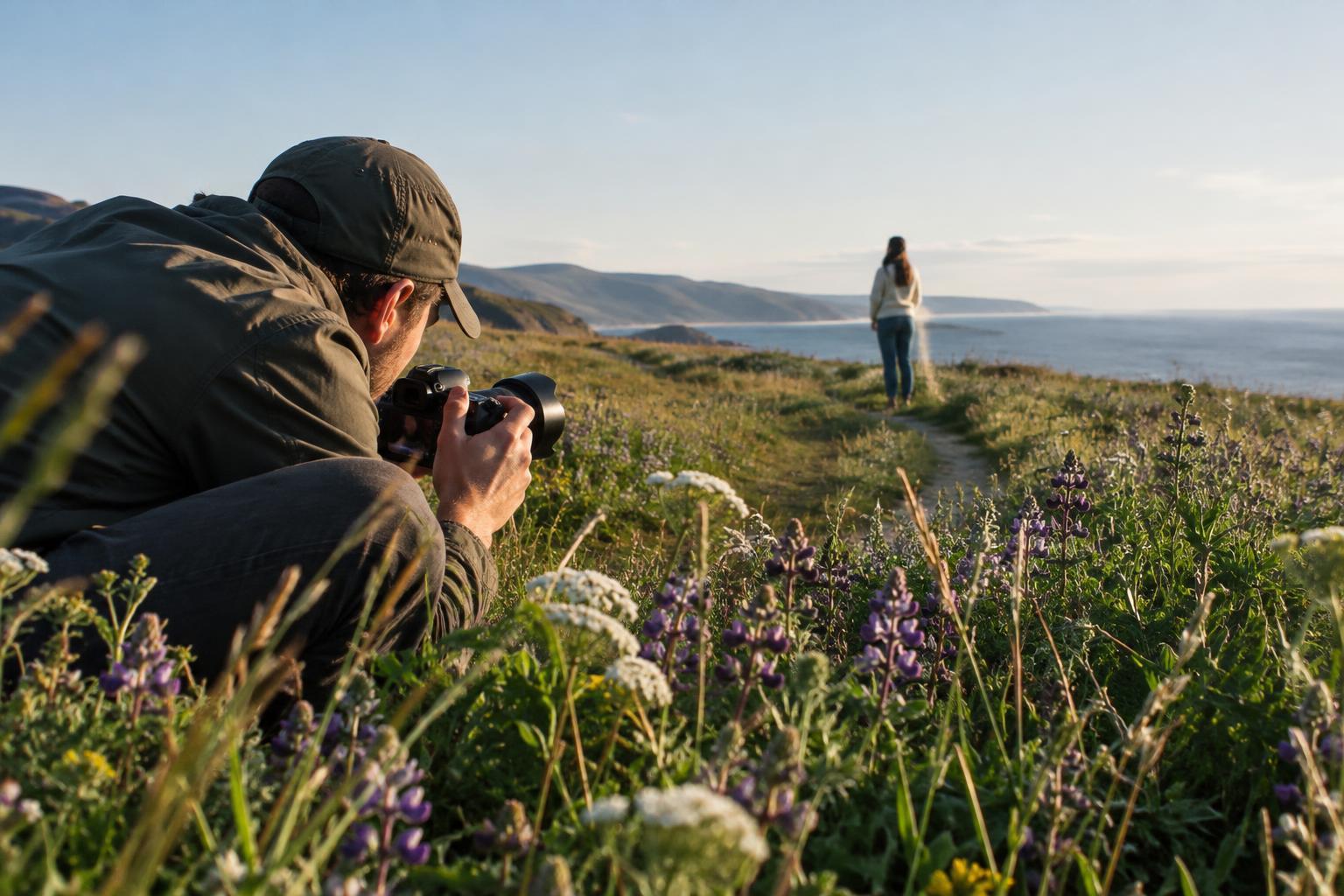
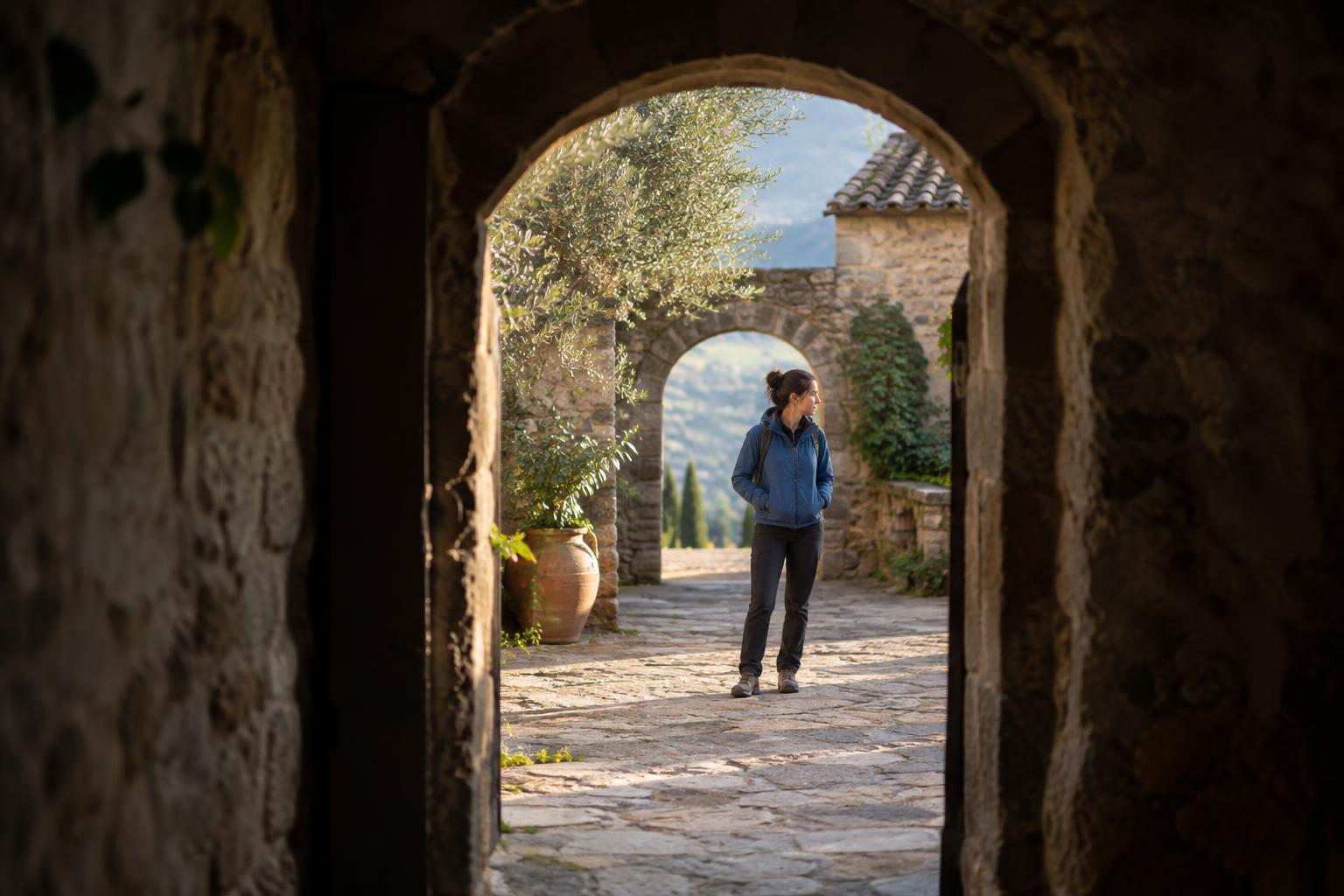
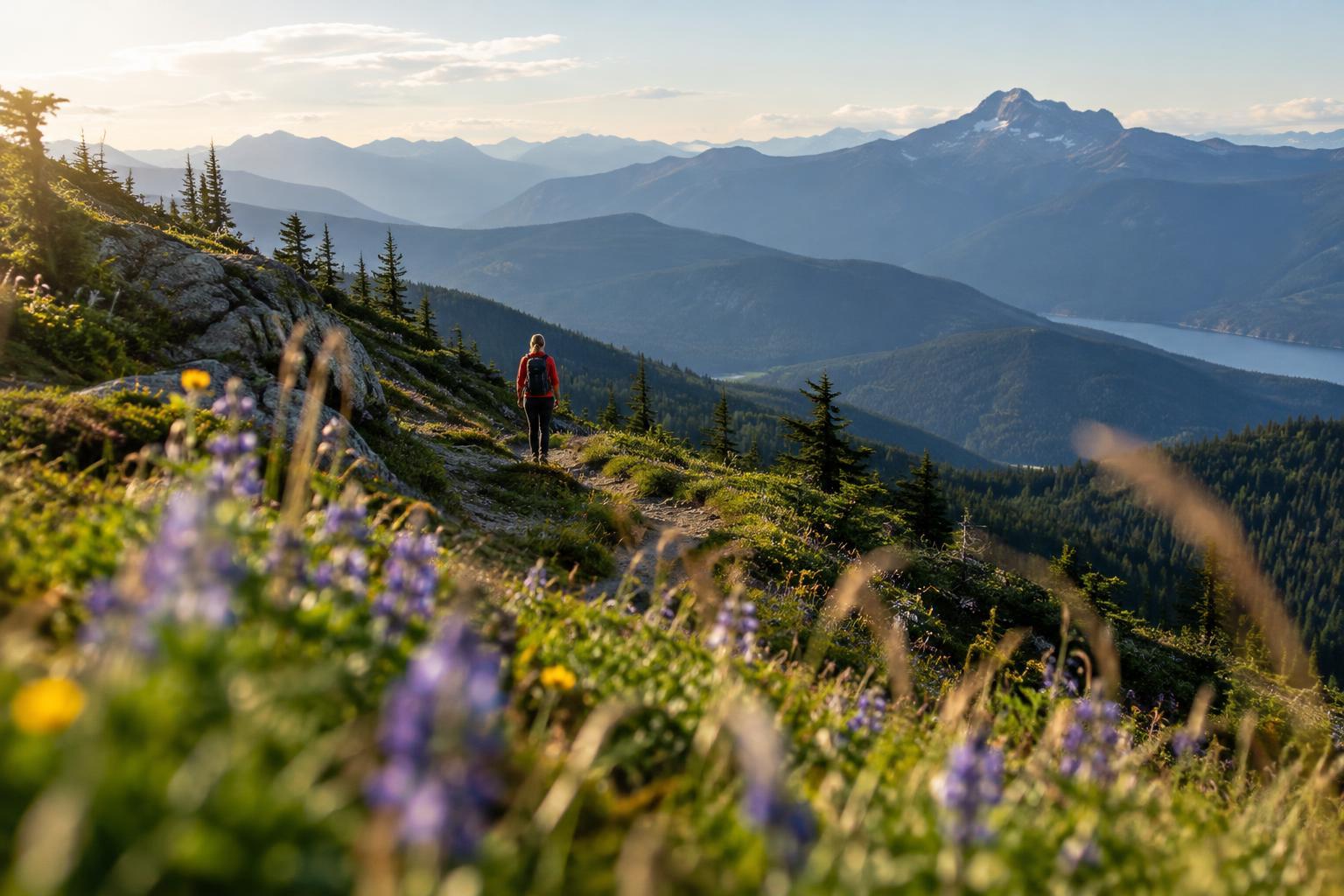
When you notice a subject worth photographing, it is tempting to point the camera straight at it and stop there. Before pressing the shutter, look at the space between you and the subject, then beyond it. These areas can become three useful layers: foreground close to the camera, middle ground where the main subject often sits, and background behind it. A photograph does not need an obvious object in every layer, but considering all three helps you decide what belongs in the frame.
Depth is partly a matter of visual clues. Overlapping shapes suggest that one thing is in front of another. Objects that appear smaller or less distinct can seem farther away. A path or row of buildings can guide the eye into the scene. Your job is not to add as many clues as possible; it is to choose a few that make the subject easier to find and the setting easier to understand.
Give the foreground a purpose
A foreground element can invite the viewer into a scene. For a portrait, that might be the soft edge of a nearby doorway. For a landscape, it might be a rock that establishes where the viewer is standing. Move around and watch how the foreground changes in relation to the subject. Even a small step can turn an awkward obstruction into a frame or remove it altogether.
Foregrounds work best when they contribute something: a sense of place, a line leading inward, a contrast in size, or a frame around the subject. If a bright object near the camera draws more attention than the subject, try changing your angle or cropping it out. Blurring a foreground object can make it less demanding, but blur alone will not make an unrelated object useful. Look at its shape and placement as well as its sharpness.
Keep the middle ground readable
The middle ground often carries the main action. It could hold a person crossing a square, a tree beside a trail, or a cup on a table. Give that subject enough separation from nearby shapes to make its outline legible. Check for poles, branches, or strong edges that appear to grow from it. Shifting left, right, higher, or lower may solve the problem without changing lenses.
You can also create separation with focus and light. Focusing on the subject while allowing nearer and farther elements to soften can establish a clear point of attention. Alternatively, keeping the whole scene sharp can work when the layers have distinct shapes and do not overlap confusingly. A patch of light on the subject against a darker background can help it stand out, but watch whether a brighter patch elsewhere pulls the eye away.
Make the background support the story
A background is more than empty space behind the subject. It can explain where an image was made, provide a pleasing color, or reinforce a pattern. In a travel photograph, a recognizable street setting may be worth keeping reasonably clear. In a close portrait, a simpler or softer background may give an expression more room. Neither approach is automatically better; choose according to what the photograph needs to communicate.
Inspect the edges of the frame and the space immediately behind your subject. Small distractions are easy to miss while you are concentrating on a face or a striking view. Try moving the subject, moving yourself, or waiting for a passerby to clear the scene. If the background still competes, a wider aperture may soften it, though the amount of blur also depends on distances and focal length. Placing more space between subject and background can make a difference without changing any camera settings.
Practice with one scene and three viewpoints
Choose a safe, unhurried location with a clear subject, such as a bench in a park or a plant by a window. Make one photograph from where you first stand. Then find a foreground element and make a second image with it in the frame. For a third image, change your camera height or move a few steps so the foreground, subject, and background overlap differently. Keep the subject recognizable in all three.
Compare the images at the same viewing size. Where does your eye go first? Does the foreground lead toward the subject or block it? Does the background add context or clutter? Repeat the exercise with a different subject, this time deciding in advance whether you want a strong sense of place or a quieter image. Building depth is not about filling every layer. It is about arranging the layers so they give the viewer a clear path through the photograph.