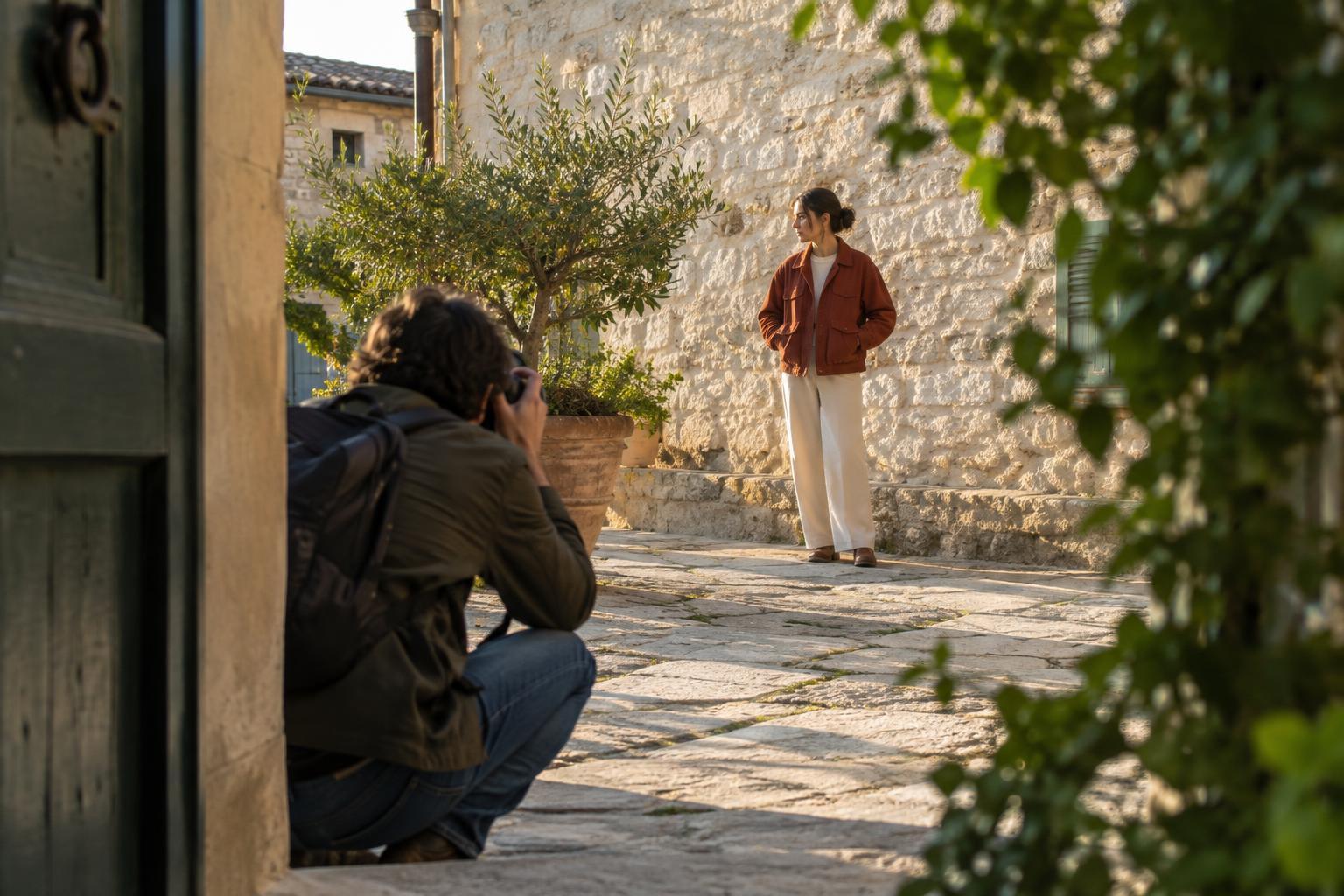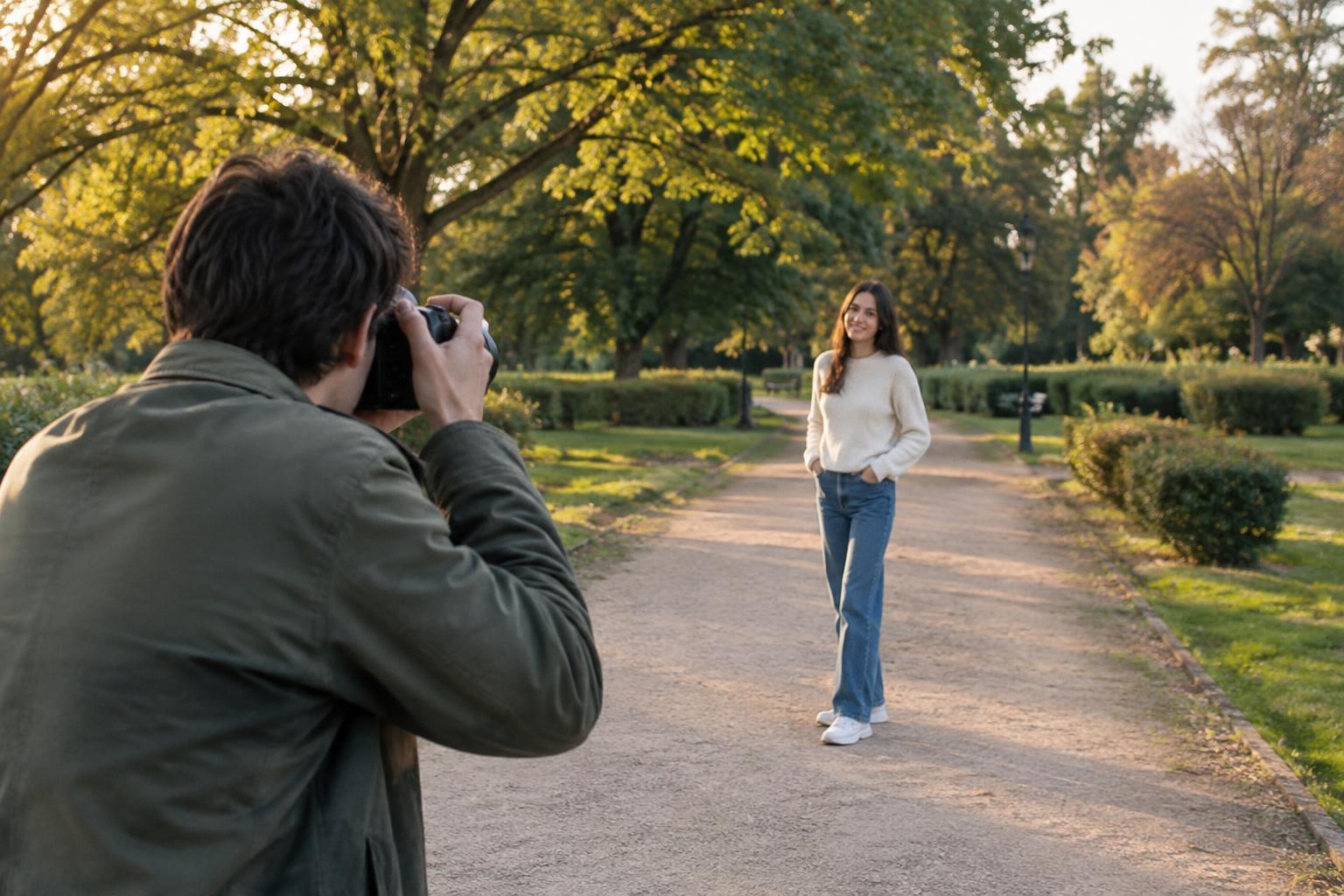
The frame is part of the composition
Aspect ratio describes the relationship between a frame’s width and height. A square image has equal sides; a 3:2 image is wider than it is tall when held horizontally. Changing that shape does more than remove pixels from the edges. It changes how much room a subject has, which details sit near the boundaries, and the path a viewer’s eye can take through the photograph.
Imagine a person standing at the end of a quiet street. A wide frame can include the buildings and make the person feel small within a larger setting. A tall frame can follow the lines of the buildings upward and give the person a stronger presence near the bottom. A square can bring the person and surrounding shapes into a more compact relationship. None is automatically better: each suggests a different point of emphasis.
What wide, square, and tall frames encourage
A wide frame gives horizontal relationships room to develop. It can help a coastline, a row of windows, or two people separated by space feel connected within one view. That extra width also needs attention. If the sides contain unrelated signs, bright patches, or empty areas with no purpose, they may compete with the subject rather than establish a setting.
A square frame often makes placement and shape especially noticeable. With less horizontal or vertical reach, it can suit repeating patterns, centered subjects, and small groups of elements that balance one another. It does not require symmetry, though. An off-center subject can feel lively when another shape or an area of negative space gives it something to play against.
A tall frame can emphasize height, depth, or a sequence from foreground to background. It may work well for a doorway, a full-length portrait, or a path leading toward a distant subject. Because the sides are narrower, objects that were useful context in a wide shot may disappear. Check whether that tighter view strengthens the story or removes information the viewer needs.
Look at the edges, not just the subject
When you change aspect ratio, first ask what the new edges do. Does a crop cut through a person’s hand, a prominent shadow, or the tip of a recognizable object? Does it leave a thin strip of something distracting along one side? Small edge decisions can make a frame feel deliberate or accidental, even when the main subject remains in the same place.
Next, notice the space around the subject. In a portrait, space in the direction someone is looking can suggest attention beyond the frame. Less space can make the same gaze feel constrained. In a landscape, a broad band of sky may convey openness, while trimming it can direct attention to textures on the ground. Cropping changes these relationships, so compare versions at the same viewing size instead of judging only by how tightly they fill your screen.
Aspect ratio can also alter the apparent rhythm of an image. A long frame may let repeating trees or columns unfold gradually. A square may compress that repetition into a pattern. If a frame feels awkward, try moving your position or changing camera orientation before relying on a crop. A few steps can change how elements overlap and give you cleaner choices later.
Choose a ratio before and after the shutter
It helps to know where a photograph might be used, but the intended display should not be your only guide. If you need both a wide image and a tall one, photograph with extra room around the important elements when possible. Keep faces, hands, signs, and other essential details away from the outermost edges. Then make a second composition designed specifically for the alternate shape. One loose frame cannot always do the work of two considered photographs.
Some cameras let you preview a chosen aspect ratio. This can help you compose decisively, but check whether the camera saves the full captured area or applies a crop to the file you plan to edit. In an editing app, try a few ratios before fine-tuning the crop. Straighten the image first, since straightening can remove more of the edges. Finally, look away briefly and return to ask a simple question: what do I notice first now?
A three-frame exercise
Find a scene with a clear subject and meaningful surroundings, such as a chair beside a window or a person at the edge of a courtyard. Make three photographs: one wide, one square if your camera offers that preview, and one tall. Change your camera orientation or your position rather than only cropping the first shot. Try to make each frame feel complete on its own.
Review the images without asking which ratio you usually prefer. Instead, write one sentence about what each photograph seems to be about. Perhaps the wide image is about the room, the square image about the chair and window together, and the tall image about the light falling across the chair. If those sentences differ, you have seen aspect ratio doing compositional work. Repeat the exercise with a moving subject, where changing your frame quickly may reveal which surrounding details are truly essential.