Start with an action, not a hand position
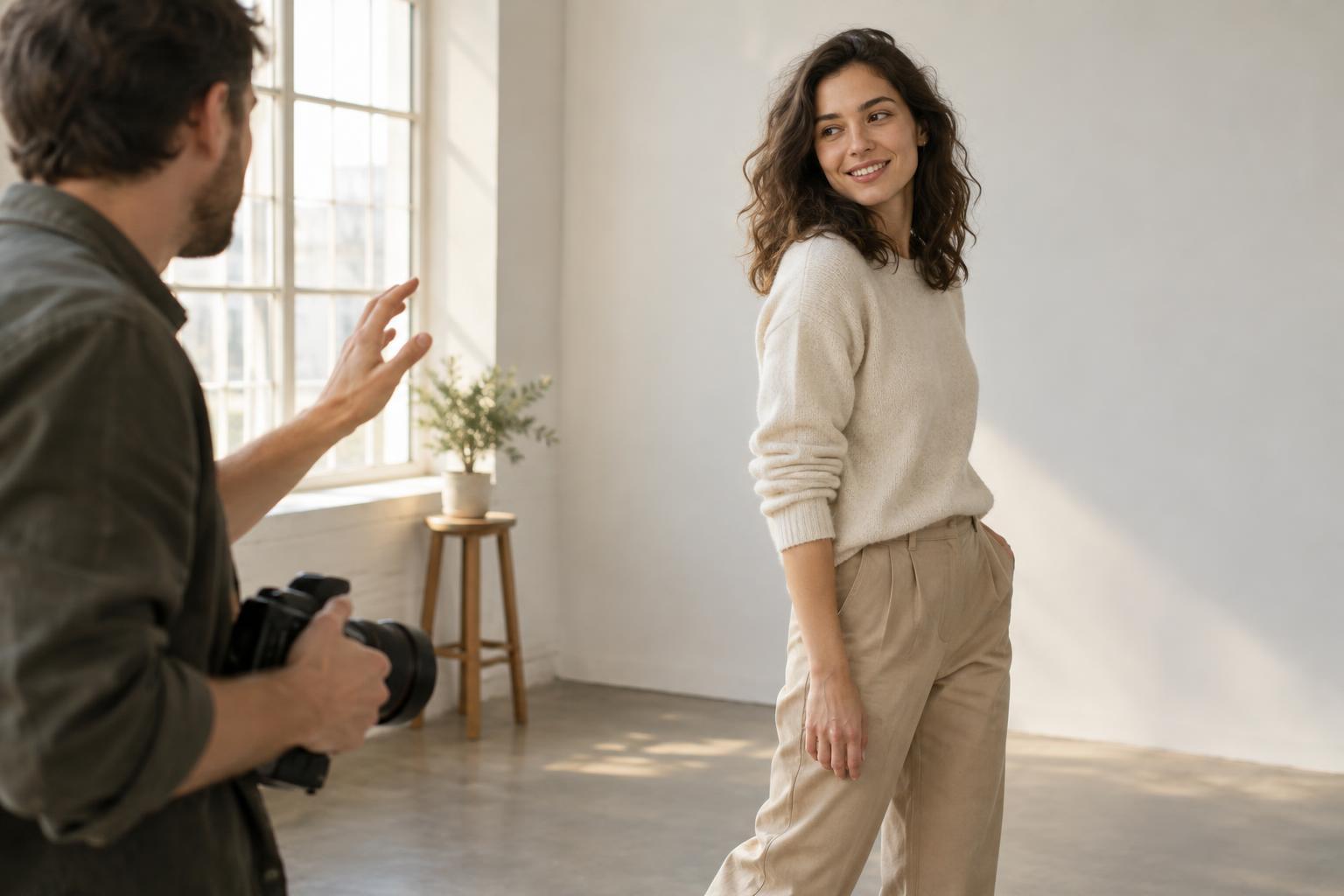
When someone asks, “What should I do with my hands?” a precise instruction such as “put your left hand on your hip” can solve the immediate problem but create a new one: a pose that looks held in place. Instead, give the person a small action. Ask them to adjust a sleeve, rest a hand on a chair, or loosely hold the strap of a bag. An action gives the hands a reason to be visible and often helps the shoulders relax too.
Choose actions that suit the person and the setting. A musician might hold an instrument; someone at home might lean on a kitchen counter. You do not need a meaningful object in every frame. Resting one hand in a pocket can be enough, especially if the other arm hangs comfortably. Try the action, take a few frames, then let the person move out of it rather than asking them to freeze.
Give each hand a different job
Hands do not have to match. In a standing portrait, one hand can rest in a pocket while the other lightly touches a jacket or hangs at the side. In a seated portrait, one hand might rest on a knee while the other supports an elbow. These small differences create a more relaxed shape than placing both hands in identical positions.
Look for places where a hand can make gentle contact without pressing hard. A palm flattened against a cheek can change the face’s shape; fingertips resting near the jaw may preserve it better. Likewise, a tight grip on a sleeve can draw attention to tension in the fingers. Invite the person to release their grip, shake out their hands, and settle again. If a gesture feels awkward to them, change it. Comfort usually reads more convincingly than an elaborate pose.
Use the frame to decide how much hand to show
A hand near the face will attract attention because viewers naturally look at faces and nearby gestures. That can work well when the gesture adds character, but check that fingers are not covering an expression or creating an unexpected shape beside the head. For a quieter portrait, keep the hands lower or farther from the face. For a detail-focused portrait, let them become part of the story by holding or working with something relevant.
Check the edges of the frame before you shoot. An arm that enters from the side with no visible connection to the body can look puzzling, and fingers cut off at the frame edge may feel accidental. You can include more of the arm, adjust your camera position, or crop above the hand entirely. Be especially attentive when changing from a full-length portrait to a tight crop: the hand pose that worked in one framing may not work in the other.
Direct with simple, flexible prompts
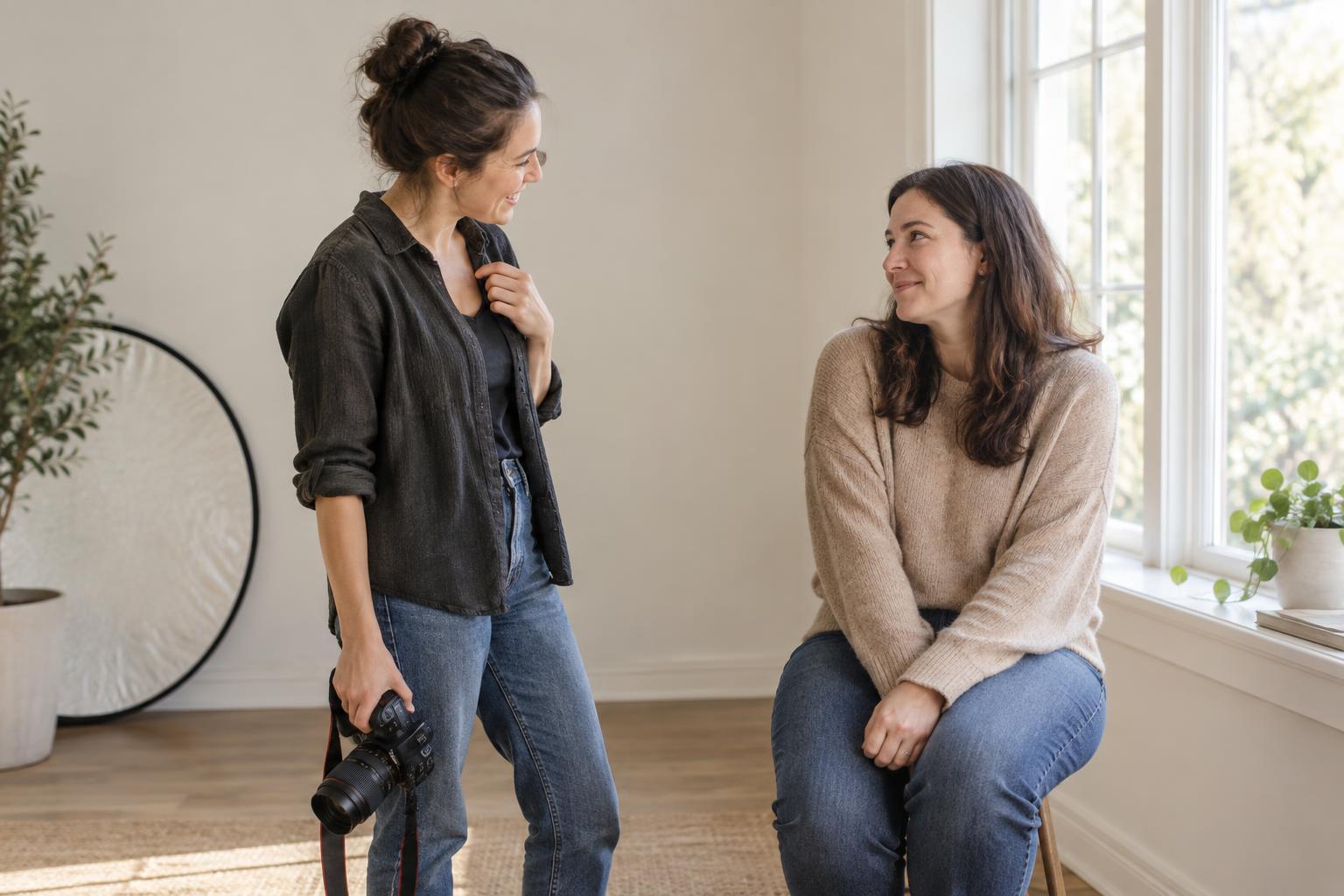
Give one instruction at a time and describe an easy movement rather than an exact arrangement of every finger. You might say, “Lean your forearm on the table,” then, once that feels comfortable, “Let your fingers relax.” Show the movement yourself if words are unclear. Take a photograph between adjustments so the session feels like a conversation, not a series of corrections.
Pay attention to what the person does naturally while listening or talking. They may fold their arms, tuck a hand into a pocket, or rest it on a railing without being asked. If that gesture fits the portrait, invite them to repeat it loosely. Ask before directing someone to touch their face, clothing, or another person, and offer an alternative when a pose does not feel right. The goal is to help them look like themselves, not to impose a standard gesture.
Practice with a short hand-pose sequence
For a useful exercise, make five portraits in the same spot with the same framing. Begin with both arms resting naturally. Then try one hand in a pocket, one hand touching clothing, a hand resting on a nearby surface, and a simple object held loosely. Keep the light and camera position similar so you can see how each gesture changes the picture. Ask the subject which version feels most like them.
When reviewing the images, look at the portrait at normal viewing size before inspecting details. Does your eye go to the face or to a tense hand? Do the fingers look comfortable? Is a hand cropped in a distracting place? Make one small adjustment and shoot again. A dependable approach is not to memorize a list of poses, but to notice what each person’s hands are already inclined to do and give that movement a clear place in the frame.