What changes when you move a light?
Move a lamp closer to a subject and the subject gets brighter. The change is not linear: for a small light radiating outward, doubling the distance leaves roughly one-quarter as much light on a surface facing it. That is a loss of two stops. Halving the distance gives roughly four times as much light, or a gain of two stops. This relationship is called the inverse square law.
It is a useful starting point, not a promise that every photograph will follow the numbers exactly. A softbox, window or LED panel has a visible size rather than behaving like a tiny point of light. Reflected light from walls can fill shadows, and a modifier may direct light unevenly. Still, the central lesson holds in practice: distance strongly affects how much light reaches different parts of a scene.
Brightness and falloff are different questions
Brightness describes how much light reaches one place. Falloff describes how quickly that brightness changes across a scene. Imagine a portrait with a light one metre from the subject and a background another metre behind them. The background is about twice as far from the light as the subject, so direct illumination on it could be much weaker. Now move the light back so it is three metres from the subject and four metres from the background. The background is still one metre farther away, but that extra metre is a smaller fraction of the total distance. Direct light on the two areas will be more similar.
This is why a nearby light can help a subject stand out against a darker background, while a more distant light can make a group or tabletop look more evenly lit. The comparison concerns distance from the light, not distance from the camera. It also assumes the light is aimed toward both areas; changing its angle or adding a grid can alter the background independently.
Use close light for separation, distant light for consistency
For a simple portrait, place a diffused lamp or softbox close to your subject and keep the subject away from the wall. Expose for the face, then look at the wall. If it is too dark, move the subject nearer to it, add a separate background light or allow more ambient room light into the exposure. If the wall is too bright, increase the subject-to-wall distance where space permits, or aim the light so less of it reaches the wall.
When photographing two people standing at different distances from a light, moving that light farther away can reduce the difference in illumination between their faces. You may need more light output, a wider aperture or a slower shutter speed to maintain the exposure. For a row of objects, check both ends of the arrangement rather than judging brightness only at the centre.
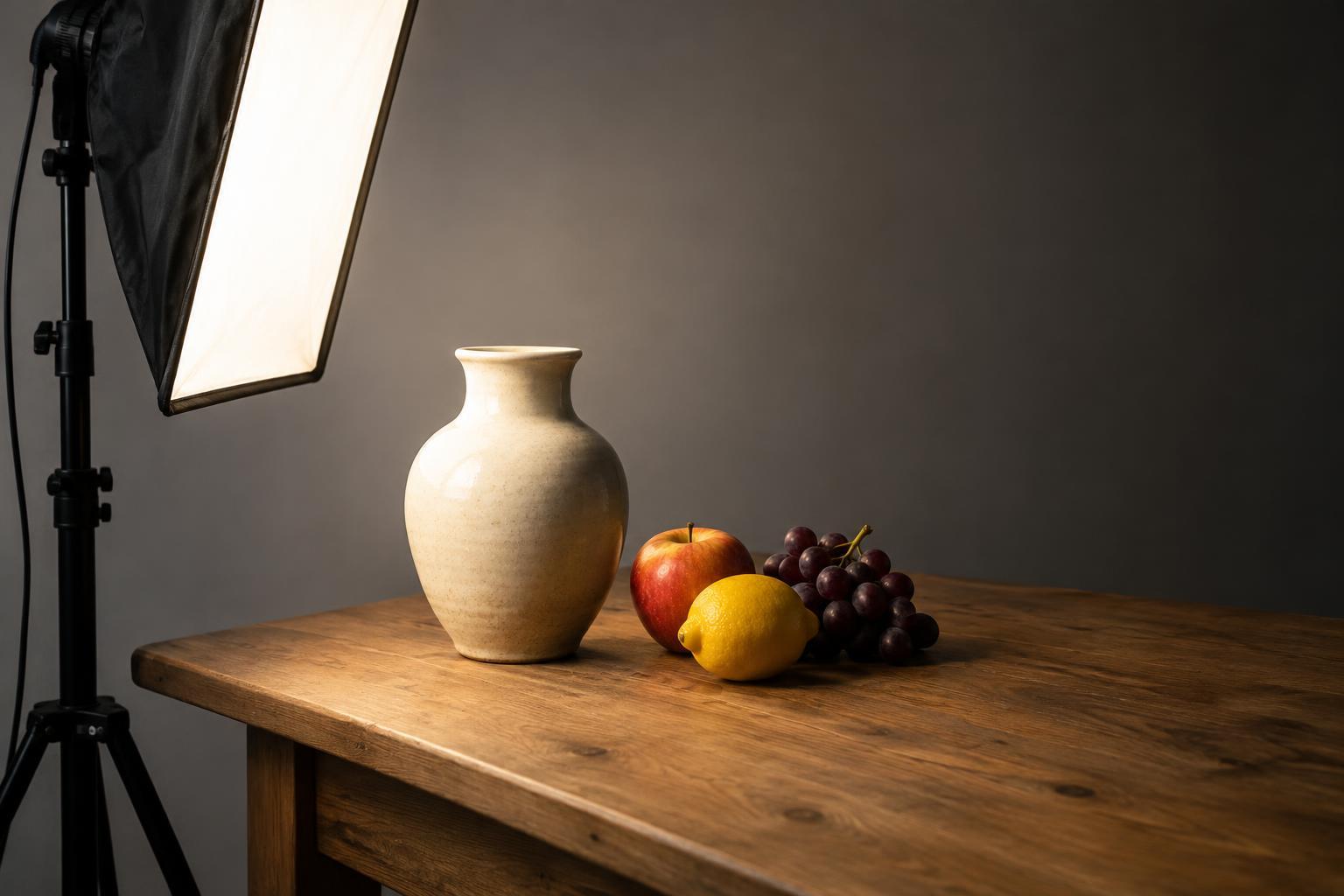
Moving a light also changes its apparent size: the same softbox appears larger to a subject when it is close. That often makes shadow edges softer, while the stronger falloff makes illumination less even across the space. Softness and falloff are related to the setup, but they are not the same thing. A close, soft light can produce gentle shadows on a face and still leave a nearby wall comparatively dark.
Know when the rule needs a lighter touch
Distance calculations are most straightforward for a small source in an open space, with surfaces facing the light. Near a large window or softbox, different parts of the source sit at different distances from the subject, so a neat quarter-brightness prediction may not fit. A white ceiling or wall can act as another source after light bounces from it. Use the rule to choose a starting position, then inspect the image or take a meter reading at the places that matter.
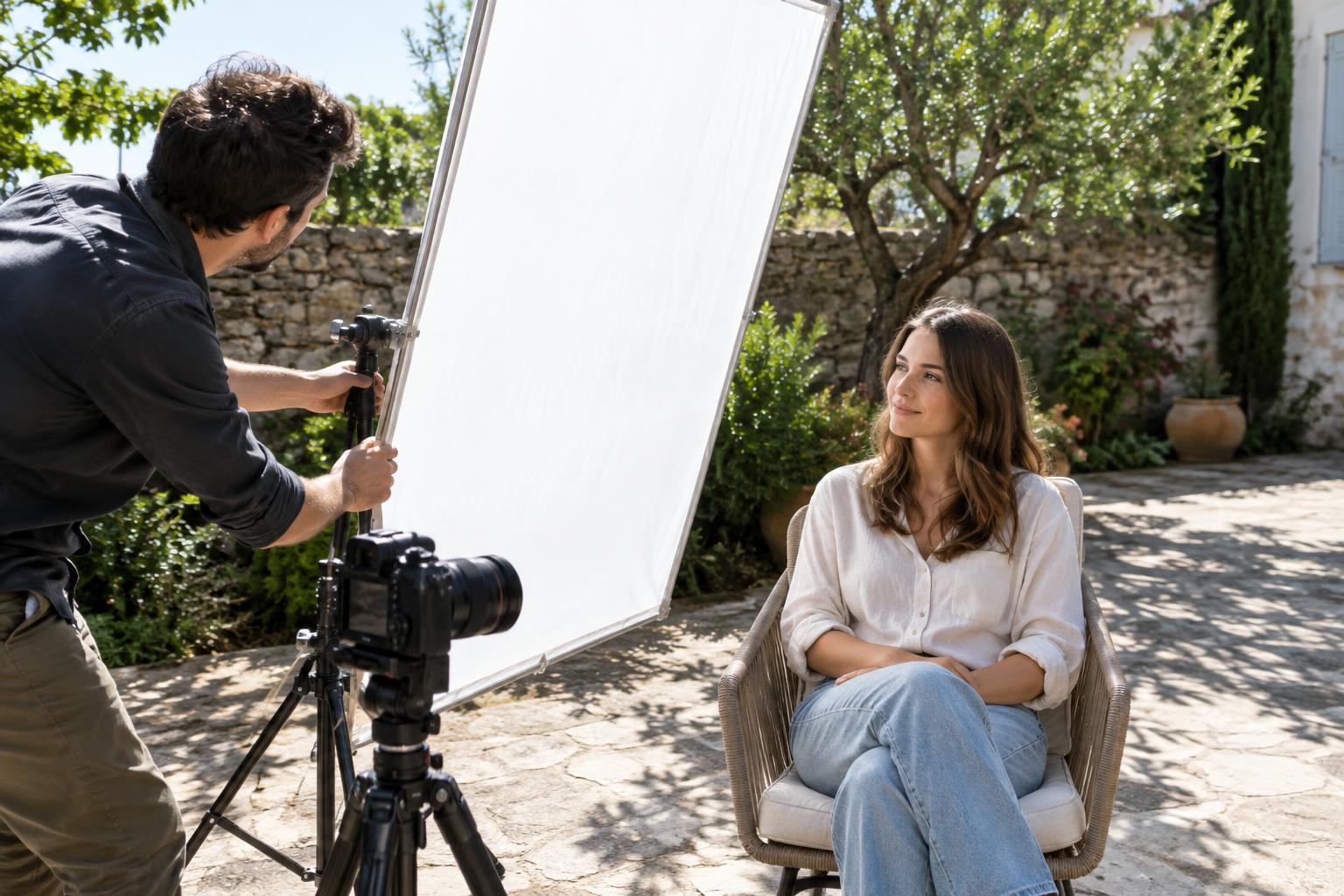
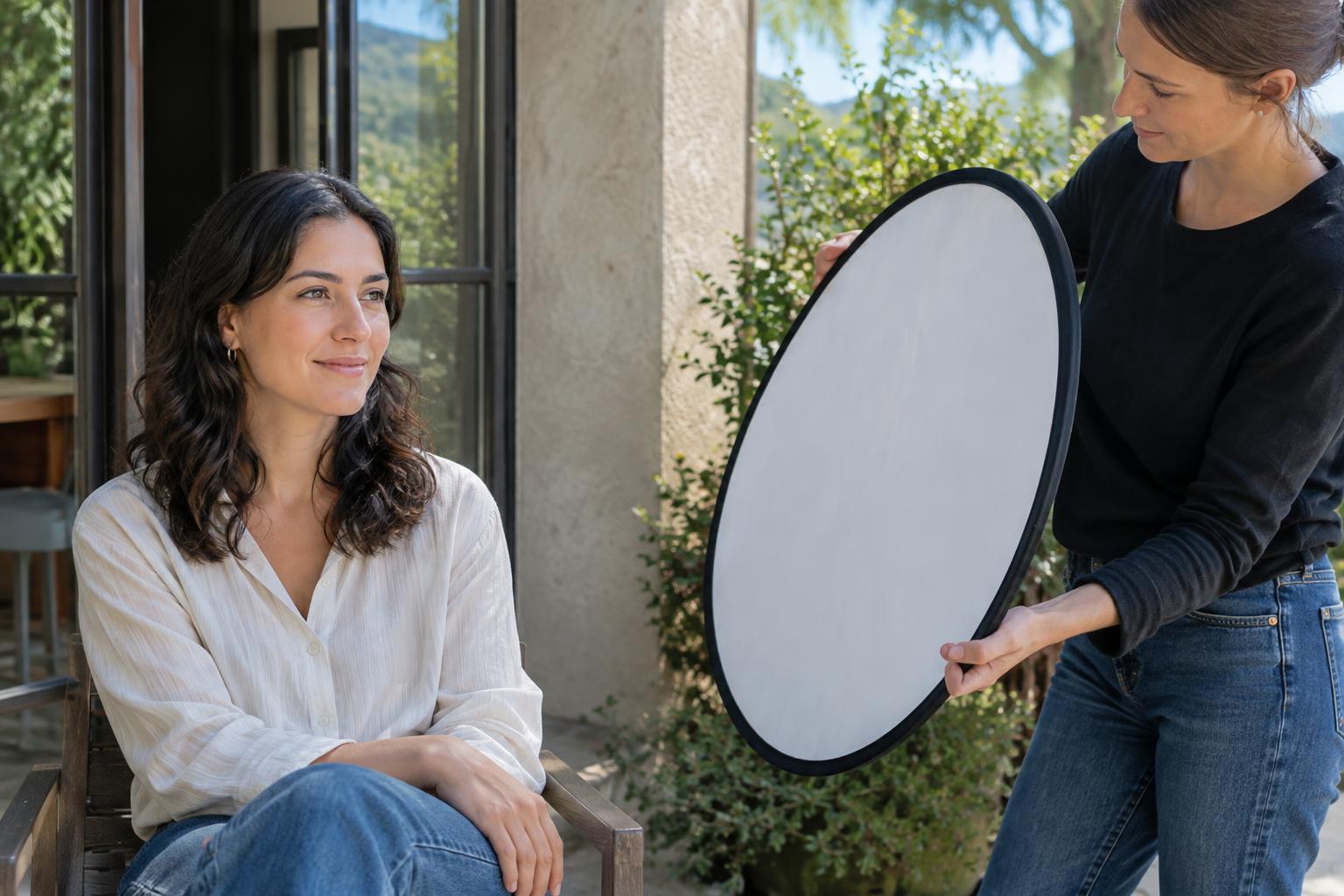
Sunlight is another useful exception in everyday photography. The sun is so far away that moving a person a few steps closer to or farther from it makes no meaningful difference to illumination. Outdoors, shade, clouds, nearby surfaces and the sun’s angle matter far more than those few steps. Moving a subject closer to a shaded wall or a reflector, however, can noticeably change the light those nearer sources contribute.
A short exercise to make falloff visible
Set a lamp to a fixed output in a room where you can limit other light. Put one object about one metre from the lamp and a second object one metre farther away, keeping both within the beam. Lock your camera’s exposure settings and take a photograph. Then move the lamp farther back without moving the objects, adjust exposure to make the nearer object look about as bright as it did before, and photograph them again.
Compare the brightness difference between the objects, not just the overall exposure. The farther-back lamp should generally make them look more evenly lit. Repeat with a window, a softbox or a bounced light and notice where the result differs. That comparison is more valuable than memorising a formula: it gives you a way to choose light distance deliberately when a scene needs either dramatic separation or steady illumination.