Plan for exposure, not just the forecast
A short walk through drizzle and a day beside breaking waves present different risks. Rain can reach buttons, seams, and open ports; wind can carry grit into moving parts; salt spray can leave a corrosive residue even when the camera never looks soaked. Before setting out, consider where you will shoot, how easily you can find shelter, and whether you will need to change lenses outdoors. A simple plan is more useful than assuming one cover will handle every condition.
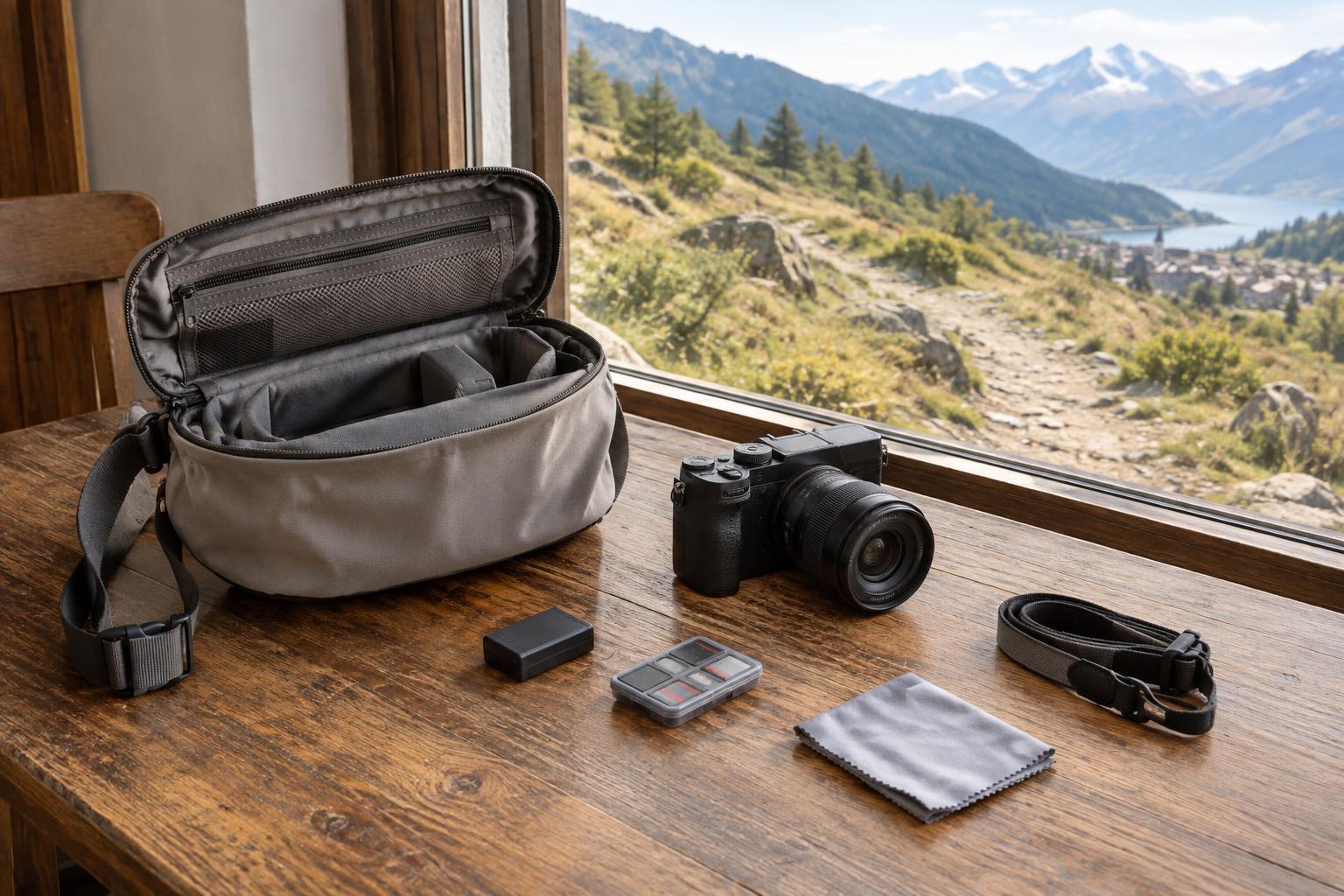
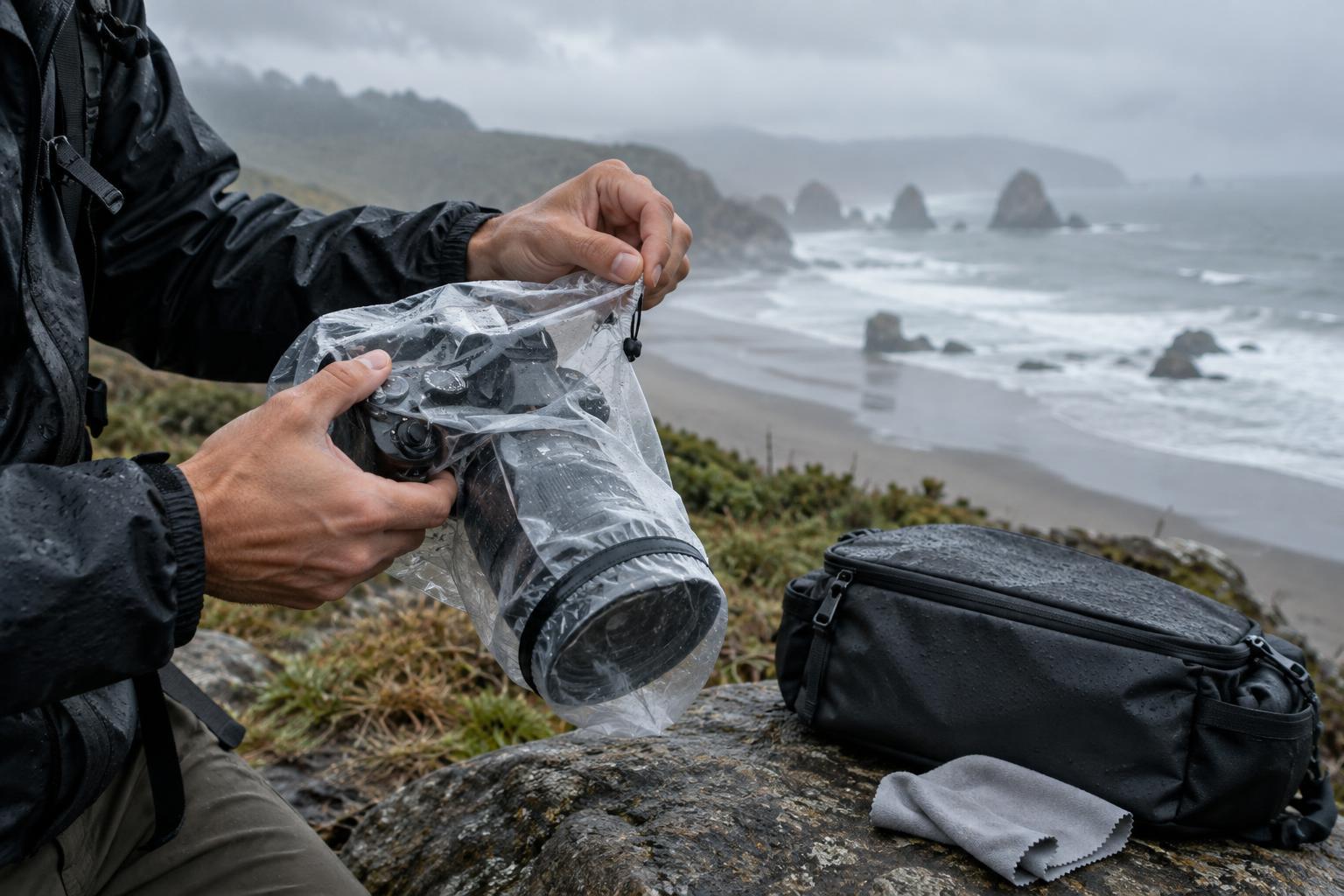
Pack a rain cover or a sturdy plastic bag that can shield the camera while leaving you access to the controls you need. Add clean microfiber cloths, a soft blower, spare dry bags or resealable pouches for accessories, and a separate place to stow wet items. Keep a dry cloth in an accessible pocket rather than at the bottom of your luggage. Check your camera and lens manuals for the maker’s care instructions: weather-resistant construction varies, and it does not make equipment waterproof.
Keep rain off openings and working surfaces
In rain, protect the camera before the first drops collect on it. Fit the cover under shelter if you can, point the lens downward when you are not making a photograph, and keep the camera strap arranged so it does not channel water toward the body. A lens hood can help keep drops off the front element, though it cannot protect the whole setup. Wipe water from the outside of the cover occasionally so it does not spill onto the camera when you remove it.
Avoid opening the battery door, card slot, or lens mount in the rain. If you must change a lens, step indoors or into a genuinely dry, sheltered spot first. When you finish, remove visible moisture with a clean cloth and let the gear dry in a ventilated place before sealing it in a bag for storage. If water appears to have entered the camera, turn it off and follow the manufacturer’s guidance rather than repeatedly testing whether it still works.
Treat blowing sand as an abrasive
Sand is easiest to manage while it is still outside the bag. Close compartments promptly, keep the camera off the ground, and avoid setting a backpack on a windy beach with its opening facing upward. If conditions are especially gritty, consider working with one mounted lens instead of swapping lenses. A zoom may reduce lens changes, but any extending barrel also deserves care around airborne particles.
Before wiping a sandy surface, use a hand blower to lift loose grains away. Rubbing grit across glass, screens, or a filter can scratch them. Brush sand gently from the outside of the body and the bag, keeping it away from buttons and openings. Do not direct a forceful jet of air into seams or the lens mount; it may drive particles farther inside. If a control grinds or a lens mechanism resists movement, stop using it rather than trying to work the sand out by force.
Give salt spray its own cleanup routine
Near the sea, fine droplets can settle on gear without a noticeable splash. Use a cover when spray is blowing toward you, and move back or change your angle if waves begin reaching your position. The photograph is rarely worth exposing an uncovered camera to repeated spray. Keep salty outerwear and cloths separate from clean equipment so you do not transfer residue while packing.
After shooting, remove loose particles first, then wipe the camera’s exterior with a soft cloth lightly dampened with fresh water. The cloth should not drip, and water should not be pushed toward seams, ports, or switches. Dry the exterior with a second cloth. Clean the front element using lens-safe materials and the lens maker’s guidance; avoid rubbing a crust of salt across the glass. Do not rinse or immerse a camera or lens unless its manufacturer explicitly says that is safe. If spray reaches an open port or the interior, consult the care instructions or a qualified repair service.
Build a repeatable return-to-base habit
Protection continues after the shoot. Inspect the bag’s exterior before bringing it onto a clean table, and give damp gear time to dry before long-term storage. Moving from cold outdoor air into a warm, humid room can cause condensation; leaving the camera in a closed bag briefly while it warms gradually may help limit moisture forming on its surfaces. Once it has adjusted, unpack and check the camera, lens, strap, and accessories for remaining dampness or grit.
Practice the routine on an ordinary trip: pack your cover where you can reach it quickly, identify a sheltered place for lens changes, and rehearse covering and uncovering the camera without touching the front element. When poor conditions arrive, you will spend less time improvising and more time deciding whether it is sensible to keep shooting. The aim is not to make gear invulnerable, but to reduce avoidable exposure and recognize when it is time to put it away.