Start with the people, not the pose
Before directing a couple, ask what feels like them. Some people are comfortable holding hands or leaning close; others would rather show affection through conversation or a shared activity. Ask whether there are gestures they enjoy and any they would prefer to skip. Their answers give you a starting point and make it easier to guide them without asking for intimacy they do not want to perform.
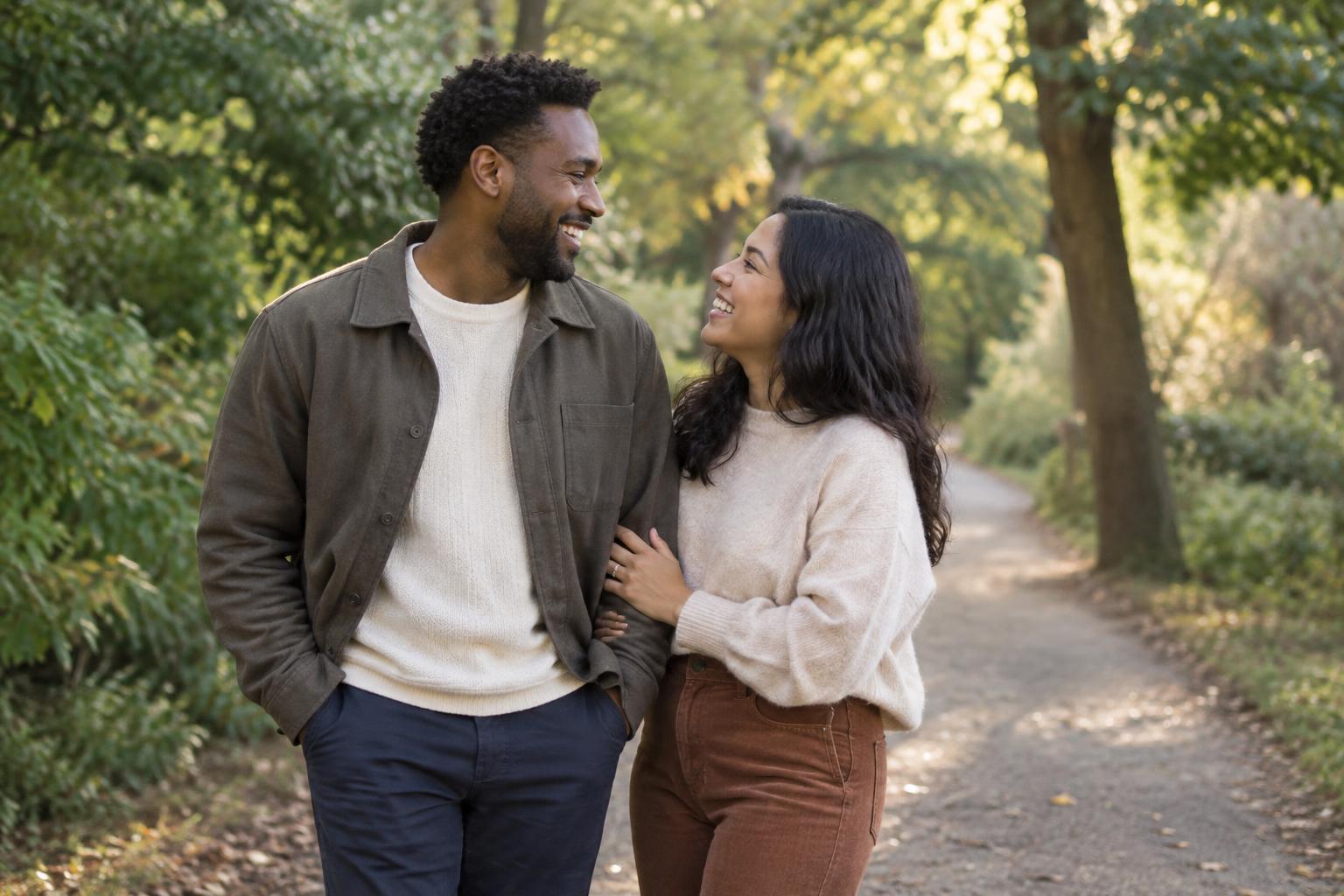
Begin with a simple arrangement: have them stand or sit near each other, then ask each person to turn slightly toward the other. Give them a moment to settle before taking a picture. Notice how they naturally use their hands, where they look and how much space they leave between them. A pose that reflects those habits will often feel more convincing than one built around a fixed idea of what a couple should look like.
Give prompts that create something to respond to
Instructions such as “look natural” leave people guessing. Give the couple a small task instead: walk together at an easy pace, tell each other about a favorite shared place, or take turns making the other person laugh. Photograph both the action and the quieter moment after it. A prompt gives their attention somewhere to go, while you remain free to refine the composition.
Keep prompts specific and low-pressure. You might ask one person to rest a hand on the other’s shoulder, then check whether it feels comfortable. If it does not, try linked arms or hands resting side by side. Avoid insisting on a reaction or repeating a joke until it feels staged. When something genuine happens, let it finish before giving the next direction. Brief pauses can produce portraits with calm expressions as well as lively ones.
Build a pose from distance, hands and eyelines
Small adjustments can change the story of a portrait. Bring the couple close enough that their shoulders touch, and you emphasize togetherness; leave a little room between them while they exchange a look, and the space becomes part of the composition. Try one person facing the camera while the other looks toward them, then have them switch. These variations offer different ways to show connection without changing locations.
Hands deserve attention because they can look uncertain when people are concentrating on the camera. Give each hand a comfortable place to be: holding a partner’s hand, resting lightly on an arm, or tucked into a pocket. Watch for fingers hidden behind a back or hands pressed awkwardly against clothing. Rather than stopping the session for every detail, make one adjustment at a time and show the couple what you mean. Clear, gentle direction is easier to follow than a long list of corrections.
Use light and framing to support the relationship
Look for even light on both faces, particularly when the couple is facing each other. Open shade or light from a large window can make expressions easier to see without asking them to squint. If one face falls into deep shadow, rotate the pair together or shift your own position before changing the pose. Check the background for bright distractions and objects that appear to grow out of a head.
Make a few frames from each setup rather than relying on one crop. A wider photograph can include the place they chose and the space between their bodies; a closer one can concentrate on expressions and hands. A standard or short telephoto lens can help you work at a comfortable distance, but use whatever lens lets you communicate easily and avoid crowding them. Leave enough room around moving hands and heads so an unplanned gesture stays in the frame.
Practice a short sequence, then look for what works
For a manageable exercise, make a five-minute sequence in one spot. Start with the couple standing side by side. Ask them to turn toward each other, walk a few steps together, stop, and share a quiet conversation. At each stage, take a wide frame and a closer frame. Change only one direction at a time so you can see whether distance, eyeline or movement made the stronger photograph.
Afterward, review the pictures for more than sharpness. Which frames show both people engaged? Where do hands look relaxed, and where does a pose seem to interrupt them? Share a few promising images with the couple during a longer session and invite their reactions. Their favorite may not be the most polished frame; it may be the one that feels most familiar. Let that response guide the next set of portraits.