Start with the photograph, then check the tide
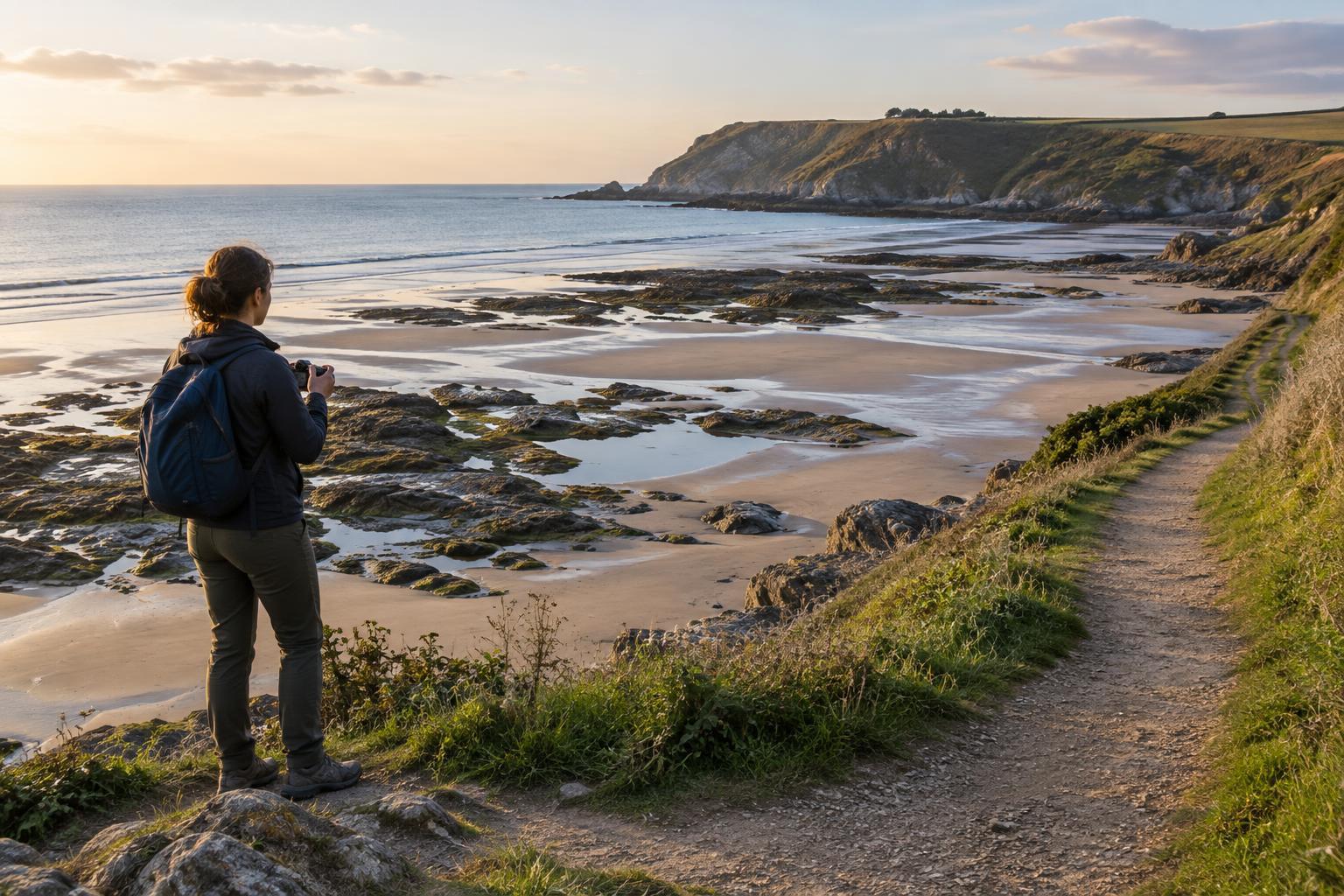
The tide changes more than the amount of beach available. Lower water may reveal rock patterns, tidal pools, and a broader foreground. Higher water can simplify a scene, bring reflections closer to a sea wall, or place waves against a headland. Before choosing an arrival time, decide what you hope to photograph. A wide view of exposed sand calls for a different plan from a study of water moving around a single rock.
Look up tide predictions for the location and date you intend to visit, then compare them with a map or a previous photograph of the area. Predictions help you anticipate water level, but they do not show exactly where you can stand or how waves will behave. Weather, swell, shoreline shape, and local conditions all matter. Treat a planned composition as an idea to explore, not a reason to press on when the setting looks different.
Plan access before you plan the frame
Find a legal, established way to reach the shore and identify a return route before walking toward the water. A beach that looks open on arrival may narrow as the tide rises. Headlands, coves, and stretches below cliffs deserve particular care because a retreating route may not be obvious from your shooting position. Check local access notices and conditions, and avoid entering closed or restricted areas for a better angle.
Give yourself generous time to get back without rushing, and keep reassessing the route while you photograph. Do not assume that a predicted low tide means a crossing will remain comfortable or safe; moving water, slippery rock, and unexpected waves can complicate even a short walk. If you cannot tell whether you will be able to return by the same route, choose a viewpoint with more dependable access. There will be other photographs.
Build a flexible shot list
A short shot list makes it easier to respond when the shoreline changes. Pick one wide view that shows the place, one middle-distance composition with a clear subject, and one detail such as wet stone, foam, or reflected light. Note where you might stand for each, but be willing to photograph from farther back if the water or footing makes your first choice unsuitable. A longer lens can help isolate a feature without moving closer to the edge.
Think about light alongside the tide rather than treating either as the only deciding factor. Low-angle light may emphasize texture across exposed sand, while overcast conditions can make subtle colors and patterns easier to see. If your preferred water level falls at an inconvenient time, try a different subject instead of forcing the original idea. Repeating the same three-shot exercise on later visits can show you how much the coast changes.
Pack for movement and protect your attention
Carry equipment you can manage while walking on uneven ground. A camera with one versatile lens is often more useful than a heavy bag of options when you need to move promptly. A lens cloth can help with spray, and a simple cover or dry bag can protect equipment between shots. Wear footwear appropriate to the access route, but do not mistake sturdy footwear for a guarantee of grip on wet rock.
Set up away from incoming water when possible, and secure straps and loose items before composing. A tripod can be useful for deliberate framing or longer exposures, but it can also slow your departure and may be unstable in sand or moving water. Keep your bag and tripod where you can retrieve them without stepping toward a wave. If the scene demands constant attention to your gear or footing, move back and simplify the photograph.
Use the visit to improve the next plan
Before leaving, make a few notes about what you actually observed: where the water reached, which paths stayed open, where the light fell, and which viewpoints felt comfortable. Record enough context to make the notes useful later, such as whether the visit was near a predicted high or low tide. Your observations are a guide to that visit, not proof that the same spot will behave identically next time.
Back home, review the photographs for both composition and decision-making. Did a simpler foreground work better than a crowded one? Could you have made the frame from a more secure position? The most useful coastal plan leaves room for both kinds of improvement. Tide information helps you arrive with possibilities in mind; careful observation helps you decide which of those possibilities are worth pursuing.