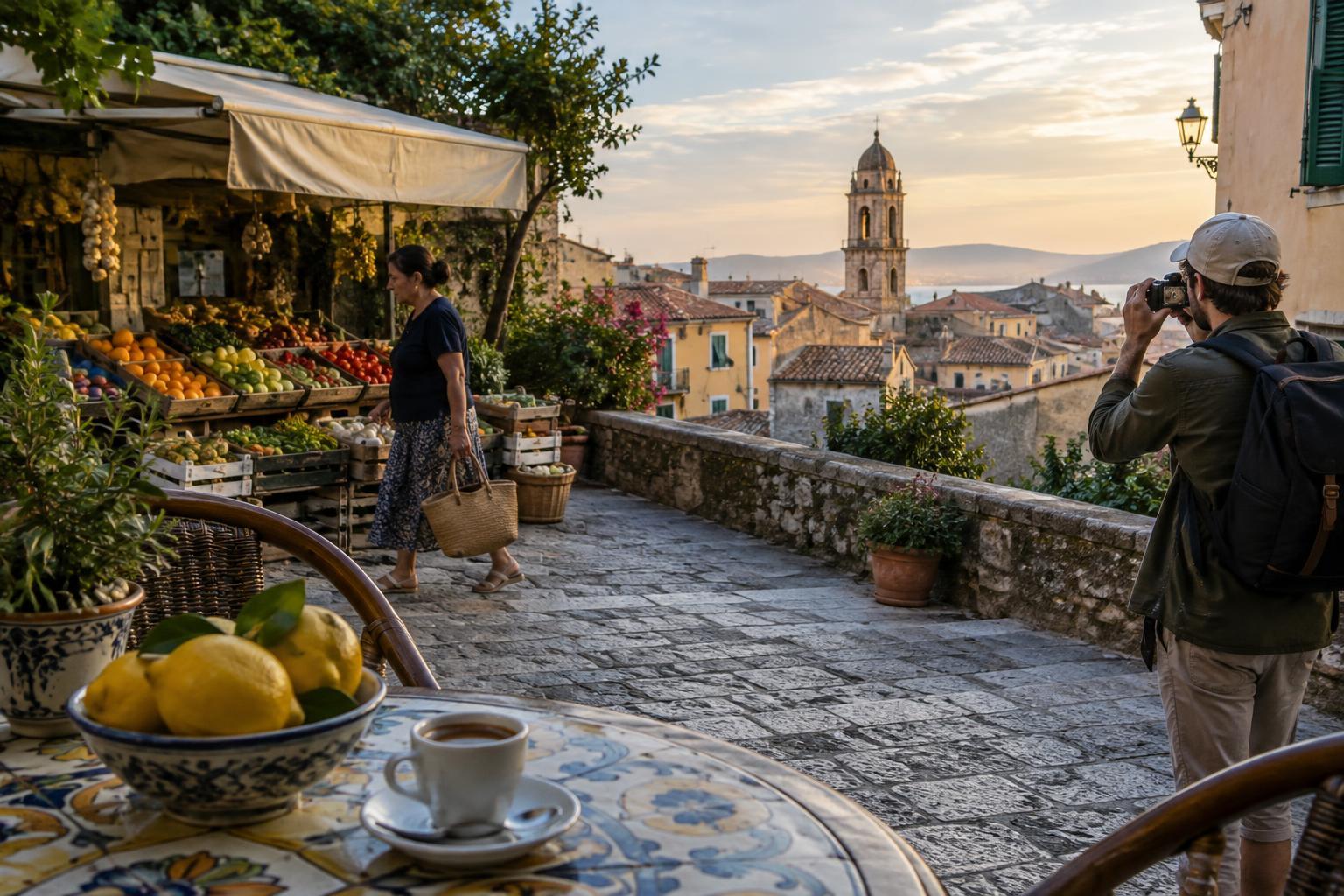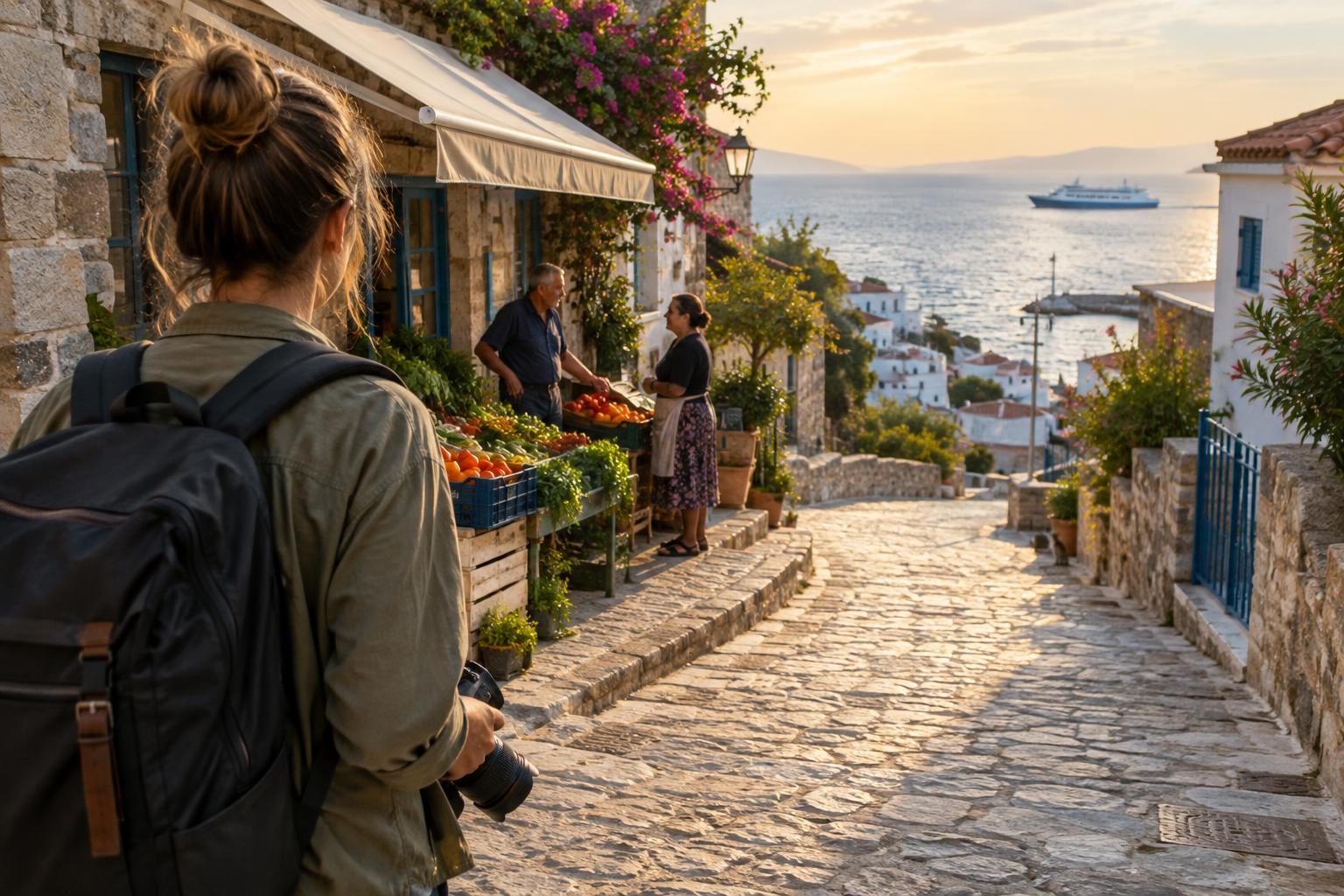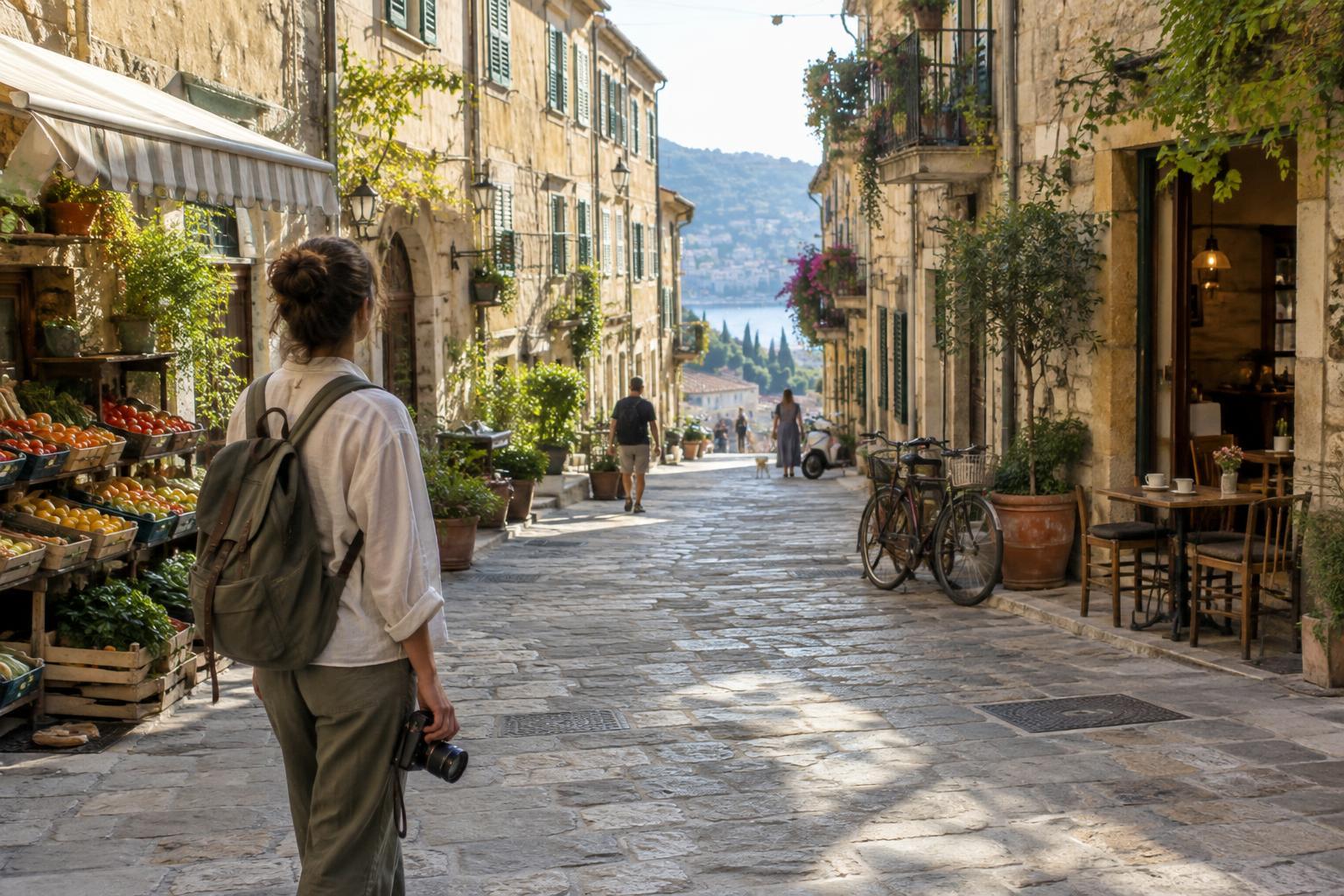
Decide what the photograph is about
When you arrive at a popular landmark, it is tempting to aim for the familiar view and wait for everyone to leave the frame. That may not happen. Instead, take a moment to decide what you want the picture to show: the structure’s shape, a particular detail, the scale of the place, or the experience of visiting it. A clear subject gives you more options than the goal of making a crowded scene look empty.
Start with a wide frame that shows the setting, then make a tighter one that concentrates on a single feature. Look for lines, arches, shadows, or repeating forms that lead the eye toward your subject. Check the edges of the frame before pressing the shutter: a partial sign, bright bag, or cut-off person may draw more attention than the landmark. Sometimes a small change in camera position is enough to simplify the background.
Give the crowd a role
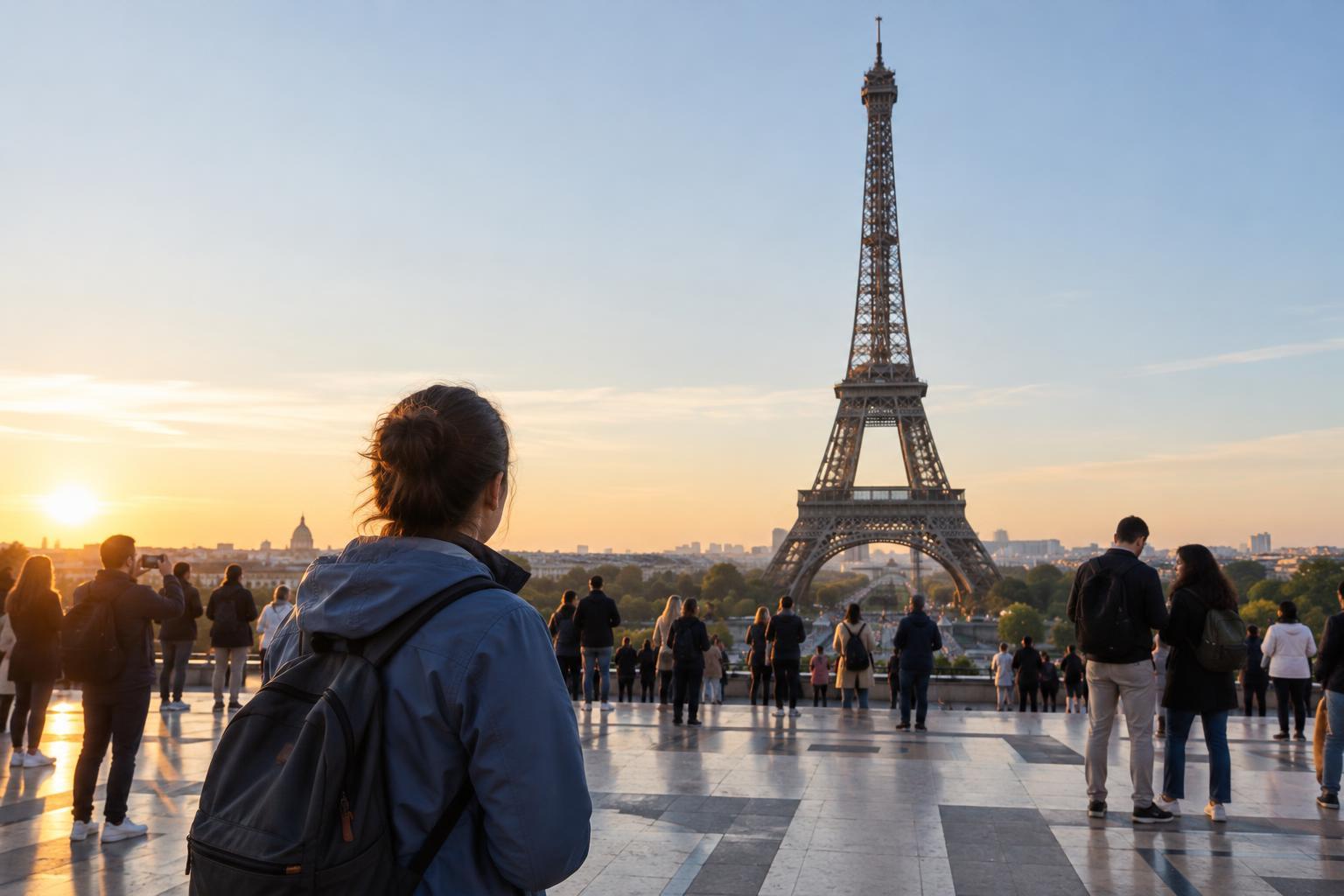
People can help tell the story of a place. A visitor looking up can suggest scale; a stream of pedestrians can convey the energy around an entrance. If people are part of your composition, decide where they should sit in the frame rather than treating every person as an interruption. Try placing the landmark as a steady background while someone crosses a clear foreground area.
For a less busy image, watch how the crowd moves. There may be brief gaps between groups, or moments when people overlap one another and read as a single shape. Choose your framing first, hold the camera steady, and make several photographs as the arrangement changes. Review them later instead of checking each shot and missing the next opening. Be considerate of other visitors: do not block a walkway or ask strangers to move just to clear your photograph.
Change your position before changing your gear
The most direct viewpoint is often the busiest one. Walk a short distance to either side and look again. A lower angle may put the landmark against the sky; a higher public vantage point may reveal a useful pattern in the crowd. You can also frame through a doorway or include a nearby wall to cover distractions. Stay within public access areas and follow any photography rules posted at the site.
A wide lens is useful for showing the landmark in context, but it can pull a great deal of visual clutter into the frame. A longer focal length can isolate a detail or compress layers of people and architecture. You do not need to carry both: with one camera or phone, make a range of compositions by moving where permitted and varying how tightly you frame. If you use a phone’s digital zoom, check whether the resulting image has enough detail for your intended use.
Work with the light you find
Light can separate your subject from a crowded background. Side light may bring out surface texture, while backlight can turn people into simple silhouettes. In strong midday light, look for a shaded viewpoint or use the contrast deliberately: a sunlit landmark can stand out against a darker foreground. Watch for bright patches near the edge of the frame, which can compete with your subject.
Expose for the part of the scene you most want to preserve, particularly if the sky and landmark differ greatly in brightness. If your camera or phone allows it, tap or meter on the subject and inspect the result. When light is difficult, make one frame that protects bright details and another that keeps the landmark visible. You can choose the stronger photograph during editing without assuming every part of the scene must be equally bright.
Make a small set of images, then edit with restraint
Give yourself a simple exercise at the next busy landmark: make five distinct photographs. Try a wide establishing view, a clean architectural detail, a frame that uses visitors for scale, a composition built around light or shadow, and one image that captures how it felt to be there. This assignment encourages you to look beyond a single postcard angle and gives you a more useful selection afterward.
When editing, compare similar frames and keep the one with the clearest subject and strongest arrangement of people. A modest crop can remove edge distractions; careful adjustments to brightness and contrast can help the eye settle where you intended. If you remove an object digitally, consider whether the change still represents the scene in the way you want to share it. A photograph of a crowded landmark does not need to hide its crowd to be successful.