Start with the story, not the plate
A meal can reveal a great deal about a place: how people gather, what a market sells, or where you paused after a long walk. Before photographing the food, ask what you want to remember about the experience. Was it the steam rising from a bowl on a cool morning, the colors of a busy counter, or a quiet table beside a window? That answer can guide what you include in the frame.
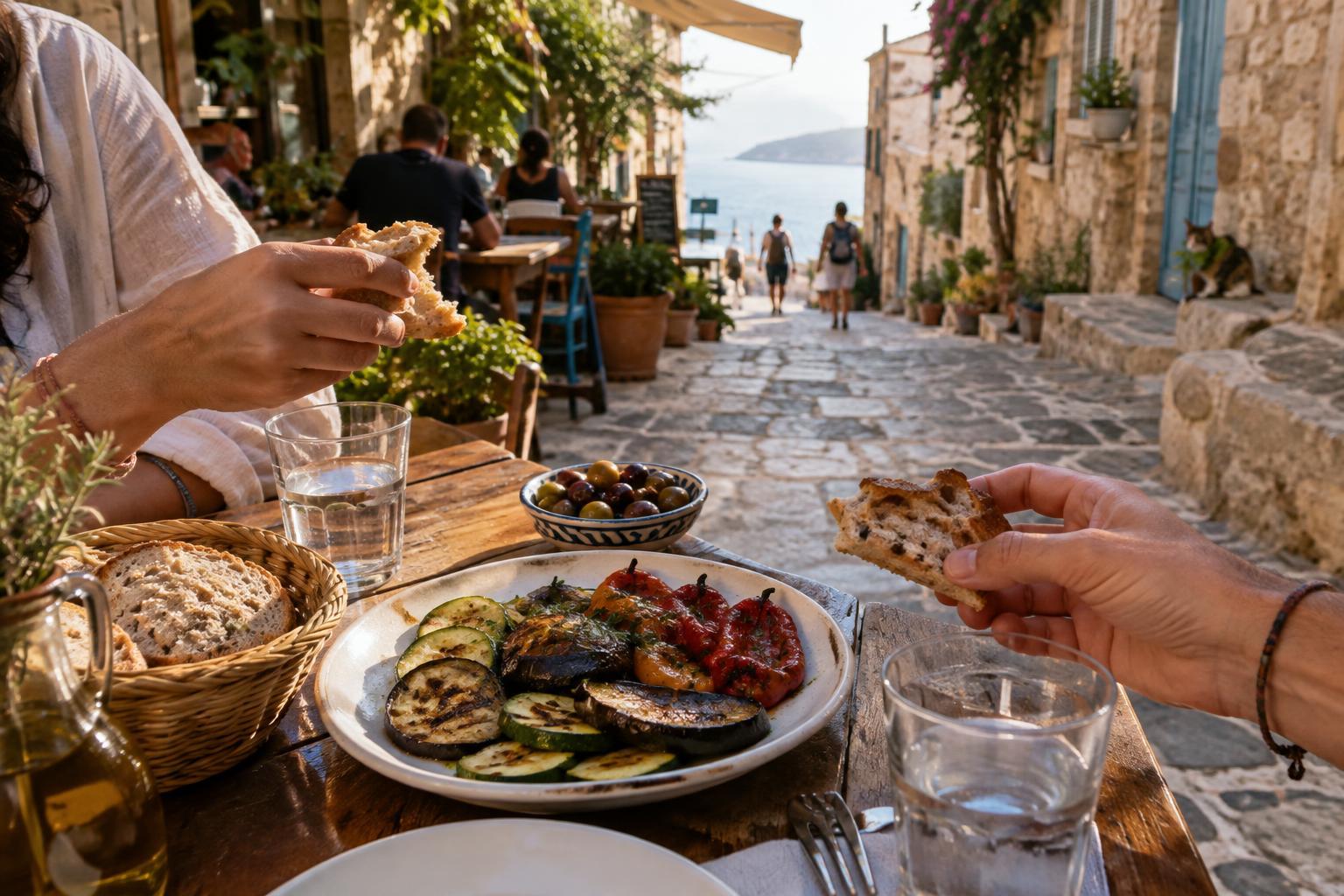
Make a few different photographs rather than expecting one image to do everything. A wider view can establish the setting; a closer frame can show texture; a final image might capture the nearly empty plates or hands sharing a dish. Together, these photographs give the viewer a sense of arriving, eating and leaving. If you are keeping a travel journal, a short note about the place and the meal can help you select the most meaningful images later.
Use the surroundings to give food a sense of place
Food photographs often become more distinctive when they include clues beyond the dish. A patterned tablecloth, a stall sign, a view through the window or the way a meal is served can all add context. Look around before rearranging anything. Sometimes the best composition is already there, and moving every object into a tidy layout would erase what made the scene interesting.
Choose your viewpoint according to what matters most. An overhead angle can make several plates and table details work together as a scene. A lower angle can emphasize the height of a pastry or show the room behind a cup. Move slightly left or right to check for distracting objects along the edge of the frame. If the background is crowded, get closer to one telling detail rather than trying to hide the entire setting.
Find workable light without interrupting the meal
Window light is often a useful starting point because it can show shape and texture without requiring extra equipment. If you have a choice of seats, notice how light falls across the table. Side light may bring out the surface of bread or fruit, while light from behind can make steam or the rim of a glass more visible. Turn the plate a little if appropriate, but avoid changing a shared meal just to make a picture.
In dim interiors, steady your camera or phone with both hands and take a moment to check that the important part of the image is sharp. On a phone, tap the food to set focus and adjust brightness if the highlights look washed out. Mixed lighting can give food an unusual color, so consider whether a small change in position improves the scene. A compact camera, a single versatile lens or a phone is enough for this approach; carrying less equipment may make it easier to respond to a meal as it unfolds.
Photograph people with care
The people preparing or sharing food can be central to its story, but a good photograph is not a reason to make someone uncomfortable. Ask before making a close portrait of a vendor, cook or fellow diner. If you cannot ask easily, concentrate on your own table, the surroundings or details that do not single anyone out. Be especially mindful when a space is small or a person is working quickly.
When companions are happy to be photographed, watch for natural gestures: someone reaching for a shared plate, pouring a drink or considering the first bite. You do not need to direct every movement. Make the photograph, then put the camera down and take part in the meal. A few attentive frames usually tell a clearer story than a long series that turns dinner into a photo session.
Edit for a coherent memory
When selecting photographs, look for variety rather than choosing only the prettiest close-ups. Pair an image of the meal with one that shows where it happened and, if you have it, a small human moment. Remove near-duplicates and keep photographs that contribute something different. This simple sequence can help a viewer understand the experience without needing a long caption.
In editing, begin with modest adjustments to exposure and color. Food can look unappealing if shadows are lifted too far or colors become unnaturally intense. Compare images from the same meal so that one does not appear much warmer or brighter than the others without a reason. For practice, photograph your next travel meal in three frames: one setting, one dish detail and one moment before or after eating. Edit them as a group, then ask whether they convey more together than any one frame alone.