Start with the trip, not the camera
A camera can be capable and still be wrong for a particular journey. Before comparing equipment, picture a normal day on your trip. Will you walk for hours, move through crowded spaces, or have time to stop and build a photograph? A short city break with a small bag places different demands on your gear than a trip planned around wildlife or deliberate landscape work.
List three subjects you most want to photograph, such as street scenes, family portraits, distant details, or evening meals. Then consider what might keep you from taking those pictures: weight, changing lenses, limited reach, or the effort of transferring files. These constraints are more useful than a general search for the “best” camera. You may also decide that photographs are only one part of the trip and that staying present matters more than covering every possible shot.
Choose a phone when ease and access matter most
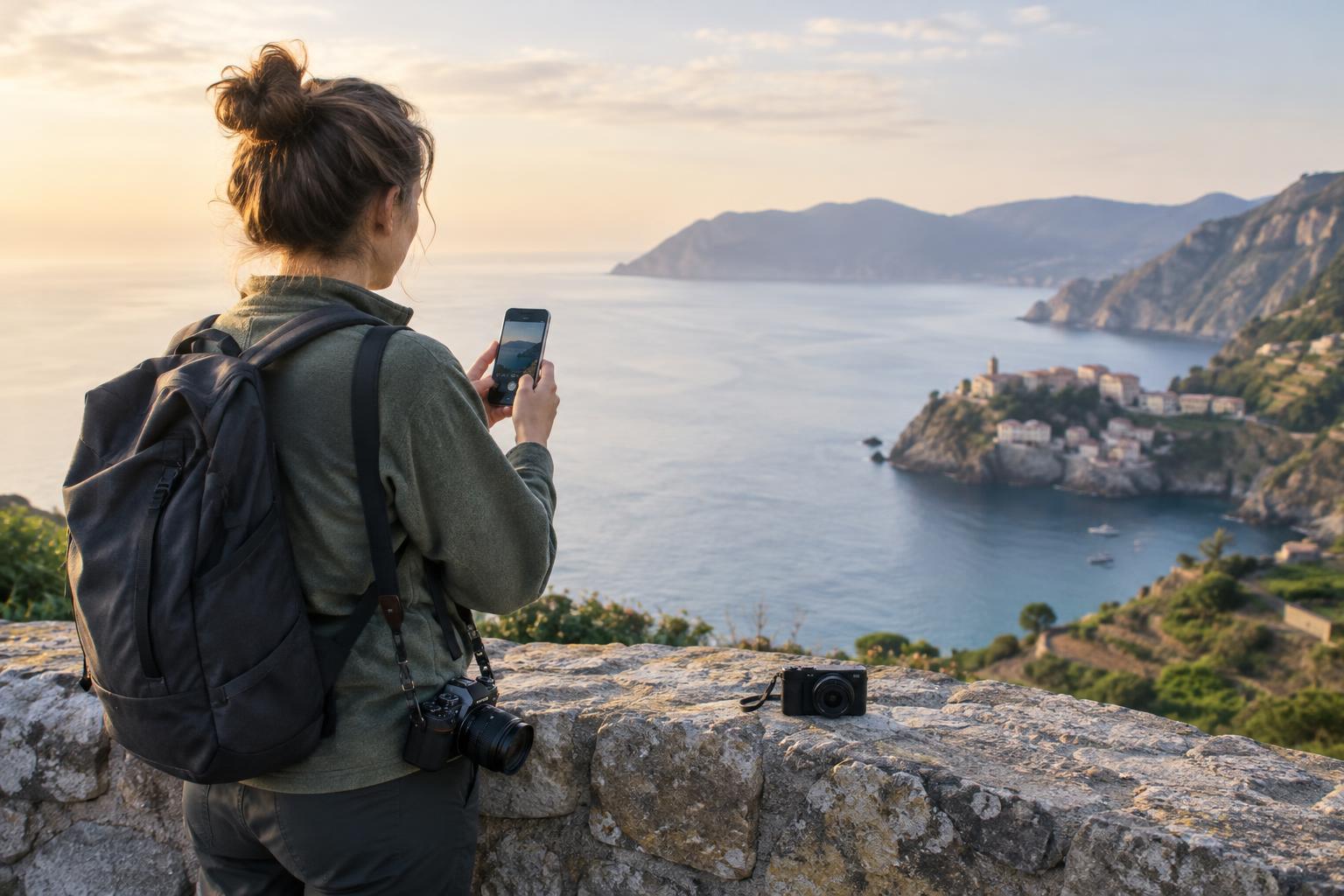
A phone is often the simplest travel option because it is usually close at hand. It makes quick photographs, navigation, notes, and sharing part of the same routine. That convenience can help you notice fleeting gestures, signs, colors, and small scenes you might miss while retrieving a camera from a bag. For many travelers, carrying less also makes long days more enjoyable.
The trade-offs become clearer when a subject is far away or the light is difficult. Zooming may offer less flexibility than a dedicated long lens, and a small device can be awkward to hold steadily in dim conditions. Rather than trying to make every scene work, use the phone’s strengths: move closer when appropriate, seek good light, and simplify the frame. Clean the lens before shooting, watch the edges of the picture, and take a moment to choose where the focus should fall.
Consider a compact camera for a middle ground
A compact camera may suit you if you want a dedicated way to photograph without carrying separate lenses. Depending on its design, it may offer a useful zoom range, direct controls, or a grip that feels steadier than a phone. Those differences matter most when you expect to photograph often enough to keep the camera accessible, rather than buried beneath other travel items.
Compact cameras vary widely, so decide which feature solves a real problem for you. Reach may matter for architectural details or subjects you cannot approach. An easy-to-use viewfinder may help when a rear screen is hard to see. Check the camera’s size alongside the bag or pocket you actually plan to use: “compact” does not always mean effortless to carry. Also consider how you will charge it and move photographs to your preferred editing device.
Bring interchangeable lenses for specific creative goals
An interchangeable-lens camera makes the most sense when you have a reason to use its flexibility. You might want a wide view of an interior, a longer lens for distant subjects, or a particular look for portraits. Manual controls and a comfortable grip can also make it easier to work deliberately. In return, the camera, lens choices, batteries, and protective bag all become part of your travel plan.
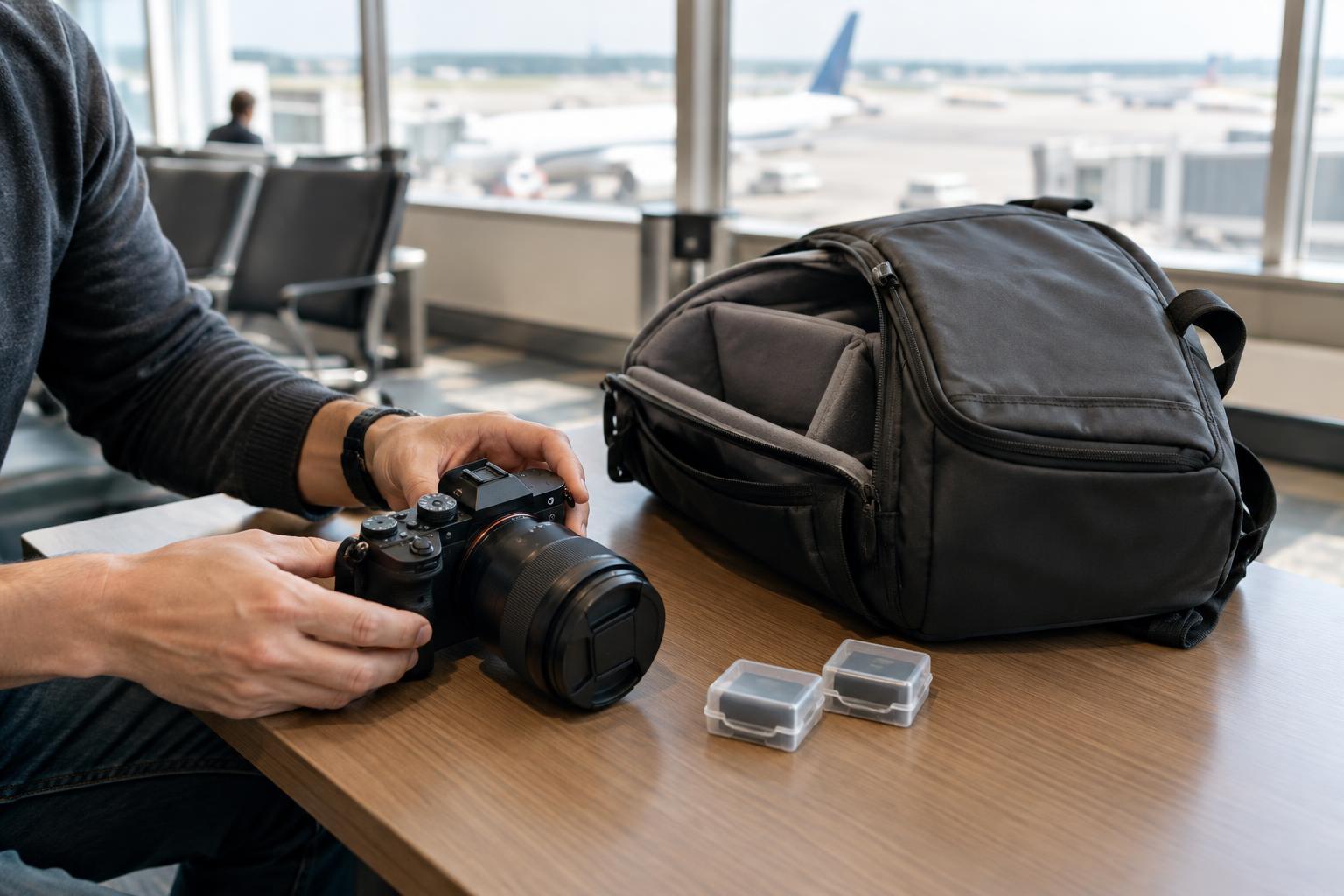
You do not need to pack every lens you own. Choose one lens that covers your most common photographs, then add another only if it serves a clear purpose. Before departure, practice changing settings and carrying the kit for the length of a typical outing. If the bag feels burdensome at home, it is unlikely to feel lighter at the end of a travel day. A smaller kit that you willingly bring along can be more useful than a versatile one left in your room.
Make a choice you can test before leaving
Try a local travel rehearsal: spend a few hours walking with the setup you plan to take. Photograph one wide scene, one nearby detail, one person who is happy to be photographed, and one scene in challenging light. Pay attention not just to the results but to how quickly you reached the camera, whether you enjoyed using it, and which pictures you chose not to make. Review the images afterward at the size you normally view or share them.
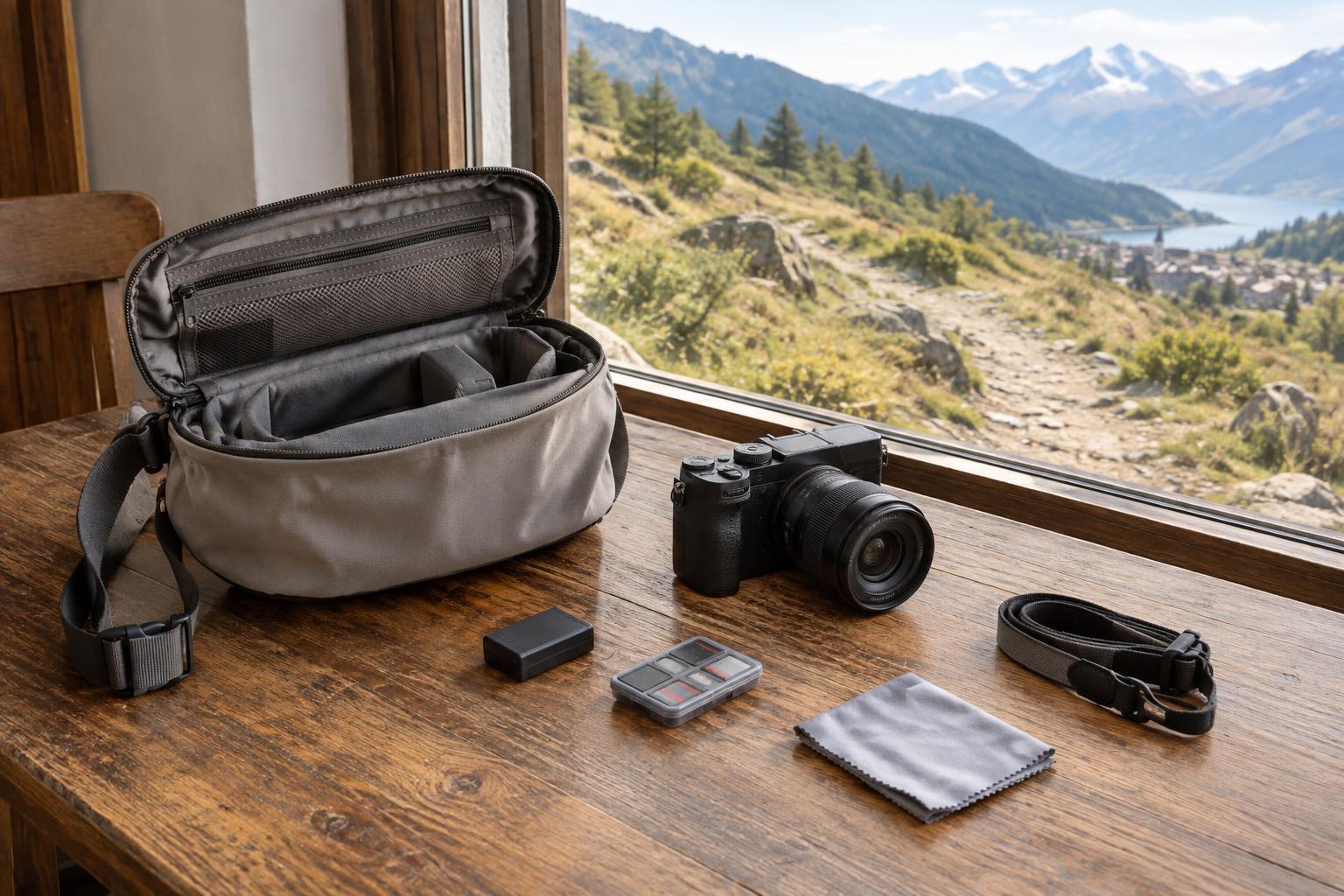
Use that experience to pack a simple, repeatable setup. A phone may be enough; a compact may earn its place through reach or handling; an interchangeable-lens camera may justify its weight for a planned subject. Whichever you choose, leave room for the basics: a charging plan, enough storage, and a way to protect your files during the trip. The right choice is the one that supports both your photographs and the journey around them.