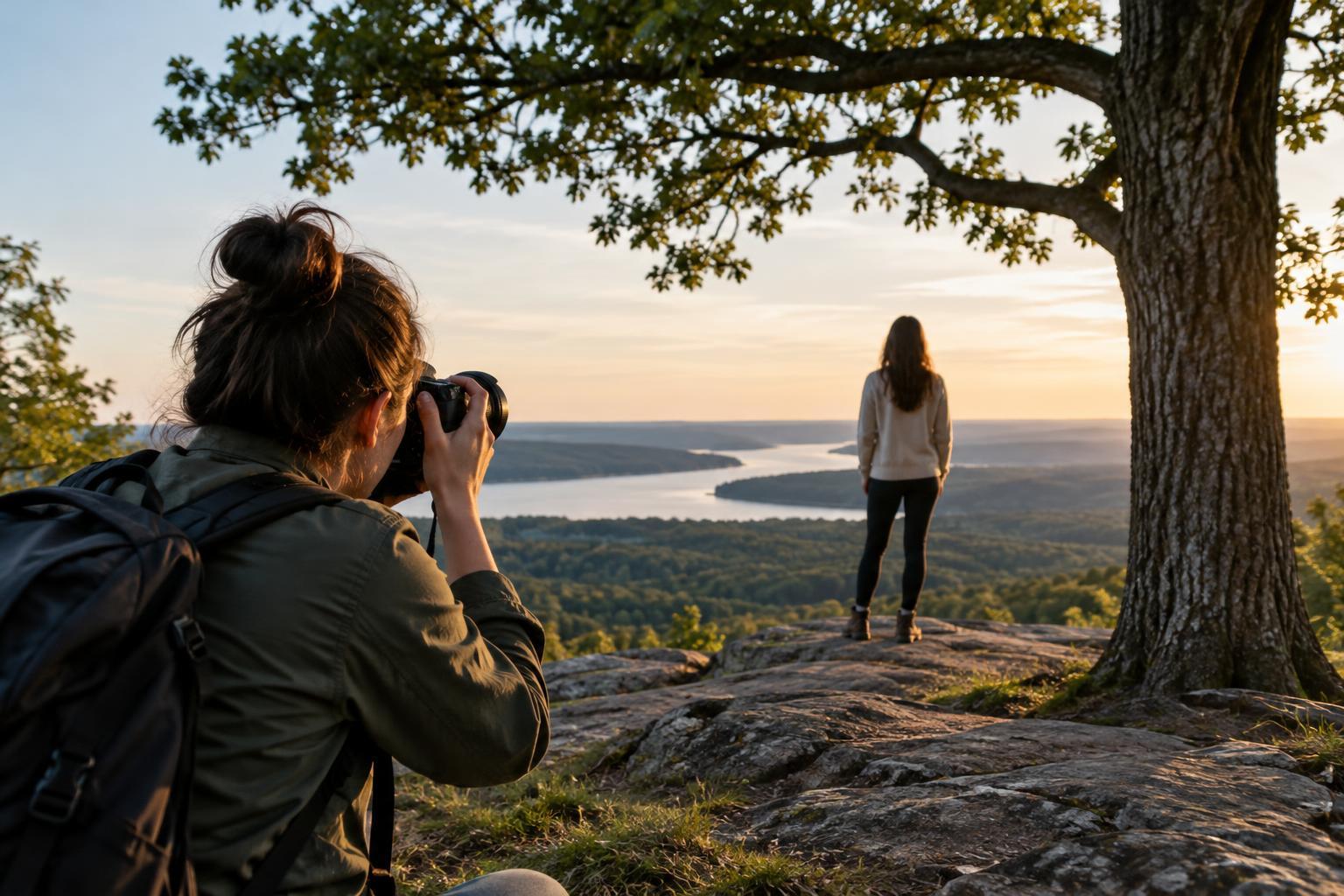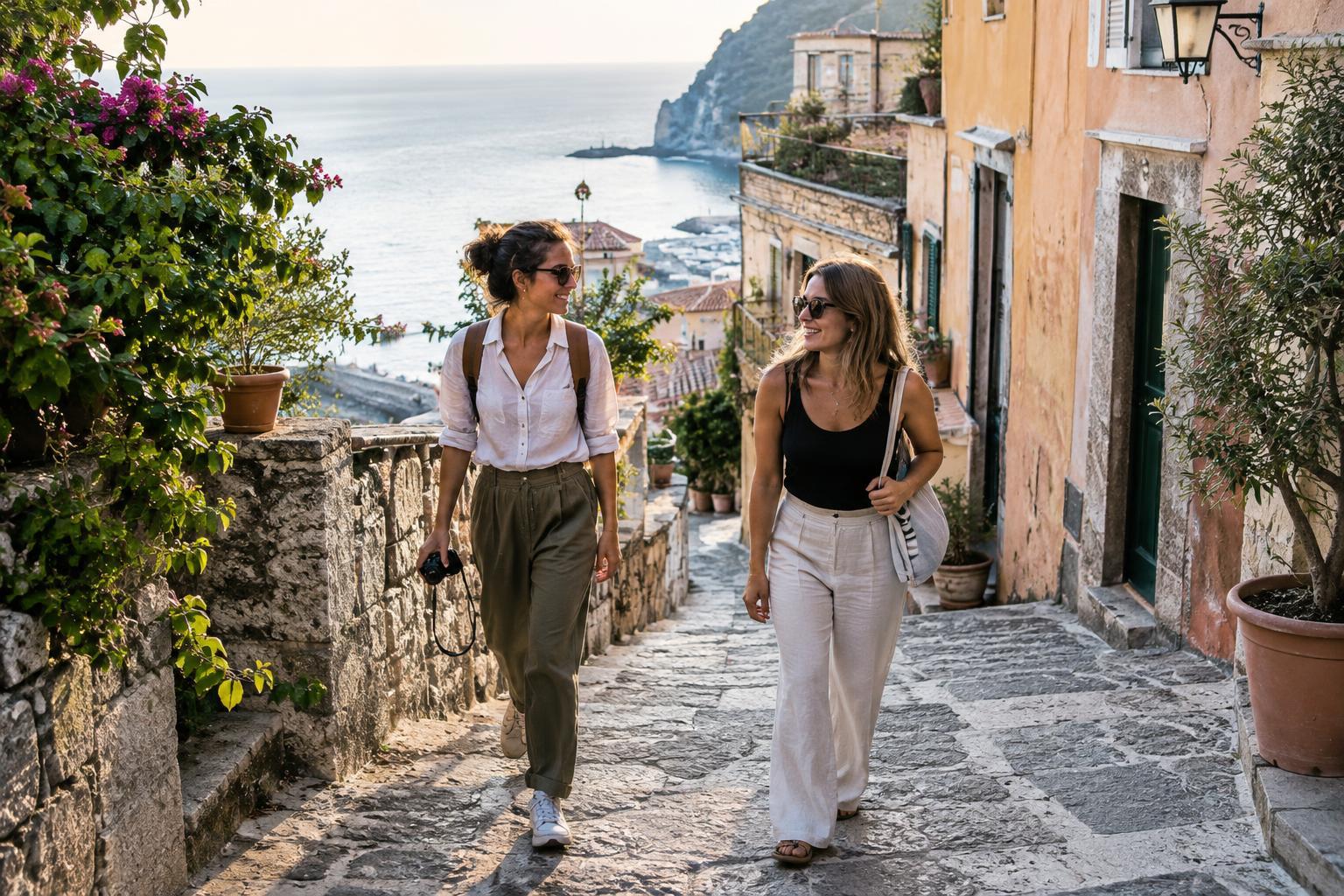
Start with the photographs you expect to make
Before choosing a strap or bag, think about how often you expect to use the camera. If you are wandering through a market or along a scenic street, you may want it ready every few minutes. On a long walk between locations, you may be happier with it packed away. You can change how you carry it during the day; one arrangement does not have to serve every stretch of the route.
Keep the kit small enough that you will actually carry it comfortably. One camera with one versatile lens may be more useful than several options you are reluctant to unpack. If you bring a spare lens, ask where you could change it without blocking a path or exposing the camera interior to blowing dust or rain. Accessibility begins with knowing what you can reach and what can stay in the bag.
Choose a carry position that stays under control
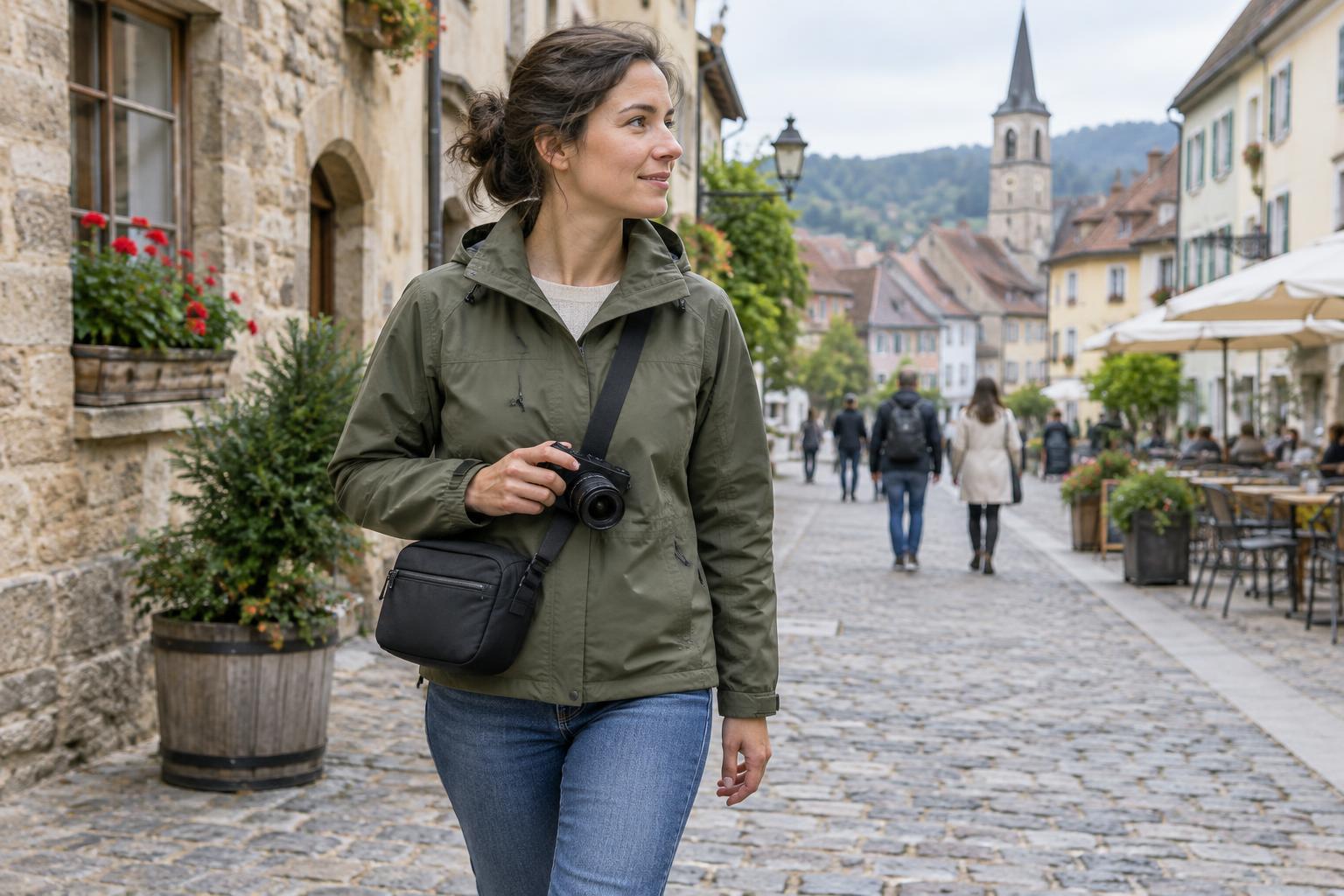
A neck or shoulder strap keeps a camera close to hand, but a long, loose strap may let it bounce against your body or nearby objects. Adjust it so the camera rests where you can steady it with one hand. A crossbody strap can spread the load differently and may help keep the camera from slipping off a shoulder. Whichever style you use, check that the strap and its attachment points are properly secured before you set out.
A wrist strap suits a small camera that you tend to hold for short periods, but it does not replace a place to put the camera when your hands are needed. A bag or padded insert gives you that option. Consider how the camera sits when you bend, climb steps or sit down: a carry position that feels fine while standing still may become awkward in motion.
Avoid leaving the camera swinging unattended from a strap. In crowds or narrow spaces, bring it close to your body or put it away. This helps you avoid bumping people and reduces the chance of striking the camera against a wall, railing or table.
Make the bag easy to use, not just easy to carry
A secure bag is only useful for active photography if opening it is simple enough that you will bother. Try packing the camera at home, then taking it out and putting it back while wearing the bag. You should be able to find the opening, lift the camera without catching the strap and close the bag again without setting it down. Practice slowly first; speed will come from a familiar routine.
Give small items consistent places. A spare battery can go in one pocket, a lens cloth in another, and a memory card in a protective case rather than loose among keys. Keep drinks apart from camera gear where possible, and avoid packing hard objects against the screen or lens. If the bag has closures, make a habit of checking them after each stop rather than assuming they are shut.
When choosing a bag, consider your full walking load, not only the camera. Space for water, an extra layer and personal essentials can make a compact camera bag more practical than a padded bag that forces you to carry a second one.
Plan for weather and busy places
Weather protection works best when it is ready before the weather turns. Keep a suitable cover or protective bag where you can reach it without unpacking everything. A dry cloth can help with moisture on the outside of the camera, but take care not to rub grit across glass. If rain or spray becomes heavy, putting the camera away may be the most sensible choice. Do not assume a camera or bag is waterproof unless its specifications support that use.
In busy areas, pay attention to where the camera is while you are looking through the viewfinder or checking a photo. Keep bag openings closed when you are not using them, and avoid setting the camera down somewhere you might forget it. You do not need to treat every location as a risk; a simple routine of checking your gear before moving on can help you stay focused on the walk.
Test your setup on a short walk
Before a full day out, take a twenty-minute walk with the kit you plan to carry. Photograph three ordinary subjects: one you spot ahead, one that appears beside you and one that requires you to pause. Notice whether you can get the camera ready without fumbling, whether the strap twists and whether the bag gets in the way when you stop.
Afterward, change one thing. Shorten the strap, move an accessory to another pocket or leave an unnecessary item at home. Repeat the walk if you can. The goal is not to make the camera instantly available at all times. It is to find a routine that lets you notice photographs, make them comfortably and keep your equipment under control between frames.