Decide what the sequence is about
Photo sequencing begins after you have a workable group of images. Instead of asking which frame is the strongest on its own, ask what the group should communicate. A series about a neighborhood market might follow the path from setup to closing, or it might focus on the relationships between vendors and customers. Both approaches can work, but mixing them without a clear intention may make the sequence feel scattered.
Write one sentence describing what you want a viewer to understand or feel by the end. Keep it modest and specific: “This workshop is a busy, collaborative place” gives you a clearer editing guide than “This is the best workshop in town.” Use that sentence when deciding whether each image contributes. A beautiful frame can be worth leaving out if it pulls attention toward a different story.
Build a beginning, middle, and end
The opening image should give viewers a reason to continue. It might establish a place, introduce a person, or present an intriguing detail. It does not have to explain everything. A wide view can provide context immediately, while a close view can raise a question that the next image answers. Choose the opening for the work it does in the sequence, not simply because it is your favorite photograph.
Use the middle to add information and change perspective. Move between people, actions, details, and surroundings when those shifts help the viewer understand the subject. For the ending, look for an image that offers a sense of arrival: a quiet moment after activity, a return to an earlier visual idea, or a final detail that changes how the opening feels. You do not need to force a dramatic conclusion onto an ordinary subject.
Pay attention to transitions and rhythm
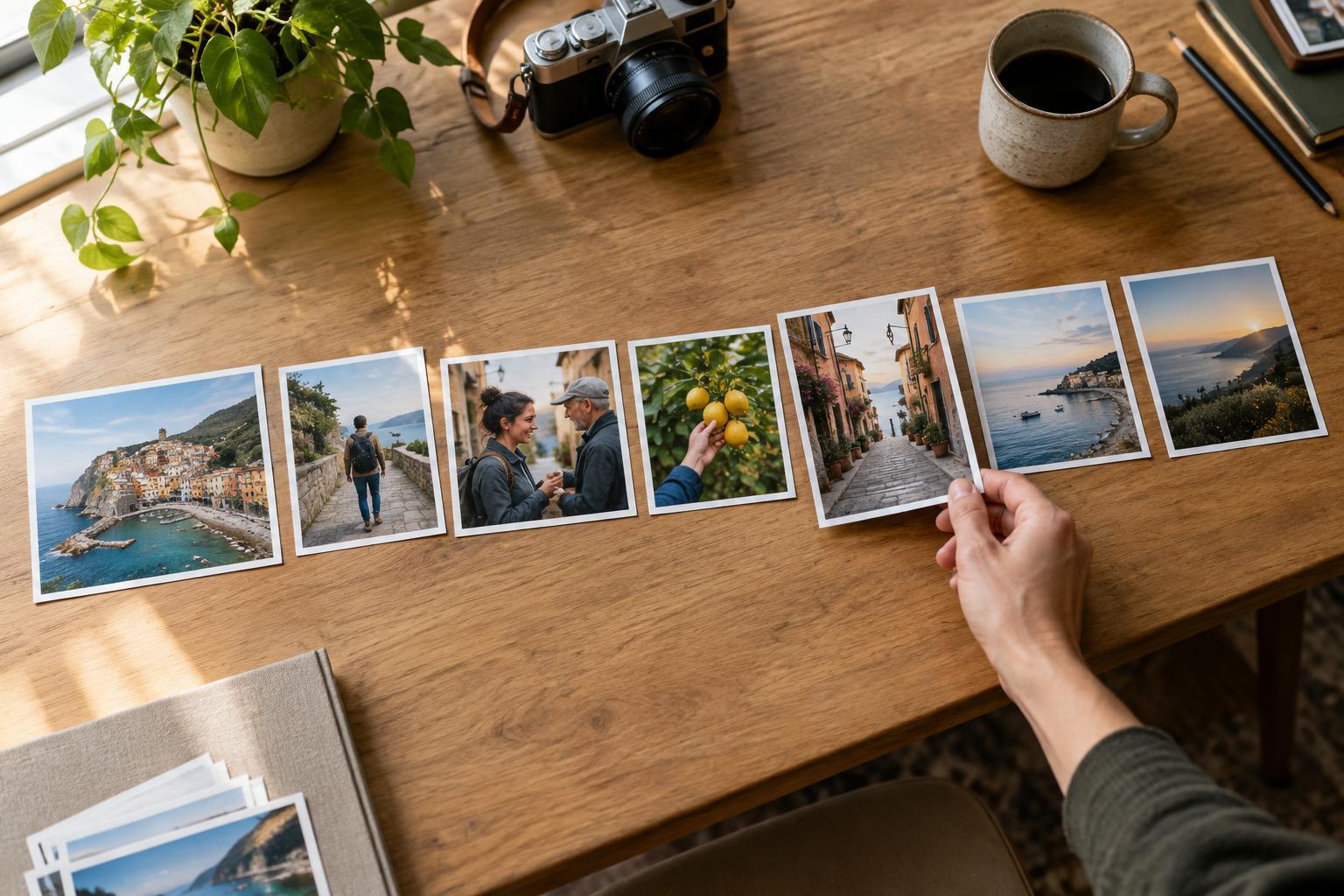
Place the photographs in a simple grid or on a page where you can see several at once. Look at each pair of neighboring images. Does the second extend, contrast with, or answer the first? A transition might connect through a repeated color, shape, gesture, location, or person. It can also work through contrast, such as a crowded room followed by one worker alone. If two pictures seem to compete for the same role, try keeping the one that makes the next image more effective.
Varying visual distance can help the series breathe. Several wide shots in a row may feel repetitive, while a long run of details can leave viewers unsure where they are. A shift from wide to medium to close is one useful pattern, but it is not a rule. Repetition can be powerful when it draws attention to a meaningful change. The question is whether the rhythm feels deliberate when you view the whole sequence, rather than whether every adjacent pair looks different.
Edit for the group, not just the individual frame
Once you have a rough order, review the images together at the size and on the background where you expect people to see them. Watch for abrupt shifts in brightness, color, or contrast that distract from the story. Images made under different light do not need identical white balance; a warm indoor scene and a cool outdoor scene may accurately reflect the experience. Aim for choices that feel intentional across the series rather than applying the same settings to every file.
Check crops as a group, too. If every subject is tightly framed, a little breathing room may help establish context. If one crop repeatedly directs attention away from the story’s main subject, adjust it or reconsider the frame. Preserve enough variation that each photograph retains its character. Consistency is about helping viewers move through the work without unnecessary distractions, not making separate moments look interchangeable.
Test the sequence, then make one final pass
Step away from the arrangement before reviewing it from beginning to end. On your return, resist stopping to fix individual edits. Notice where your attention slows, where you feel lost, and where an image seems to repeat something you already learned. Try removing that image and viewing the sequence again. A shorter story can sometimes give its strongest frames more space.
For a practical exercise, choose eight to twelve photographs from one outing or project. Make two sequences using the same images: one ordered by when they were taken, and another ordered by the ideas or visual connections between them. View each from start to finish without rearranging it midway. Note what becomes clearer in each version, then build a final order that serves your chosen story. This exercise helps separate the order in which you experienced a scene from the order that best introduces it to someone else.