Start with the kind of pictures you want to make
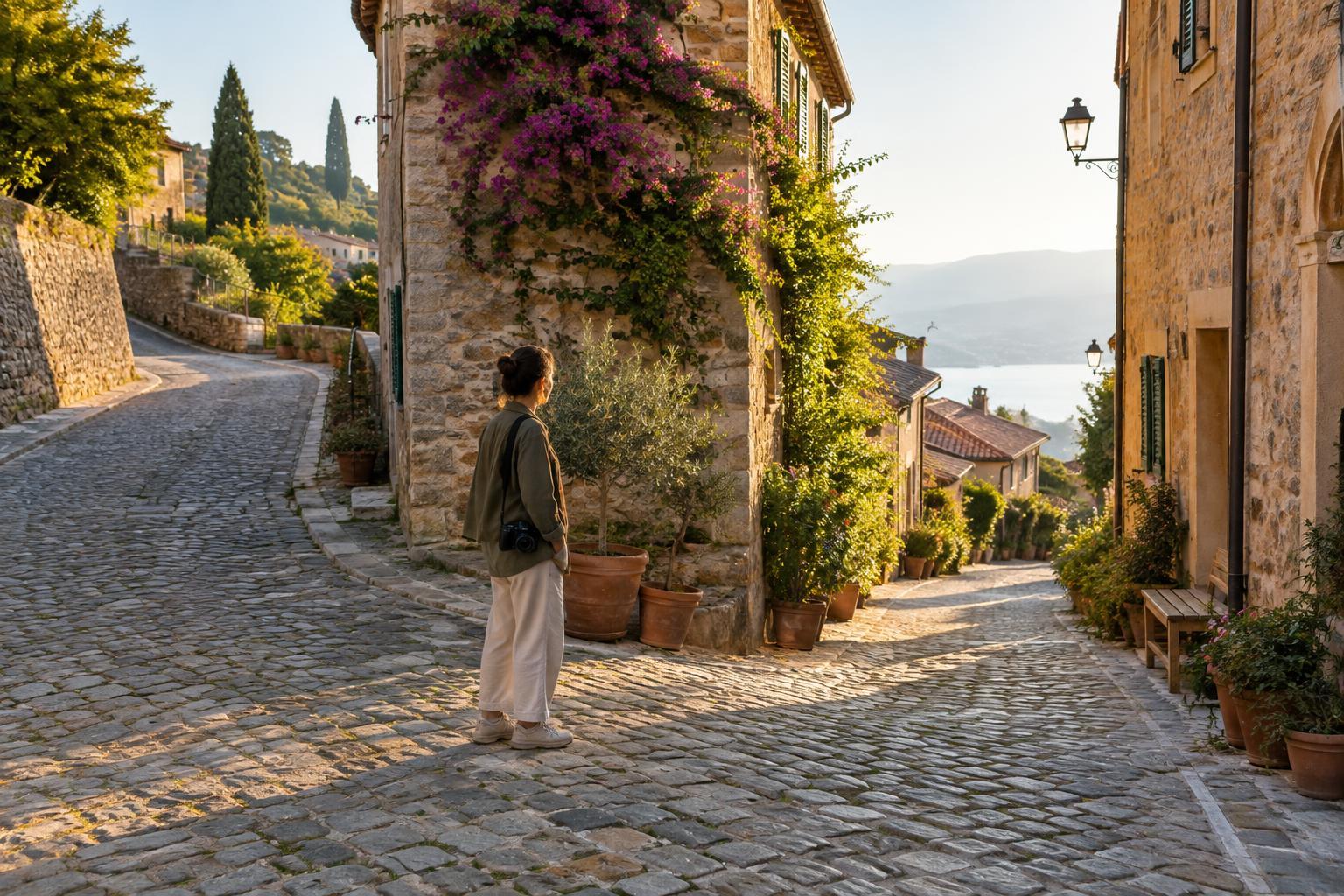
Before choosing a route, write down two or three subjects that interest you. They might be street scenes, landscapes, architecture, food or quiet details of daily life. This gives your planning a purpose without requiring a fixed shot list. If you want to photograph a town’s streets, for example, you may gain more from walking one neighborhood slowly than from visiting five landmarks in an afternoon.
Choose a few possible locations for each subject, then mark only the ones that matter most to you. Look for public spaces, walking routes and viewpoints you can reasonably reach, and check practical details such as opening hours and access before you travel. Treat photos you’ve seen of a place as clues about what might be there, not as images you must reproduce. Your strongest frame may come from an unexpected turn along the way.
Use light as a guide, not a rigid timetable
Light can help you decide when to visit a place. Low-angle morning or late-day sunlight may add texture to buildings and landscapes, while bright midday light can suit bold shadows, graphic shapes or shaded interiors. Cloud cover often produces softer contrast. Rather than assigning every hour to a specific subject, identify one or two places where the direction or quality of light could make a difference, and leave the rest flexible.
Build your days around broad windows: perhaps an early walk, a midday break or indoor visit, and an optional evening outing. Travel time, weather, crowds and energy levels can all change what feels worthwhile. If the light you hoped for does not appear, look for another visual approach instead of waiting indefinitely. Reflections, silhouettes, sheltered streets and small details can all become worthwhile subjects under different conditions.
Make room to stay and to wander
A simple itinerary might have one priority location each day, plus a nearby alternative. Give yourself more time there than you think you need. Your first few pictures may only record the obvious view; after a while, you can begin to notice gestures, background relationships and changes in light. Staying put also lets you test several compositions without rushing toward the next stop.
Protect at least one unscheduled block of time. Use it to revisit a place, follow an interesting street or put the camera away for a while. Not every promising scene needs a photograph, and a pause can make you more attentive when you start again. If you are traveling with others, discuss which outings are photography-focused and which are shared time without frequent stops. A plan is easier to enjoy when everyone knows what to expect.
Pack for the pace of the trip
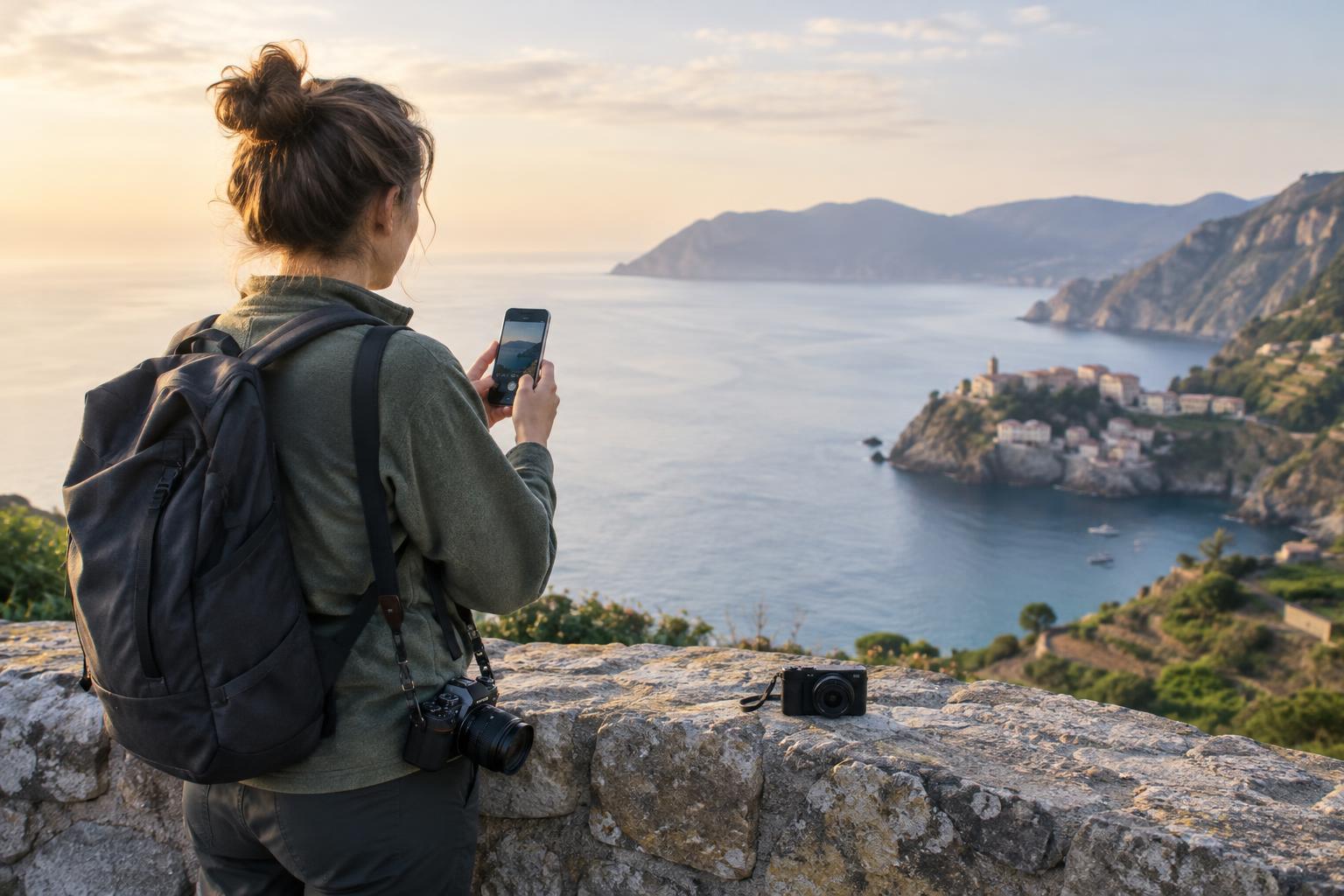
Choose equipment you are comfortable carrying for the walks you have planned. A camera and one versatile lens may be enough when you want to move freely; a second lens can be useful if it serves a specific subject you expect to photograph. A phone is also a practical option, particularly when you want to travel light or work unobtrusively. The best choice is the one that helps you keep looking and shooting, rather than repeatedly sorting through a bag.
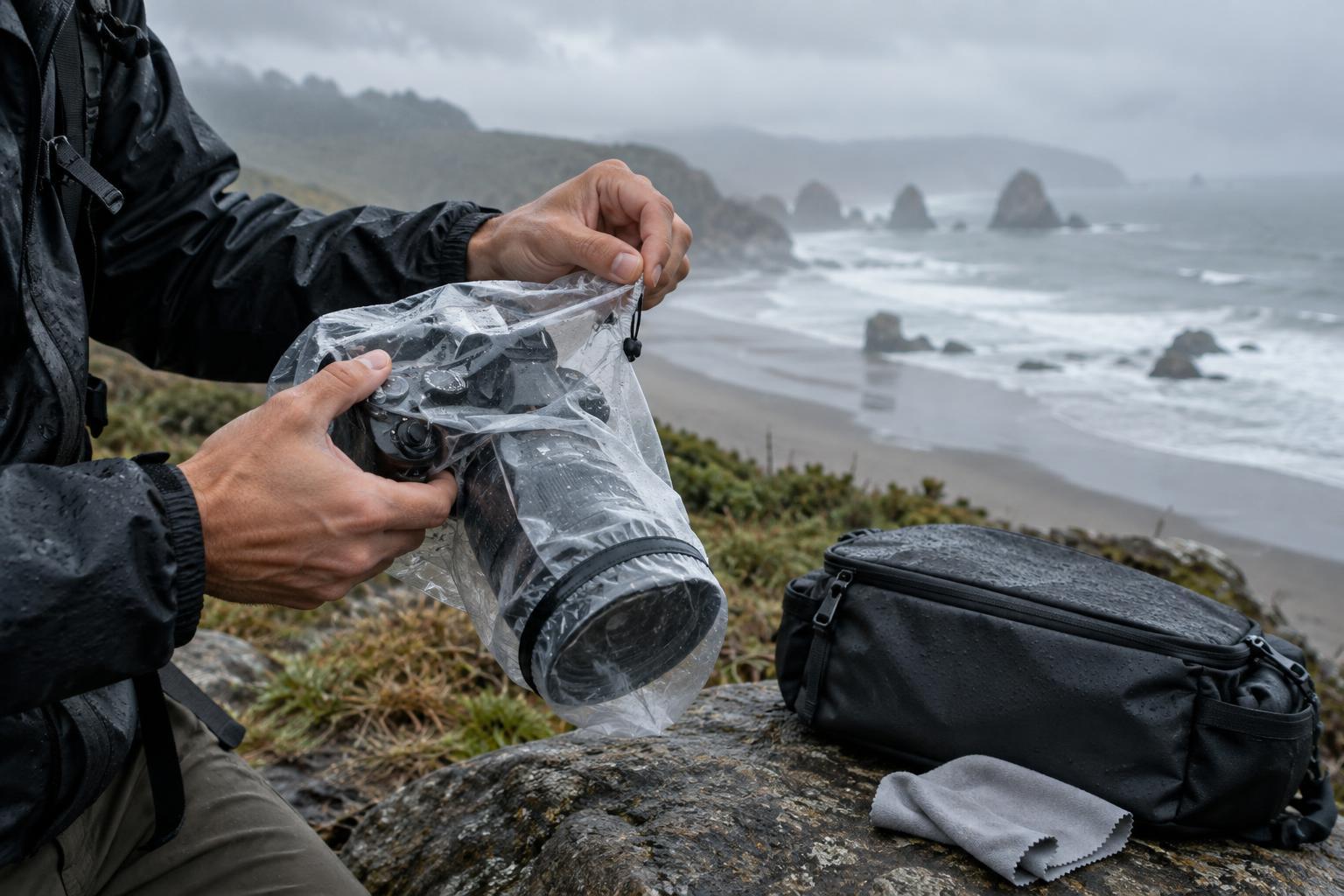
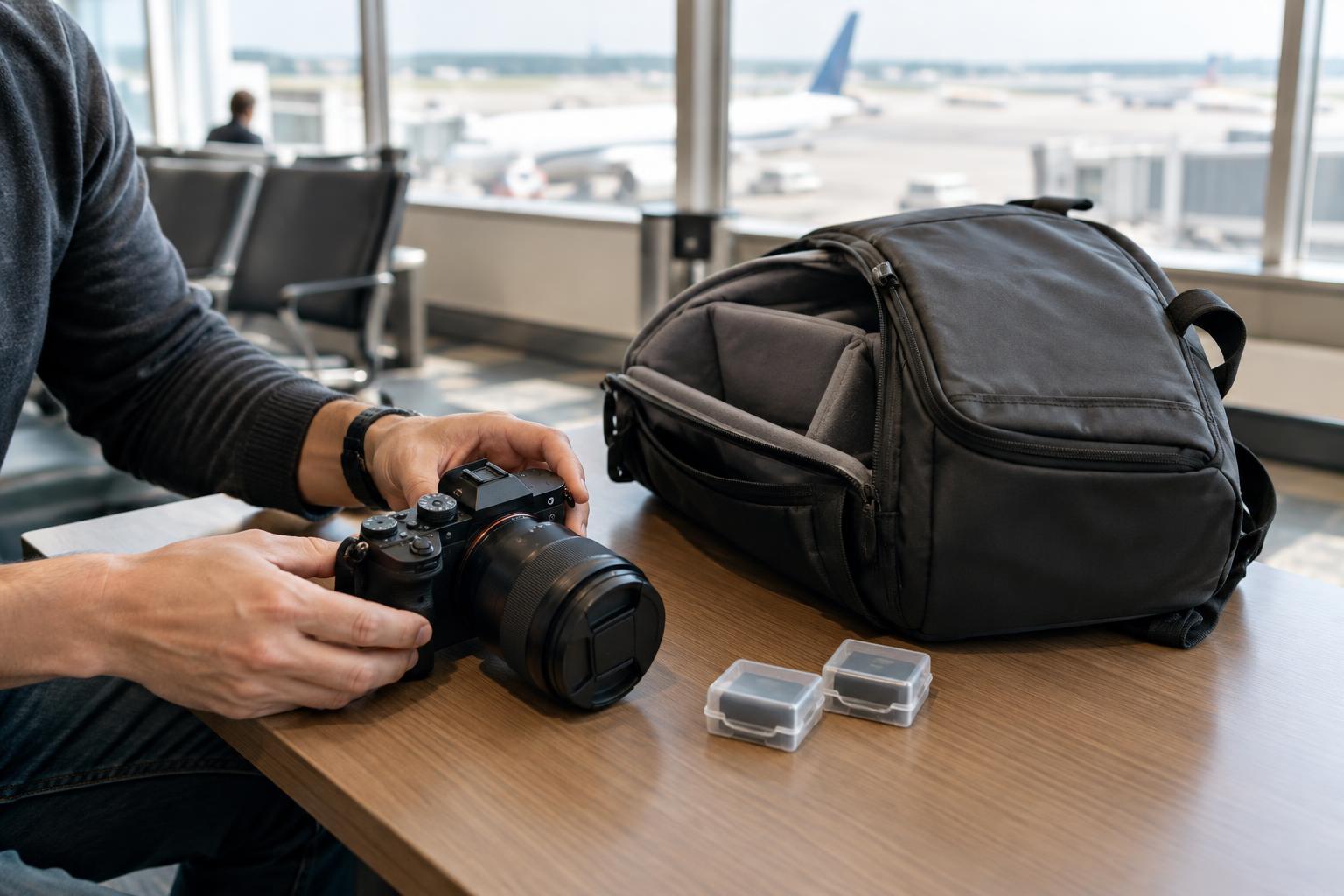
Before leaving, charge batteries, clear or prepare memory cards, and check that your camera settings are familiar. Bring a way to protect your equipment from the conditions you expect, without packing for every imaginable scenario. During the trip, establish a simple routine for keeping images organized and backed up when possible. That small habit can free you to concentrate on making pictures rather than worrying about where yesterday’s files went.
Try a flexible one-day exercise
For a practice day, pick one main area and one theme, such as doorways, movement or layers of foreground and background. Set aside an initial walk to explore without trying to cover everything. Then return to one spot that held your attention and make five distinctly different frames: change your position, wait for a different moment or simplify what appears at the edges. Keep the rest of the day open for a change of plan.
At the end of the day, choose a small group of images and ask which ones say something beyond “I was here.” Notice whether your favorites came from the place you planned to visit or from time you left unassigned. Use that observation to shape the next day’s itinerary. Flexible planning is not the absence of preparation; it is preparation that leaves you free to respond to what you find.