Start with a story, not an inventory
A travel shot list is most useful when it guides your attention rather than demands a photograph of everything you pass. Before a trip or a day out, write one sentence about what you want to remember. It might be the rhythm of a morning market, the scale of a mountain town, or the contrast between a busy station and a quiet side street. That sentence gives you a way to choose subjects when there are more possibilities than time.
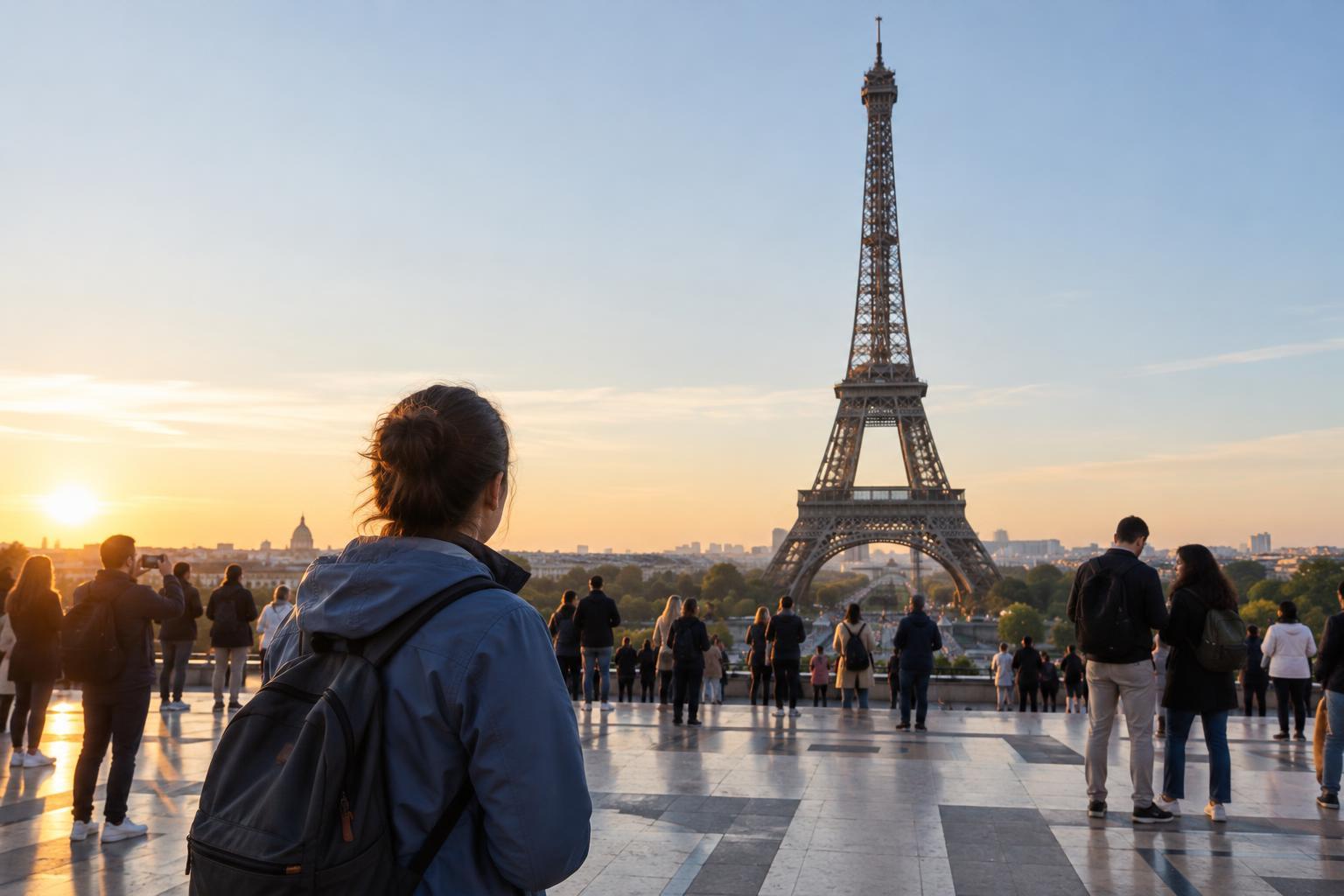
Put the obvious landmarks on your list, but keep that part short. A landmark photograph tells a viewer where the story takes place; it does not have to carry the whole story. Add a few prompts for the spaces around it: the approach, a nearby sign, the view from a side street, or the way people use the surrounding square. These frames can make a familiar sight feel connected to your own experience.
Build a list at three scales
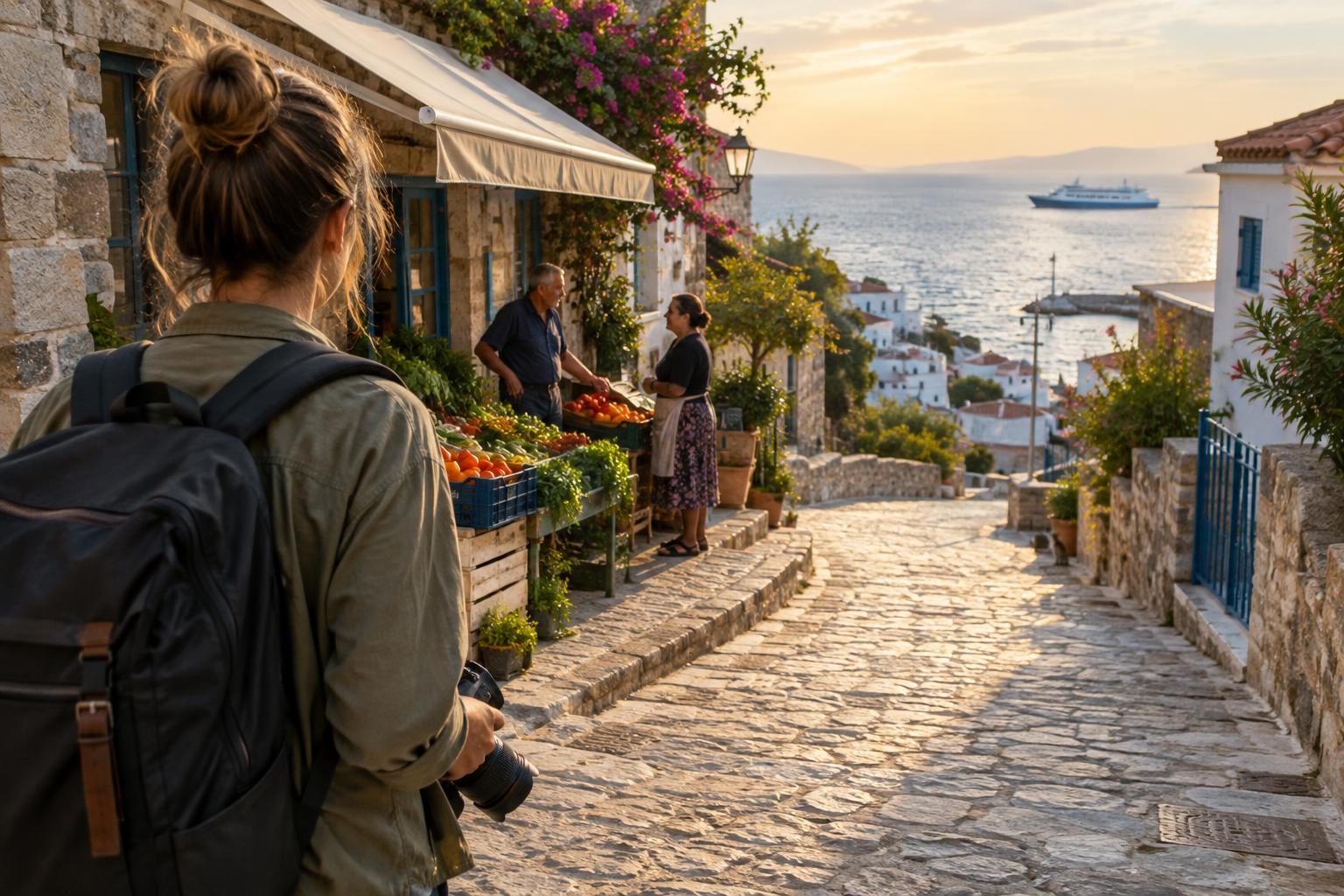
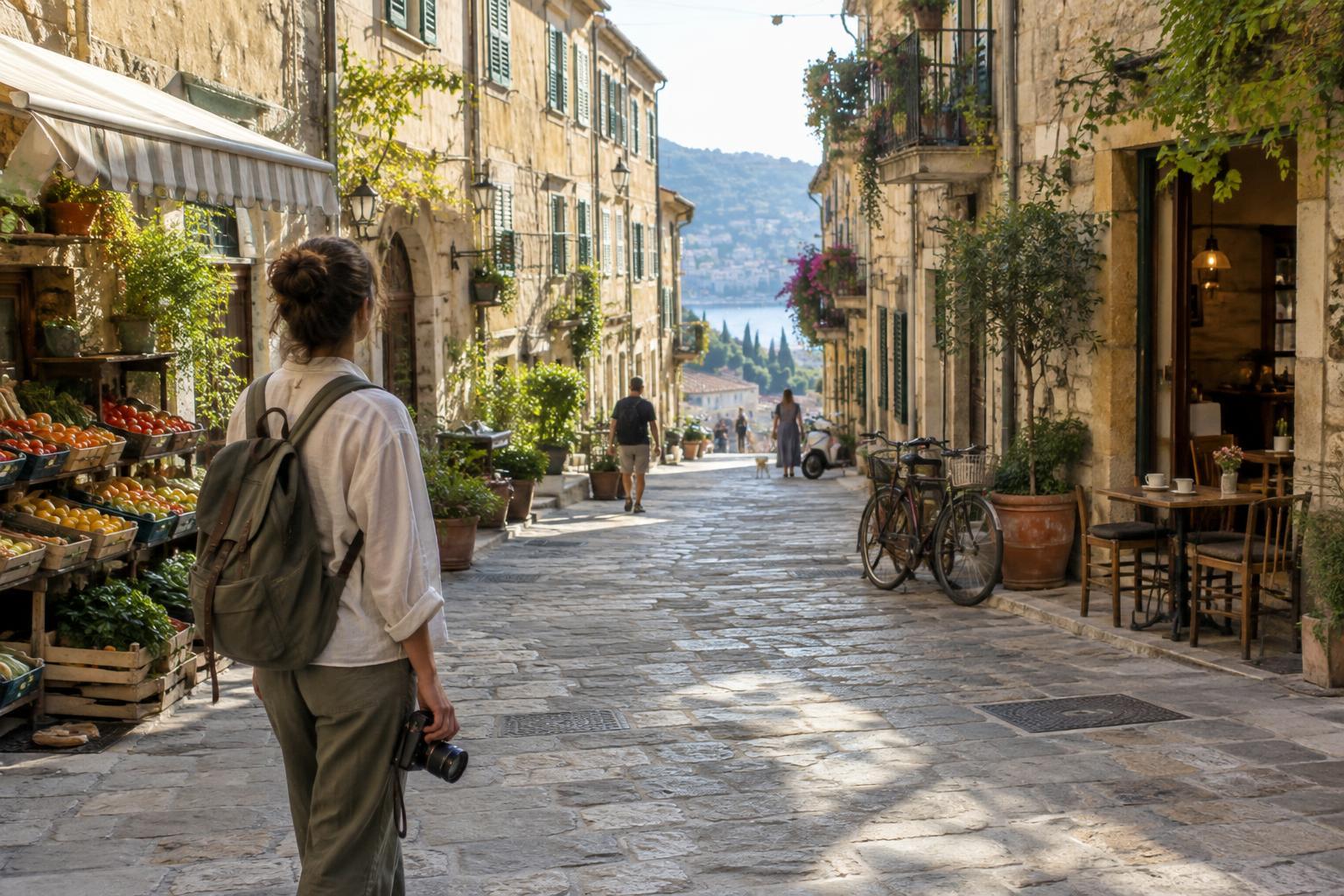
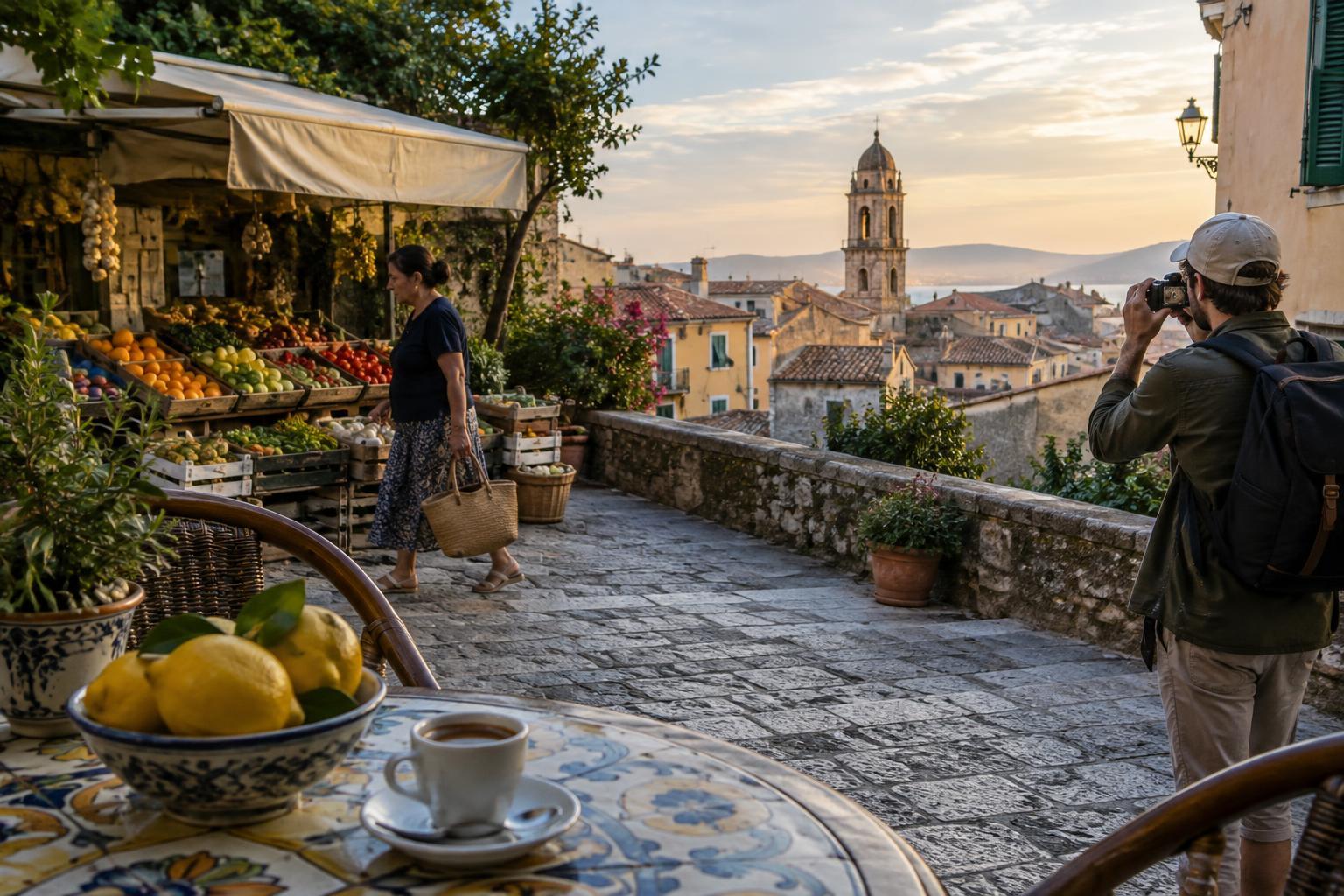
Divide your shot list into wide views, human-scale scenes, and details. Wide views establish geography and atmosphere: a waterfront at first light, a road winding through hills, or a plaza seen from its edge. Human-scale scenes show how a place works, such as someone waiting for a bus, tables being set outside a café, or travelers navigating a crossing. Details invite a closer look: worn steps, patterned tiles, a handwritten menu, or the colors of goods arranged in a window.
For each location, try listing one possible frame at each scale rather than ten specific objects you must find. At a train station, your prompts might be the building in its surroundings, the movement of passengers, and a close view of a departure board or ticket. The exact pictures will depend on access, light, and what catches your eye. Treat the prompts as options, not obligations.
Include a few sensory cues in your notes. You cannot photograph a sound or smell directly, but you can look for visible traces of them: instruments set beside a performer, steam rising from food, or leaves moving in a strong breeze. This approach often produces more distinctive photographs than a list made entirely from place names.
Leave room for light and chance
A useful shot list has priorities but not a rigid schedule. If a landmark matters to you, note a possible time to visit based on the direction of light and the angle you want. Then add an alternative nearby subject in case the light, weather, or crowds do not suit that plan. Overcast skies may soften contrast for portraits and street details, while direct sunlight can make strong shapes and shadows part of the composition.
Leave at least one open prompt on each outing, such as “something repeated,” “a quiet corner,” or “a surprising color.” It encourages you to notice what you could not have planned from home. When a scene holds your attention, take a moment to change position or wait for the background to simplify. A short list should give you enough freedom to stay with a promising subject.
Match your equipment to the way you move
You do not need a separate lens for every category on the list. A phone or a camera with a versatile zoom can handle wide scenes and many details without frequent gear changes. If you prefer a single prime lens, choose prompts that suit its field of view and use your feet when it is safe and practical to do so. For small details, move closer and check the edges of the frame for distractions before taking the picture.
Keep the kit comfortable enough to carry throughout the day. A charged battery or power bank and enough storage may be more useful than an extra piece of equipment you are reluctant to carry. Where photography is restricted, follow local rules. When photographing people, especially at close range, pay attention to the setting and ask permission when appropriate. A good shot list should never pressure you to intrude.
Use a quick review to improve the next outing
At the end of the day, scan your photographs before adding more items to the list. Do you have several wide views but nothing that shows texture or scale? Are your detail shots attractive yet disconnected from the place? Choose one gap to address tomorrow. You might photograph the same neighborhood from farther back, seek a quieter moment, or include a frame that links a detail to its surroundings.
For a simple exercise, choose one stop and make a five-frame sequence: an establishing view, a human-scale scene, two different details, and a closing image. Arrange the frames in that order, then ask whether a viewer could sense a progression without a caption for every photograph. The goal is not to complete a perfect checklist. It is to return with images that work together, including the small observations you might otherwise have walked past.