Start with a conversation, not a camera
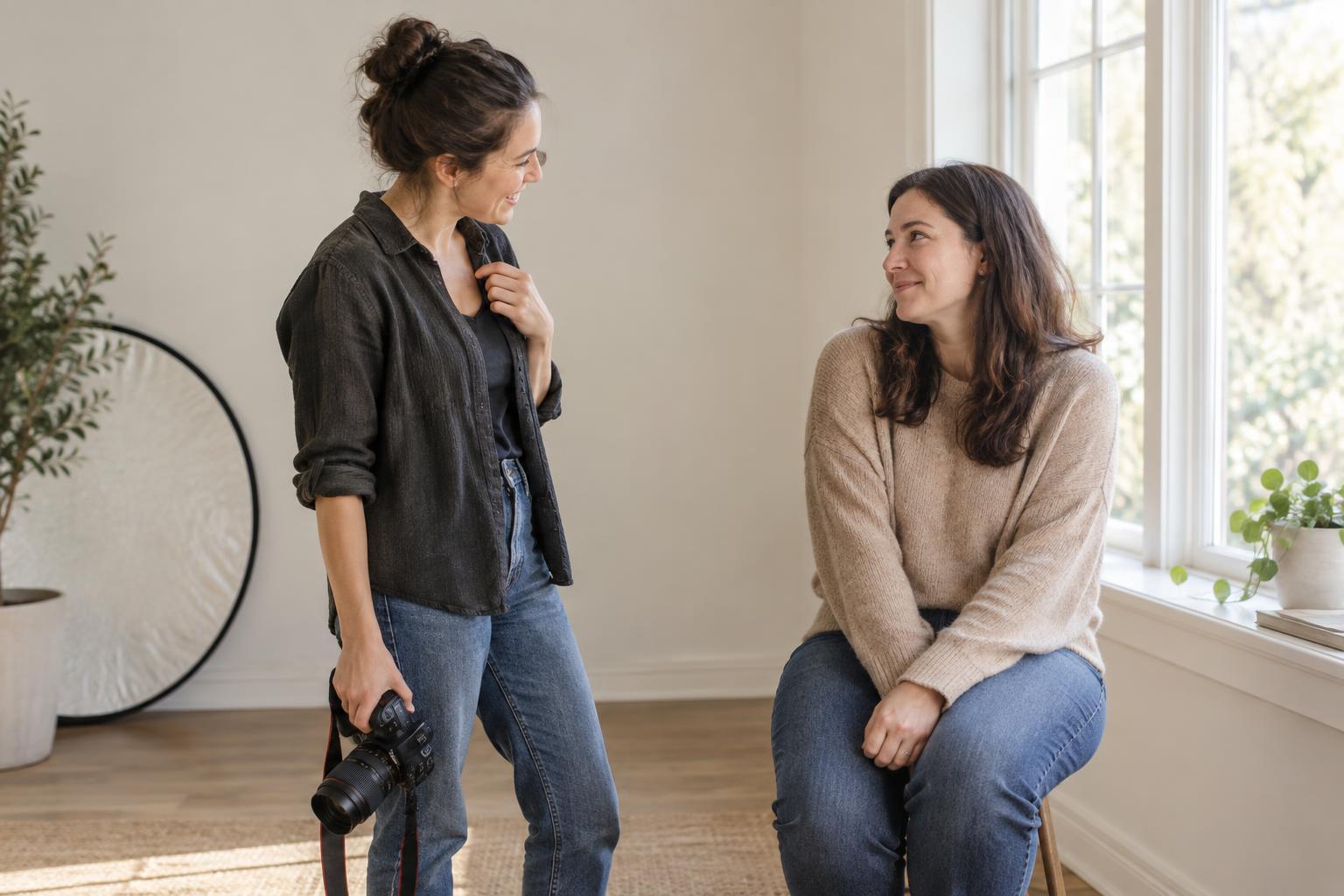
Being camera-shy can mean different things. One person may dislike posing; another may worry about where the photographs will appear. Before the session, ask what the portraits are for, how formal they should feel, and whether the person has any preferences about location, clothing, or angles. You do not need to promise a perfect photograph. You do need to agree on a plan the subject understands.
Explain roughly how the session will work: where you will begin, whether you will offer posing suggestions, when you will take breaks, and how you will choose the final images. Ask before sharing photographs publicly, even if the session feels informal. Knowing they can speak up about a pose or request a pause gives the subject some control, which is more useful than repeatedly telling them to relax.
Choose a setting that asks less of the subject
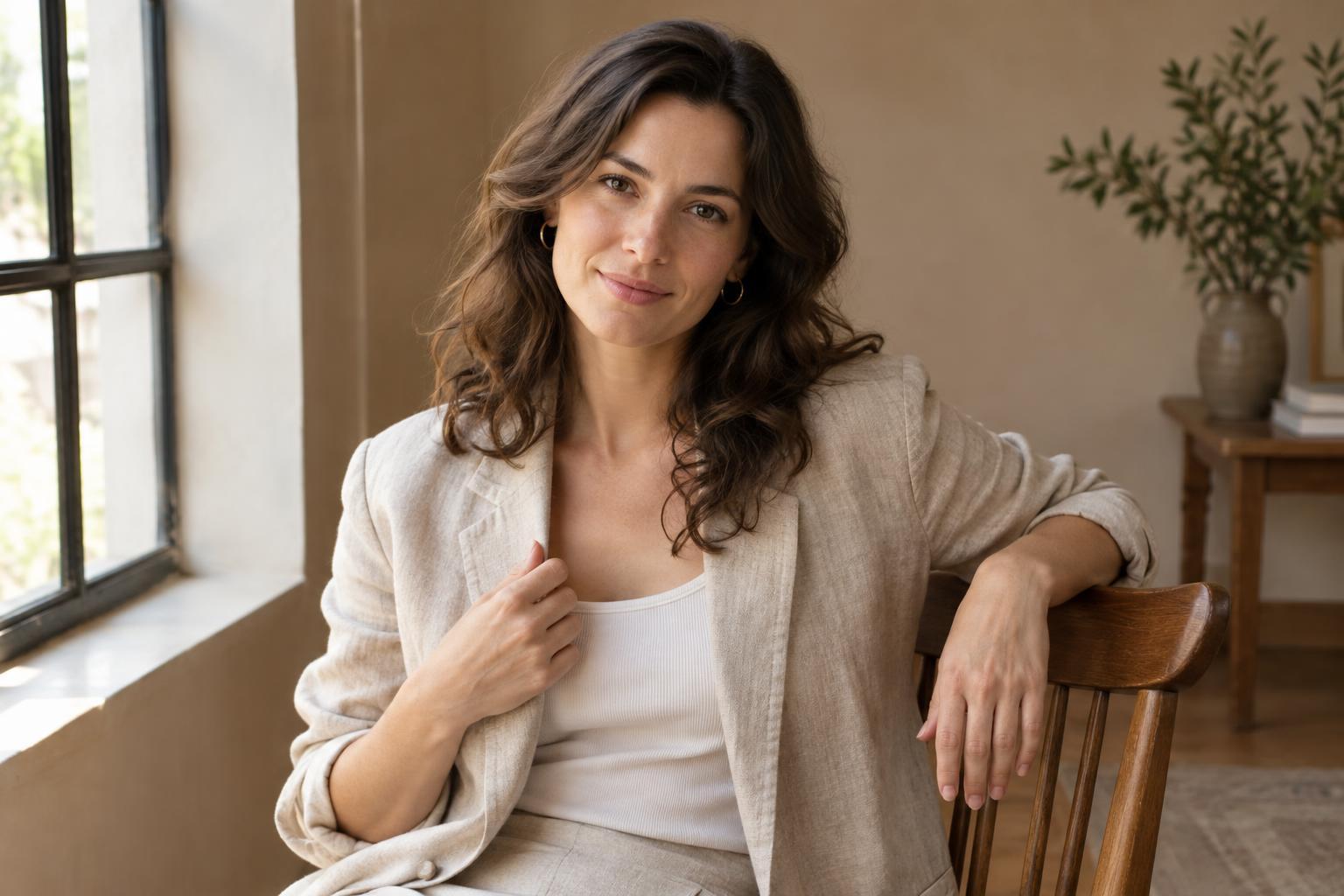
A quiet, familiar place can make the first few minutes easier. Look for a spot with an uncluttered background and room for the person to stand or sit comfortably. Near a large window or in open shade outdoors, soft light often lets you work without placing a bright lamp close to someone’s face. Check the background for distractions before bringing the camera up; frequent interruptions to move objects can make the session feel more complicated than it is.
Keep equipment choices simple. One camera and a lens that lets you frame a portrait from a comfortable conversational distance may be enough. If you use a light or reflector, explain what it does and ask before moving it close to the subject. Set exposure and test your framing with an empty chair or a stand-in when possible. The less time your subject spends waiting while you adjust settings, the more time you have to pay attention to them.
Give small, usable directions
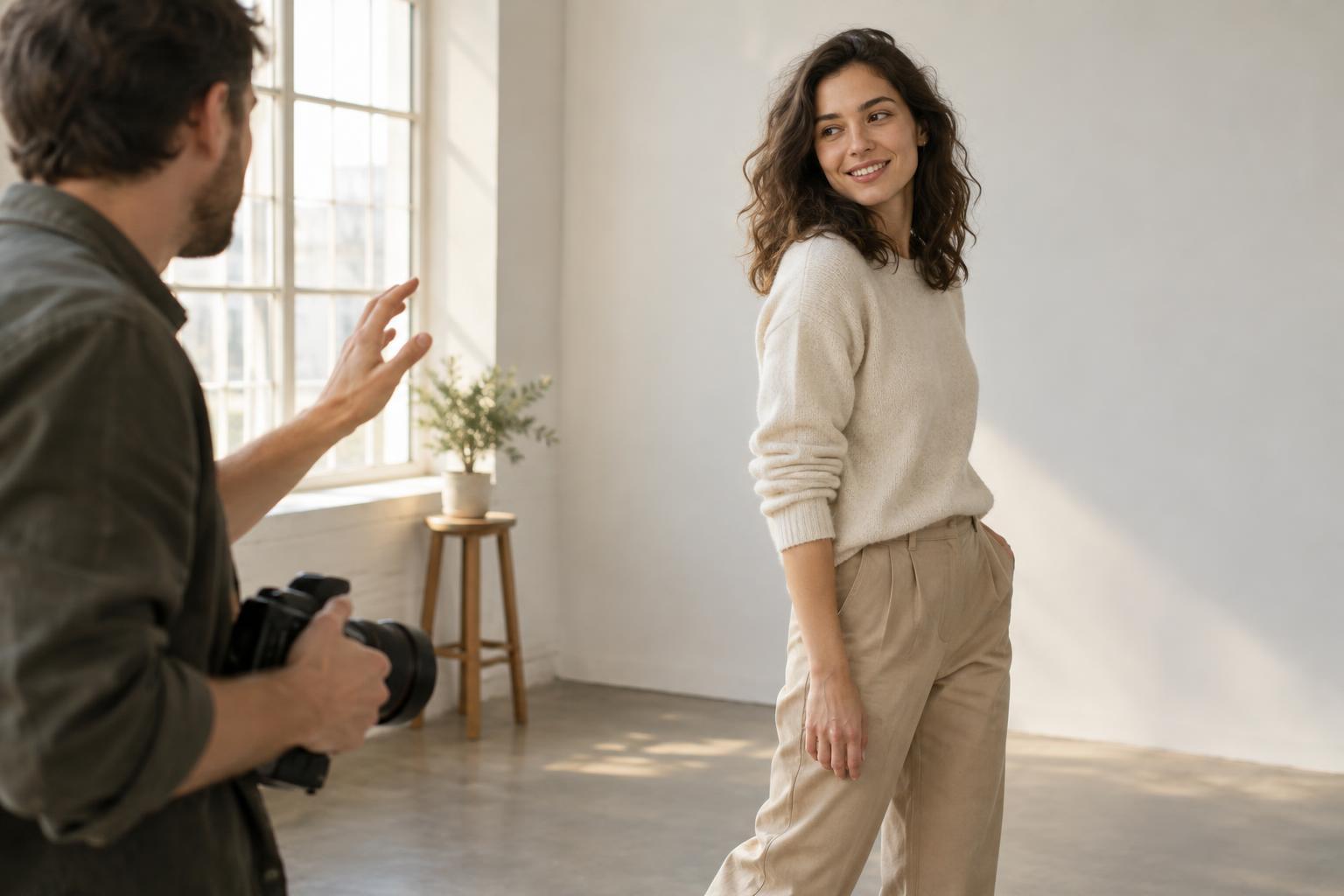
“Act natural” is difficult advice to follow while a camera is pointed at you. Offer one concrete suggestion at a time instead: turn slightly toward the window, rest a hand on the chair, or look past the camera for a moment. Demonstrate a movement if that is easier than describing it. Avoid correcting every detail. Let the person settle into a position before making another adjustment.
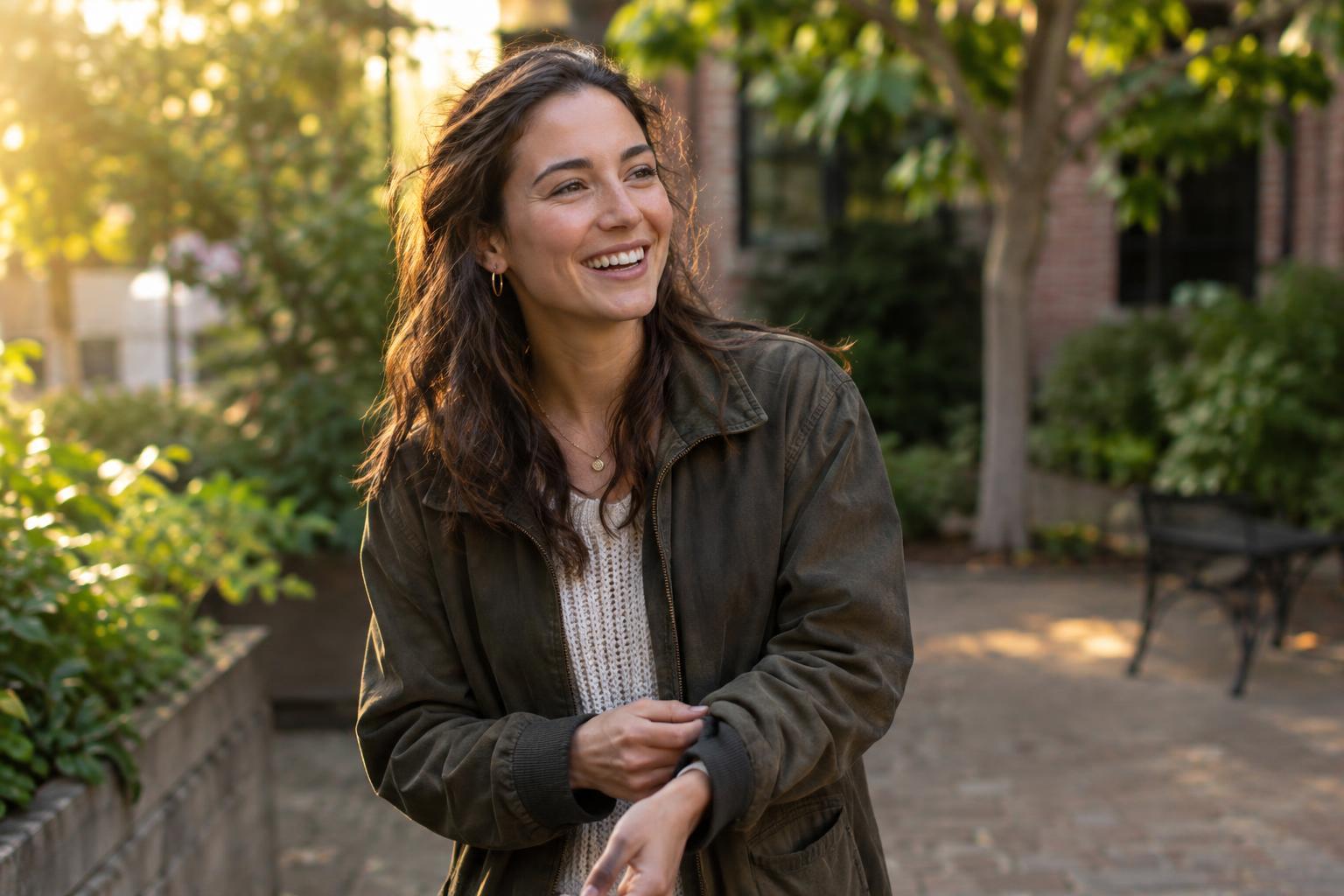
Beginning with a simple activity can take attention away from posing. A subject might walk a short distance, make a cup of tea in their own kitchen, or talk about something they enjoy while seated. Tell them when you plan to photograph the activity; do not rely on surprise to get an unguarded expression. If they prefer a straightforward posed portrait, respect that preference too. Comfort comes from choosing an approach together, not from making everyone behave spontaneously.
Use feedback to build confidence
Give feedback about what is working rather than judging how the person looks. “That turn brings light into your eyes” is more actionable than “You look great,” especially if the subject does not believe the compliment. Keep your voice steady and allow a little silence. You can continue photographing through small changes in expression without asking for a new smile after every frame.
After a few minutes, offer to show a small selection on the camera if the subject wants to look. Some people find reassurance in seeing a promising image; others become more self-conscious when they review every frame. Ask which they prefer. If an image bothers them, listen without arguing. You may be able to adjust the light, framing, or pose, but do not make the subject defend their reaction.
Make room for pauses and a clear finish
Watch for signs that the pace needs to change: repeated tense expressions, very short answers, or a subject who keeps asking whether you are nearly done. Check in directly rather than interpreting those signs as a problem to photograph through. A short pause to sit down, adjust clothing, or talk without the camera raised can help reset the session. Set a reasonable endpoint, and avoid extending the shoot simply because you want more options.
For practice, try a ten-minute portrait session with a willing friend. Spend two minutes agreeing on the goal, choose one comfortable spot, and give no more than one direction at a time. At the end, ask which part felt easiest and which direction was confusing. Use that feedback to improve your next session. The aim is not to make camera-shyness disappear; it is to create enough clarity and trust for the person to take part on their own terms.