Start by looking at the shadow
Place a mug on a table near a window and look at its shadow. Does the dark area begin abruptly, with a clear outline of the handle? Or does the edge fade gradually into the tabletop? That transition is one of the simplest ways to recognize light quality. Hard light makes relatively crisp shadow edges. Soft light makes broader, less distinct transitions.
Neither quality is automatically better. A crisp shadow can emphasize shape, pattern, and texture; a gradual one can let the viewer concentrate on a face or a quiet arrangement of objects. Before moving a lamp or changing camera settings, ask what the shadows are doing for the photograph. Their edges often communicate the lighting choice more clearly than the bright parts of the frame.
What makes light hard or soft?
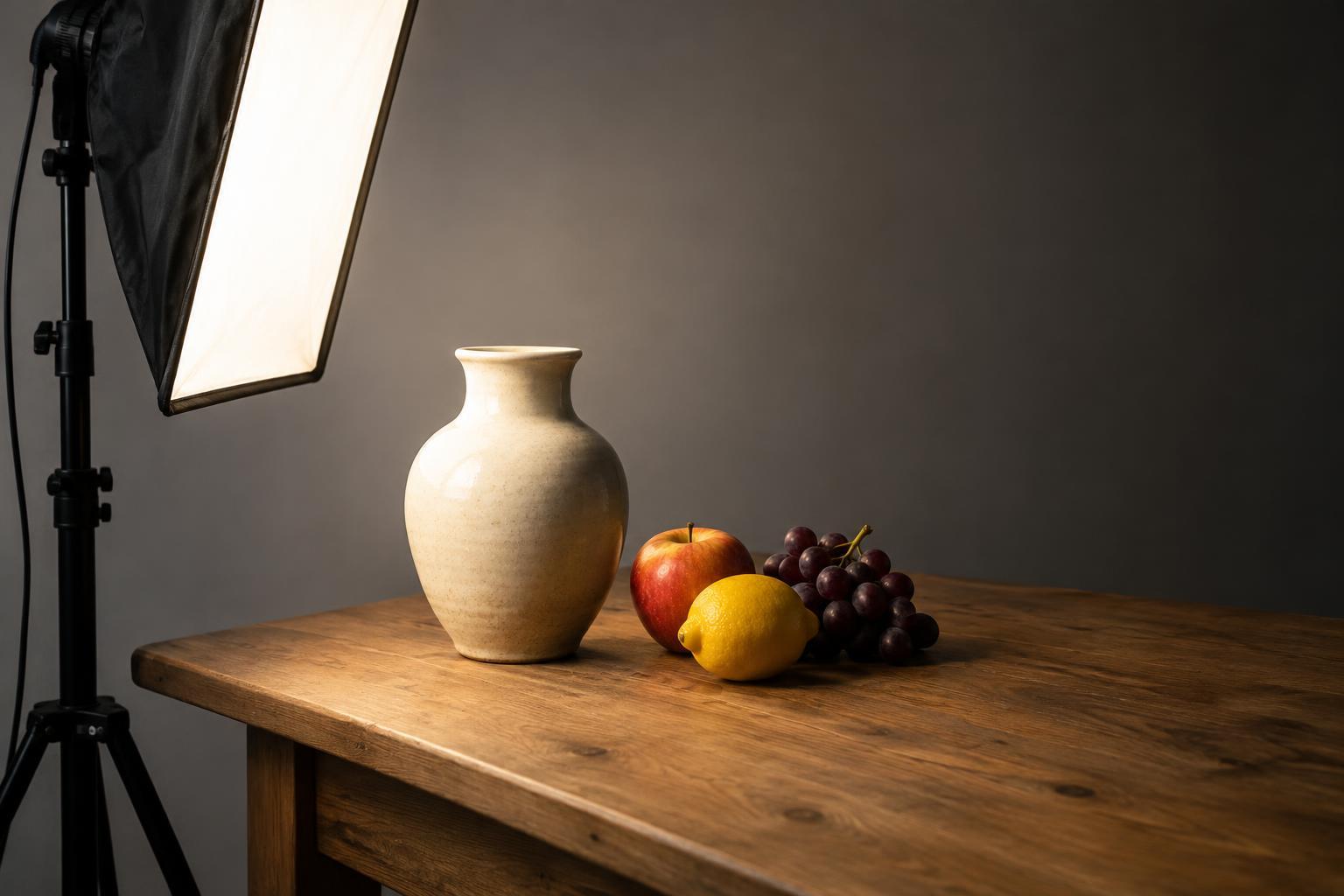
The main factor is how large the light source appears from the subject’s position. A small-looking source sends light from a narrow range of directions, producing a well-defined shadow. A large-looking source sends light from many directions, so some rays reach areas that others cannot. The shadow then has a wider transition between light and dark.
Direct sunlight often looks hard because the sun appears small in the sky. A cloudy sky can act like a much larger source, spreading light across the subject. Indoors, a bare bulb may cast sharp shadows, while a bulb shining through a large translucent surface may cast softer ones. What matters is not just the physical size of a source, but its apparent size relative to the subject.
Distance changes that apparent size. Move a lamp or softbox closer to a portrait subject and its light usually becomes softer; move it farther away and its shadows become more defined. Moving the source also changes how brightly it illuminates the subject, so you may need to adjust exposure. Watch the shadow edge as you move the light rather than relying on a fixed distance.
Choose an edge that suits the subject
Hard light can be useful when the shadow is part of the composition. Side light across weathered wood, for example, may make its surface more apparent. A person standing beside a narrow shaft of sunlight might create a bold silhouette on a wall. Because crisp edges draw attention, check where they fall: a dark line across an eye or a busy shadow behind the subject may compete with the expression you intended to show.
Soft light can make a portrait feel less dominated by individual shadows. It is also helpful for objects with curved surfaces when you want a smooth shift in tone. Softness does not mean an image must look flat, though. A large source placed to one side can still give a face or object visible shape. Likewise, a hard source can produce gentle overall contrast if light bounces into the shadows from nearby walls.
Shadow-edge softness and shadow darkness are related but separate things. To evaluate light quality, inspect the transition at an edge. To evaluate contrast, compare the lit and shaded areas. This distinction helps when editing, too: raising the shadows can make them less dark, but it will not turn a sharply outlined shadow into one made by a large source.
Shape the light with simple tools
For softer window light, position your subject where the window appears large from their point of view. A sheer curtain may spread the light further, though it can also reduce its intensity. For a harder look, try direct sunlight through a small opening, or use a small undiffused lamp. Keep an eye on color when mixing daylight with household lamps; different sources may give the lit and shaded areas different casts.
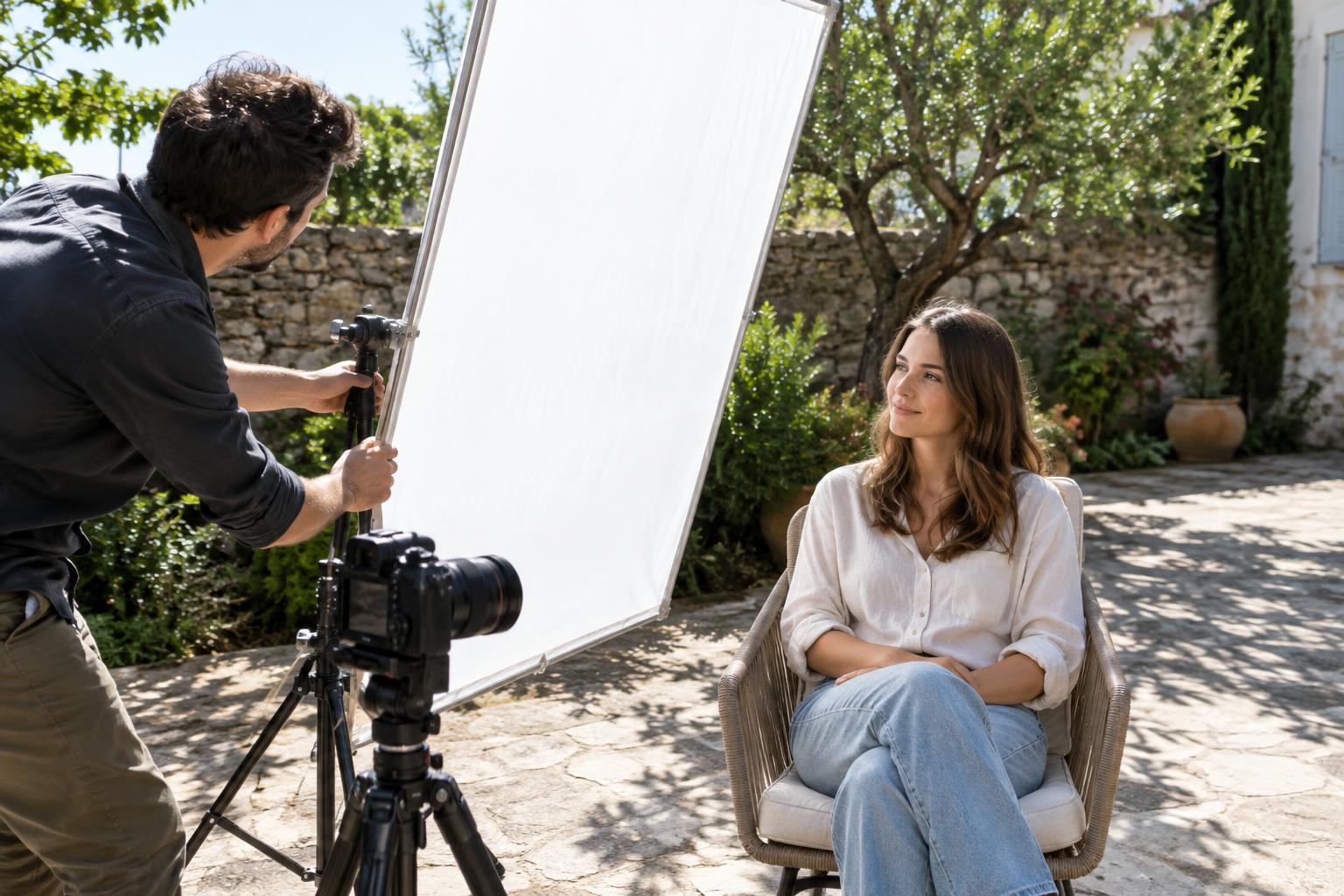
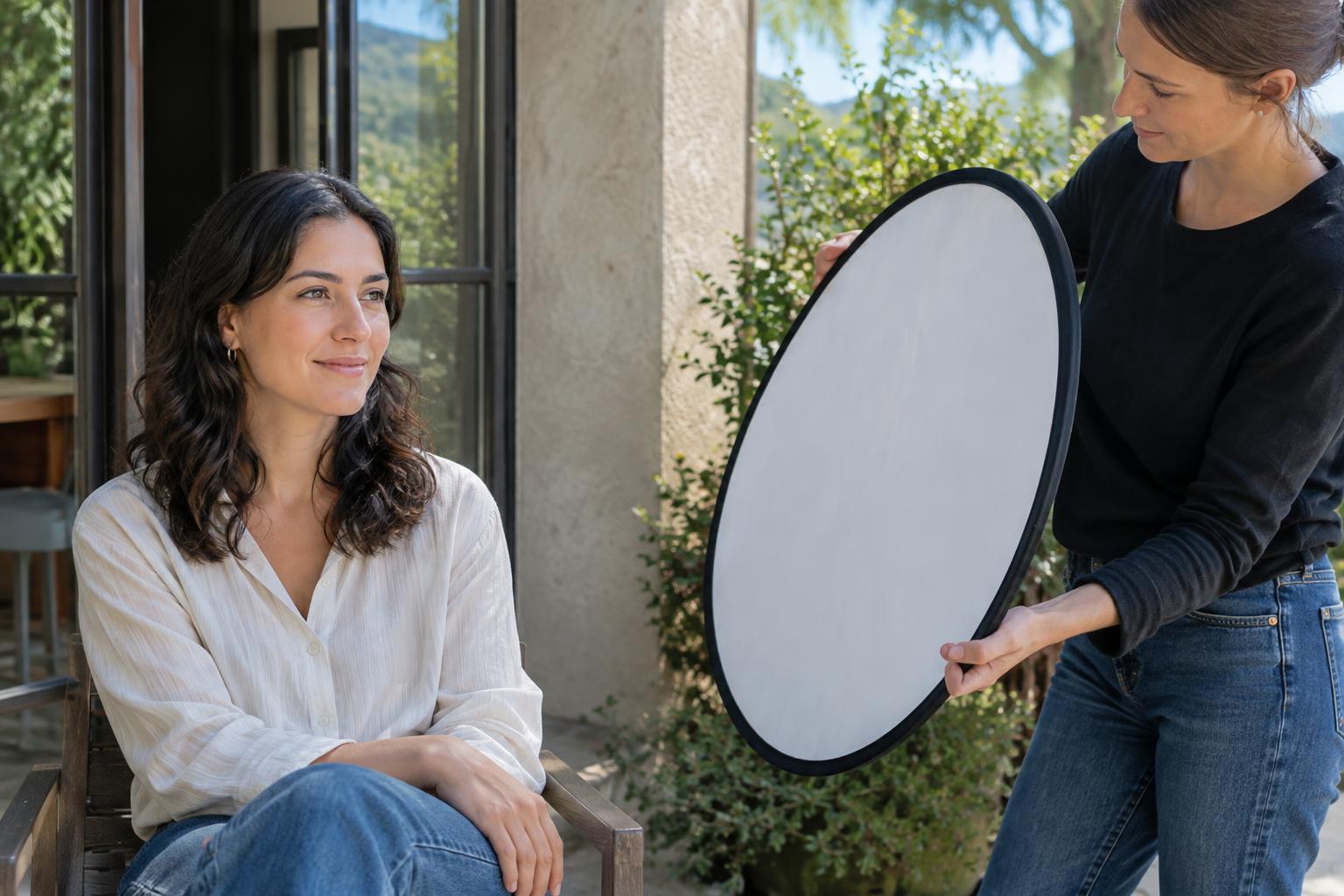
A reflector or plain light-colored board can brighten shadows without changing the main source. A dark board can do the opposite by blocking light that would otherwise bounce into them. These tools primarily change how much detail remains in the shadows, while the size and position of the main source determine much of the edge quality. If you use an artificial light, avoid placing fabric or paper close to a hot bulb.
Try a shadow-edge exercise
Set a small object a short distance in front of a plain wall or sheet of paper. Photograph it first in direct sunlight or under a bare lamp, then under light from a large window or a diffused lamp. Keep the object and background in the same positions. Look at the shadow outline in both images, especially where a handle, leaf, or other narrow detail casts a recognizable shape.
Next, use one source and change only its distance from the object. Adjust exposure as needed, and compare the width of the shadow transition rather than the overall brightness. Finally, make two compositions: one in which a sharp shadow is a deliberate graphic element, and one in which a soft edge keeps attention on the subject. The goal is not to declare a winner. It is to notice the edge, predict how it will look, and choose it on purpose.