Build a kit you can carry comfortably
Start with the photographs you hope to make, not every item you own. A camera, one versatile lens, a second lens with a distinct purpose, spare batteries, memory cards, and a compact charger may cover most trips. If you expect long walks, consider whether each extra item earns its space and weight. A smaller kit is easier to keep with you through terminals, transfers, and changes of plan.
Before you leave, check your airline’s carry-on dimensions and weight allowances, including any separate limit for a personal item. Try the packed bag on and walk with it for a few minutes. If reaching the gate already feels uncomfortable, it will probably feel worse after a day of travel. Leave a little room so you can put the camera away quickly rather than carrying loose equipment through the airport.
Keep fragile and essential items close
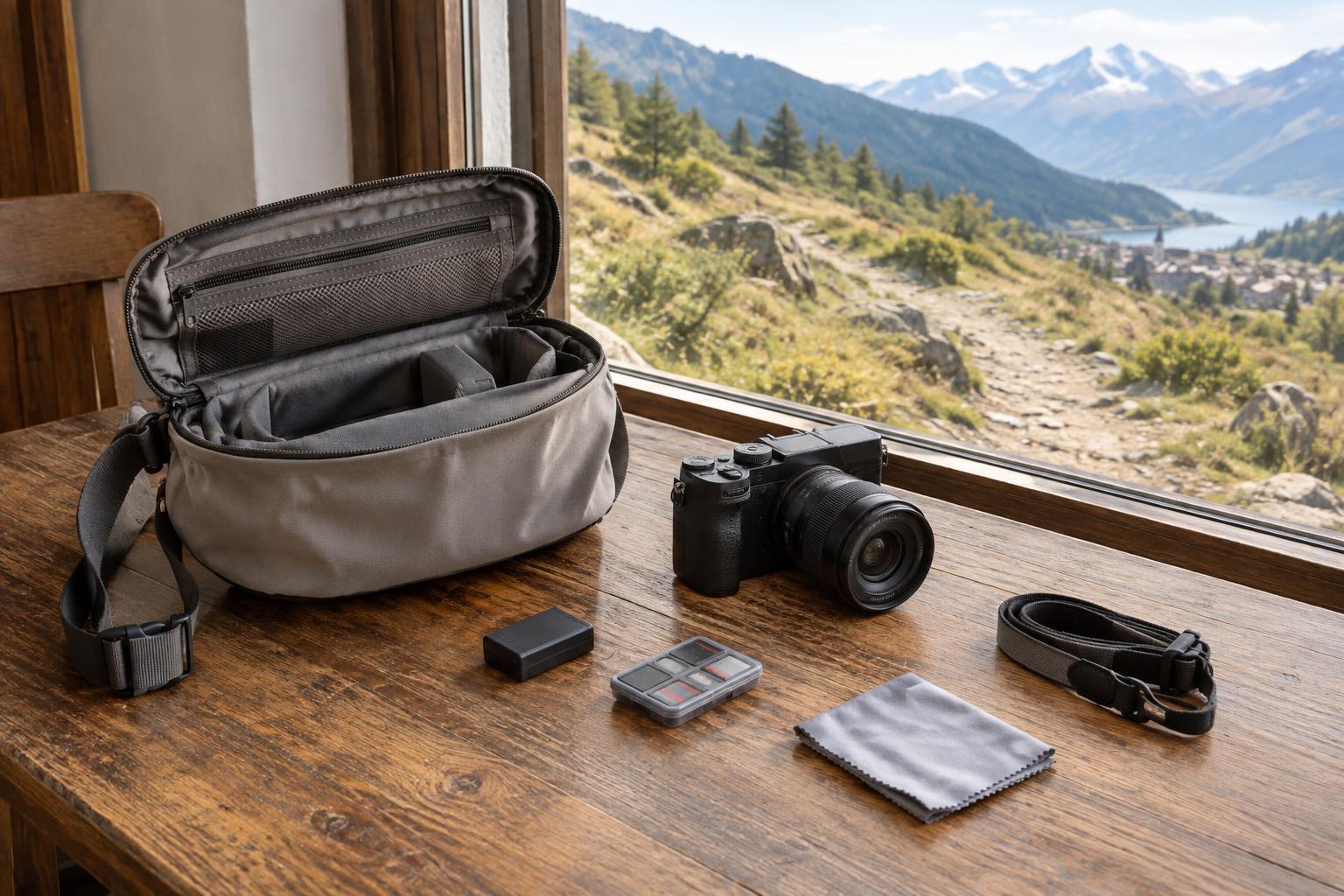
Carry your camera, lenses, memory cards, and other hard-to-replace items in the cabin when the applicable rules and space allow. Use padded dividers or wraps so equipment cannot knock together, but arrange them so you can retrieve an item without emptying the whole bag. Lens caps, a closed camera compartment, and a strap tucked away from zippers can prevent avoidable bumps and snags.
Plan for the possibility that a cabin bag may need to be checked at the gate. Put your camera, spare batteries, cards, and essential documents in a small removable pouch or personal item that you can take out promptly. Keep a simple list of what is in each bag; it helps when repacking after screening and when checking that nothing was left behind.
Pack spare batteries with extra care
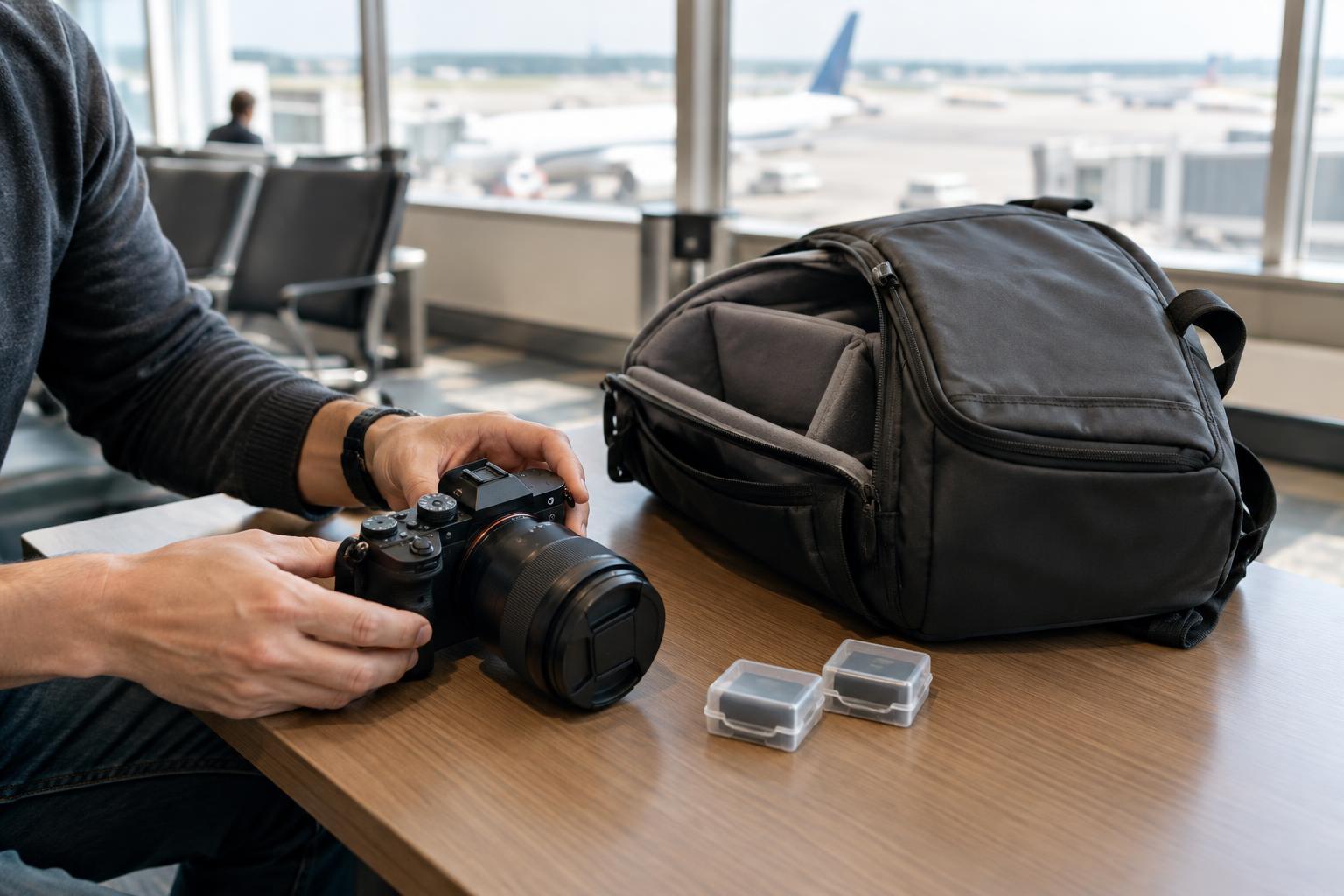
Spare lithium camera batteries and power banks commonly need to travel in carry-on baggage rather than checked baggage. Protect each spare battery’s contacts from touching metal or another battery: its original packaging, an individual protective case, or another secure insulating method can help. Keep batteries where they will not be crushed or accidentally activated. A power bank is generally treated as a spare battery, not as a charger installed in a device.
Rules can differ by battery type, capacity, airline, and route. Larger batteries may face restrictions or require airline approval, so read the watt-hour rating on each battery and check the carrier’s published guidance before packing. Also check the rules that apply at your departure and connecting airports. If your carry-on is taken for gate checking, tell the staff about spare batteries or power banks and remove them as required. Do not assume that a battery installed in a camera and a loose spare are handled identically.
Make security screening easier
Pack for easy access. Screening staff may ask you to remove cameras or other electronics, open a compartment, or present a bag for additional inspection; procedures vary by location. Keep small accessories together in a pouch so lens caps, card readers, and cables do not scatter across a tray. Allow extra time if you are carrying an unusually large kit, and follow the instructions given at the checkpoint.
After screening, step aside before reorganizing. Count your camera bodies and lenses, confirm that battery cases and card wallets are back in the bag, and close every zipper. It is easy to focus on the largest piece of equipment while a tiny card case remains in a tray. Avoid changing lenses in a crowded queue; a calmer spot gives you more control over the gear.
Prepare for the photographs after the flight
An airport packing plan should also support your first day of shooting. Charge batteries before departure, clear enough space on your cards, and set the camera to a familiar configuration so you are ready when you arrive. If you bring a charger, check that it accepts the electrical supply at your destination and pack an appropriate plug adapter if needed. Keep cards containing photographs in a consistent, protected place rather than loose in a pocket.
A useful practice exercise is to pack your flight kit, then time yourself removing a camera, finding a spare battery, and putting everything away again. If any step requires unpacking the entire bag, rearrange it. The goal is not a perfect packing system: it is a kit you can carry safely, check quickly, and use without missing the moments you traveled to photograph.