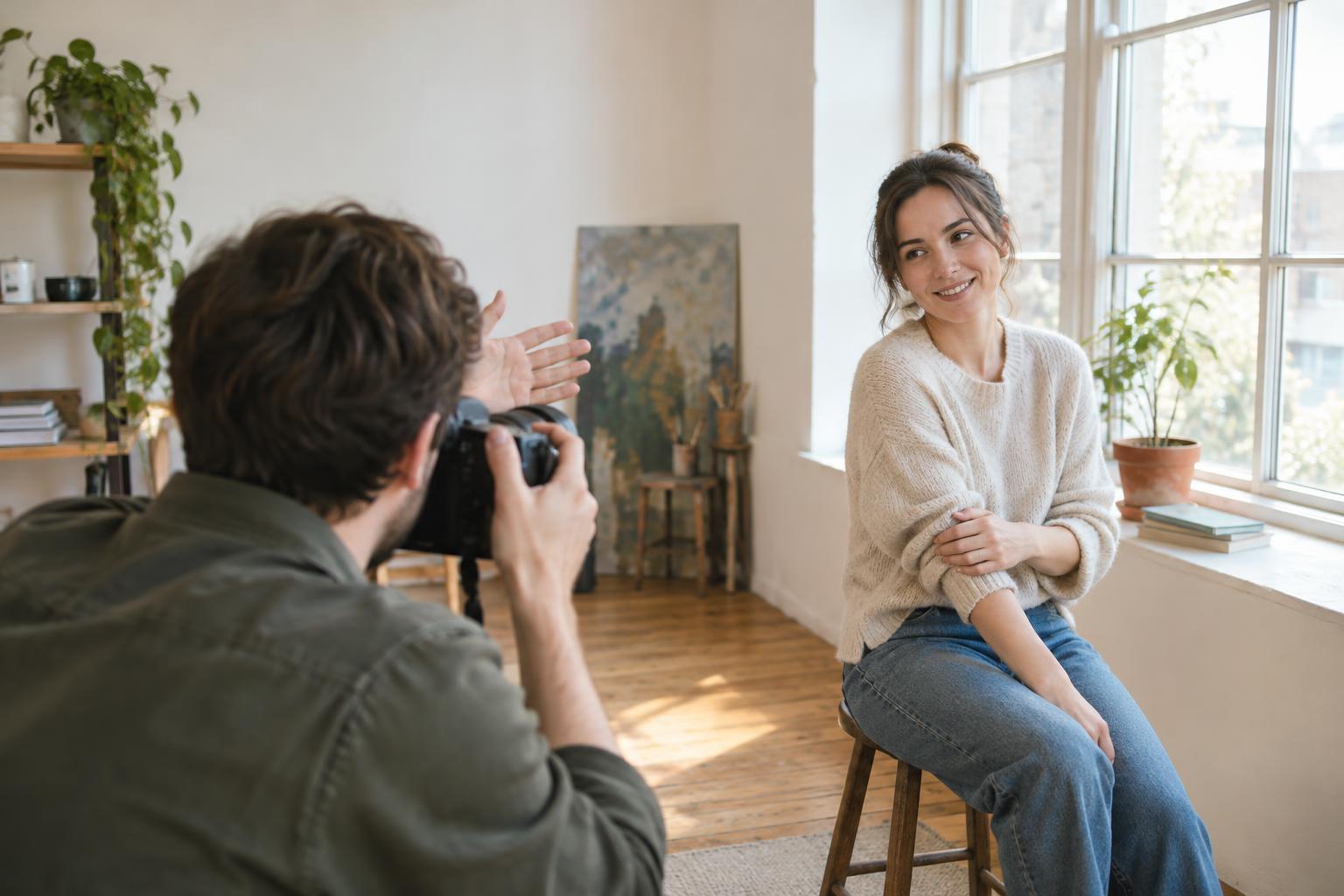
Start with the person, not the backdrop
An environmental portrait shows a person in a place that adds meaning to their image. A baker beside a workbench, a musician in a rehearsal room, or a gardener among plants gives the viewer more to explore than a face alone. The setting should offer clues about the person, not compete with them. Before lifting the camera, ask what they do in this space and which objects or routines matter to them.
Treat those answers as a starting point rather than a script. Someone may prefer to be photographed in a quiet corner instead of at the busiest part of their workplace. Ask what they are comfortable showing, especially when the space contains private information or other people. A portrait can feel revealing without displaying every detail. Collaboration often leads to gestures and locations that feel more natural to the person being photographed.
Build a frame with a clear subject
Begin with a wide view, then look at the edges of the frame. Include enough of the surroundings to establish a place, but remove details that pull attention away from the person: a bright sign, a half-visible object, or a distracting line behind their head. You can simplify the scene by moving a step to either side, changing camera height, or asking the subject to shift slightly. Small changes often work better than rearranging the whole room.
Think about how the viewer's eye will travel through the image. A doorway can frame the subject; a desk or row of tools can lead toward them. Leave space around hands when a task or object is important to the story. Make one frame in which the person looks at the camera and another in which they engage with the space. The first may feel direct, while the second may reveal more about what they do.
Use light to connect person and place
Window light is a useful place to start because you can see its direction before taking a picture. Position the subject where the light reaches their face, then check whether the background still contains detail you want to keep. If the window is much brighter than the room, try turning the subject slightly toward it or moving them farther inside. Watch for mixed light sources that give the face and surroundings noticeably different colors.
Artificial light can help when the available light is too dim, but it need not make the scene look staged. A small light or flash bounced from a nearby wall may lift the face while preserving the room's atmosphere. If you use flash, make a frame without it first so you know what the existing light contributes. In either case, check for reflections in glasses and for harsh shadows cast by shelves or equipment.
Choose equipment for the space
You do not need a particular camera or lens to make an environmental portrait. A moderate wide-angle view can show the setting in a tight room, though getting very close may exaggerate the size of a face or hands near the lens. A longer focal length can simplify a busy background, but you may have to stand farther back and lose some context. Choose the view that lets the person and the important parts of the space fit together.
Depth of field is a storytelling choice, too. A very blurred background may hide the details that make the location meaningful. Try a smaller aperture when you want tools, signs, or textures to remain recognizable, and check the result at the size where the image will be viewed. If light is limited, a steady hand, a stable surface, or a higher ISO may be more useful than asking someone to hold an uncomfortable pose for a long exposure.
Practice with a three-frame story
For an exercise, photograph one willing person in a place they know well. Make three portraits: a wide frame that establishes the setting, a medium frame that shows the person interacting with it, and a closer frame that includes one meaningful environmental detail. Before each shot, decide what the surroundings should communicate. Afterward, ask the person which image feels most like them and why.
When editing, compare the three frames before making strong adjustments. Keep skin tones believable, and avoid brightening every corner until the scene loses its sense of place. Crop only after considering what each object contributes; an imperfect-looking detail may be essential context. The strongest environmental portrait is not necessarily the busiest one. It is the frame in which the person remains unmistakable and the surroundings give the viewer a reason to look longer.