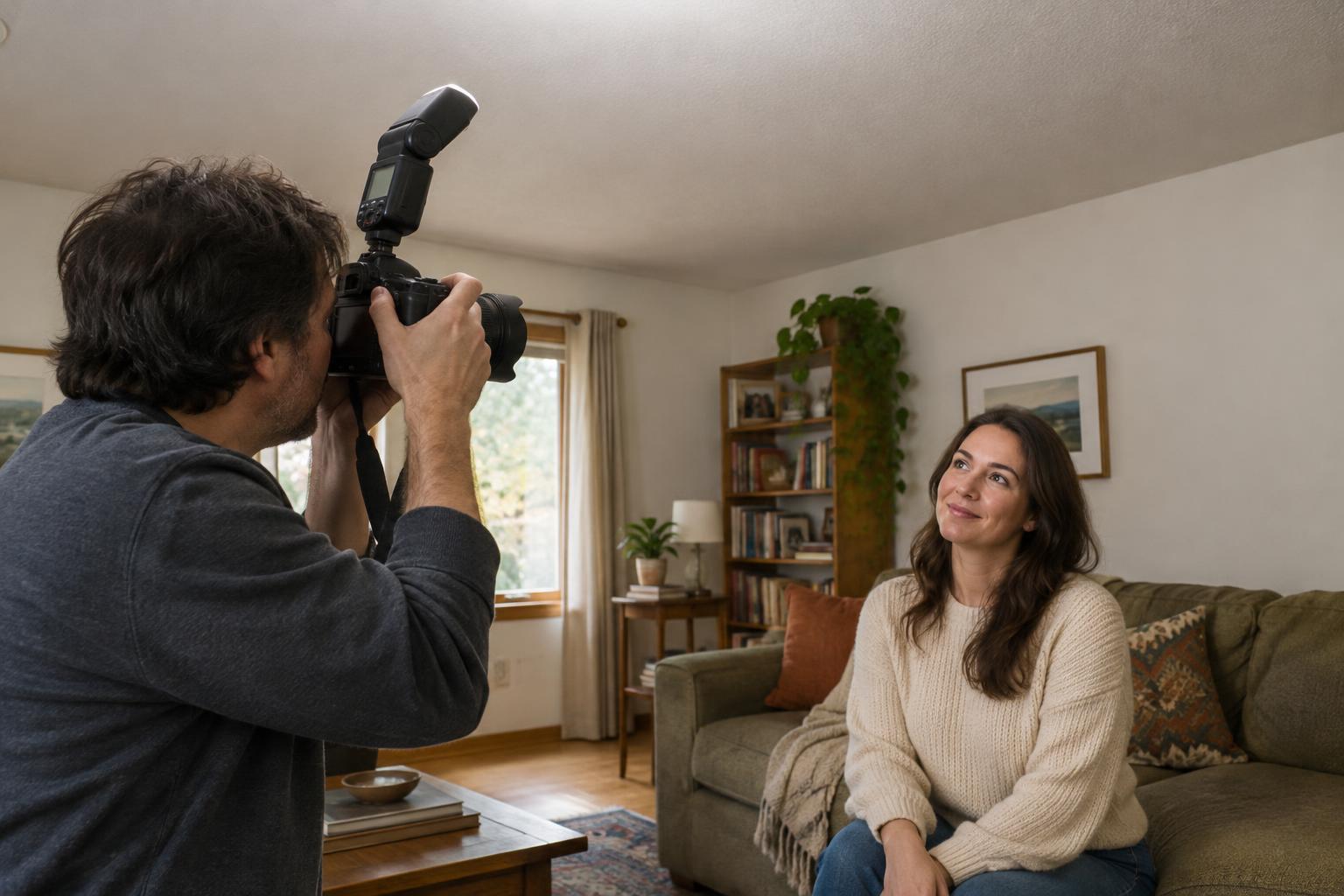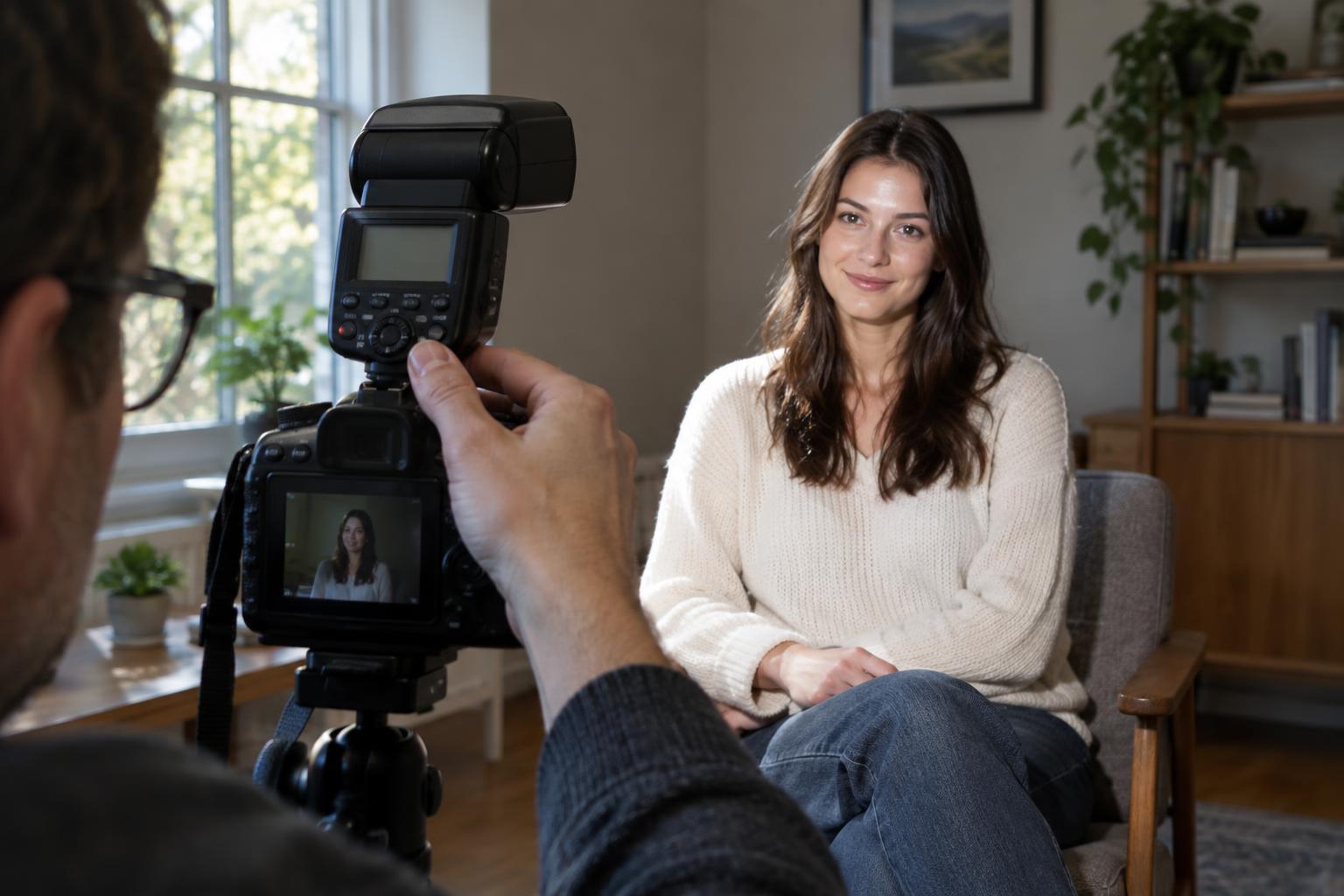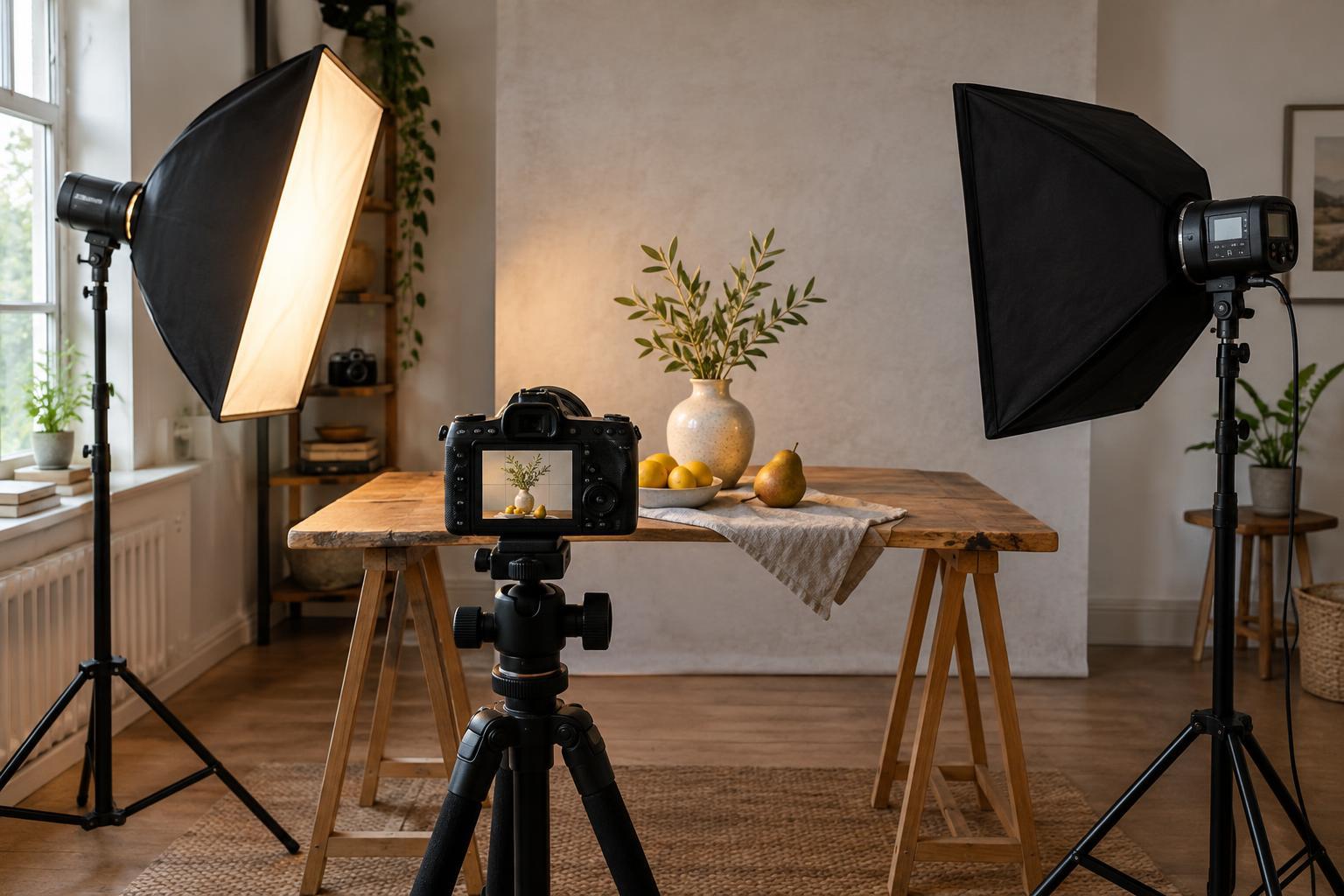
Start with what the light needs to do
The most useful question is not whether continuous light or flash is better. It is what you need the light to accomplish. Are you photographing a person who moves, an object you can arrange slowly, or a scene that also includes daylight? Do you need to make stills and video in the same session? Your answers narrow the choice faster than a list of equipment specifications.
A continuous light stays on while you compose and shoot. You can watch shadows shift as you move it, which makes it approachable for learning and convenient for video. A flash emits a brief burst when you take the photograph. That burst can provide a great deal of light for a short moment, but you usually judge its final effect from a test frame rather than by looking at the scene.
When continuous light makes sense
Choose continuous light when seeing the result before pressing the shutter matters. It is especially helpful for carefully placed shadows, reflective products and portraits where small changes to the light angle affect the face. Because the light remains on, you can make an adjustment, look at the subject and decide whether to move it again. If you also record video, the same basic setup can serve both formats.
Its limits become more noticeable when you need a small aperture, a low ISO or a fast shutter speed. If the light is not bright enough for those settings, you may need to move it closer, raise ISO, open the aperture or let more room light into the exposure. Moving a light closer also changes how quickly its illumination falls across the scene, so check both the subject and background. Some continuous lights and modifiers can get warm; leave room for ventilation and handle them according to their instructions.
When flash makes sense
Flash is a strong option when you want to add light to a bright scene or keep a moving subject sharp. A short flash burst can freeze motion even when the camera’s shutter is open longer, provided the flash supplies most of the light recorded on the subject. If ambient light also contributes strongly, it may leave a visible blur or trail. This is why a test shot matters more than assuming flash alone will stop every movement.
Flash also offers a way to shape the relationship between subject and surroundings. In many setups, changing shutter speed affects the ambient exposure more than the flash-lit subject, while flash power, distance and aperture affect the flash exposure. This distinction has limits: your camera’s flash-sync settings constrain ordinary flash use at faster shutter speeds. High-speed sync may offer another option if your equipment supports it, though it generally reduces the effective light available. Flash can also require time between shots to recharge, so consider your shooting pace.
Compare the whole setup, not just the lamp
Either source can make soft or hard light. The apparent size of the source from the subject’s position matters more than the label on the device. A large diffuser placed close to a face tends to create gentler shadow edges than a small bare light placed farther away. Before buying accessories, decide where the light can stand, how large a modifier fits and whether you need to carry the kit.
Think about the people and space, too. A continuous light lets a portrait subject see the lighting, but a bright source may be uncomfortable to face for long periods. Flash avoids a constant bright light, though repeated bursts can be distracting. In a shared room or a location with changing daylight, either type needs test frames and occasional exposure checks. If you mix sources, watch for differences in color that may be harder to correct than a simple overall white-balance adjustment.
Run a small test before the important shoot
Set up one subject near a plain background and place your light about 45 degrees to one side. Take a frame, then move the light closer without changing its angle. Compare the shadow edge, the brightness across the background and any reflections. If you have access to both continuous light and flash, repeat with a similar-sized modifier. Keep your framing and subject position fixed, but adjust exposure as needed; this is a practical comparison of working methods, not a test of equal output.
Finally, introduce movement. Ask a portrait subject to turn their head slowly, or photograph an object moving through the frame. Check sharpness at the size you expect to use the image. If the continuous setup gives you enough shutter speed and the preview helps you work, it may be the simpler choice. If motion blur or bright surroundings keep getting in the way, try flash. The best choice is the one that solves your shoot’s problem without adding complexity you do not need.