Start with a question, not a shot list
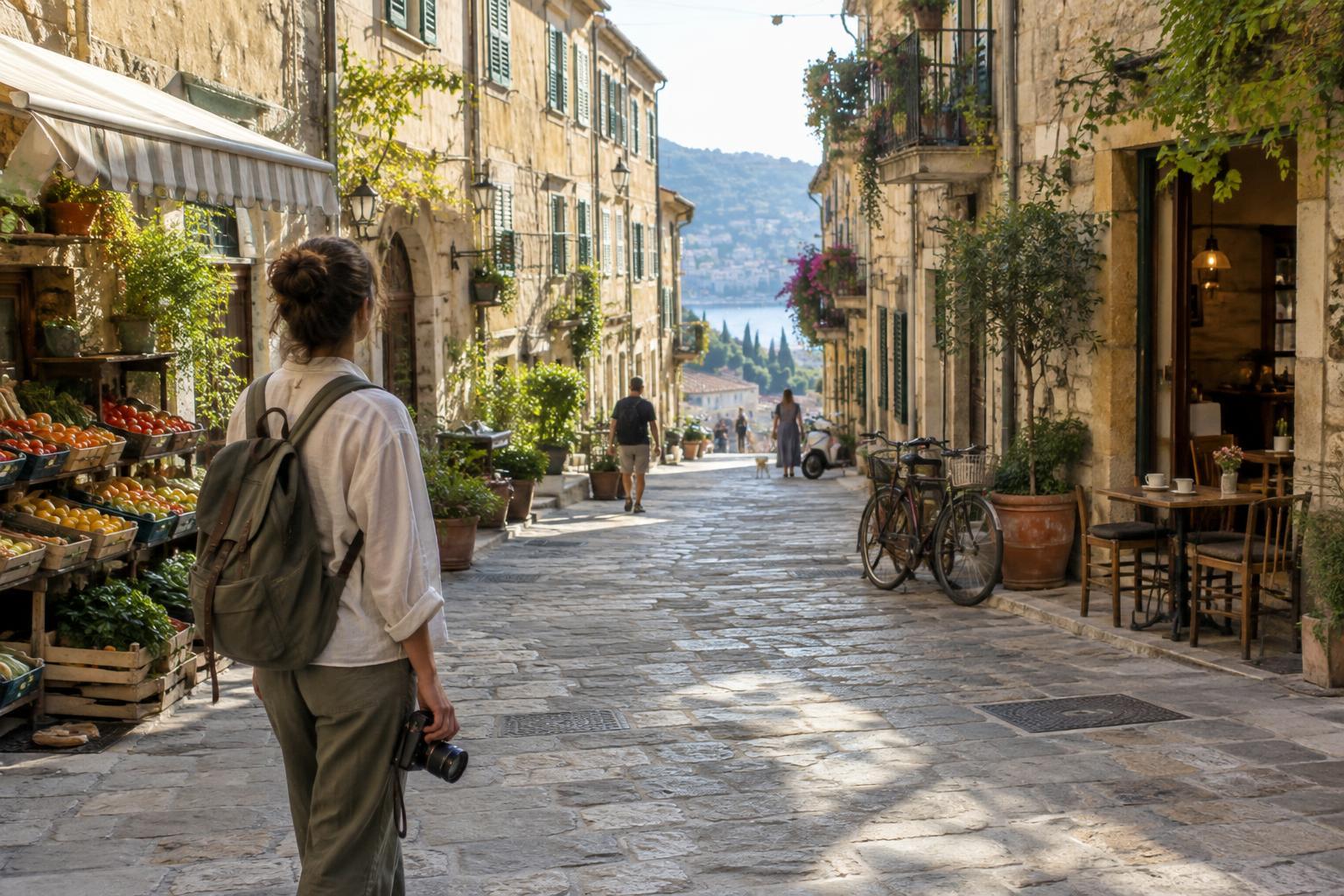
A travel photo essay is a sequence of images that helps someone experience a place, activity, or journey. It does not need to cover an entire destination. A morning at a ferry terminal, a walk through one neighborhood, or the preparation of a shared meal can provide a stronger subject than a collection of unrelated landmarks. Before photographing, write down one question you want the essay to explore: What changes as the market opens? How do people move through this station? What does the route from the harbor to the hill feel like?
Keep that question flexible. It gives you a reason to notice details, but the most interesting part of the story may be something you did not anticipate. A useful exercise is to describe your subject in one sentence without naming the destination. If the sentence still suggests a visual story, you probably have a workable focus.
Give the viewer a place to begin
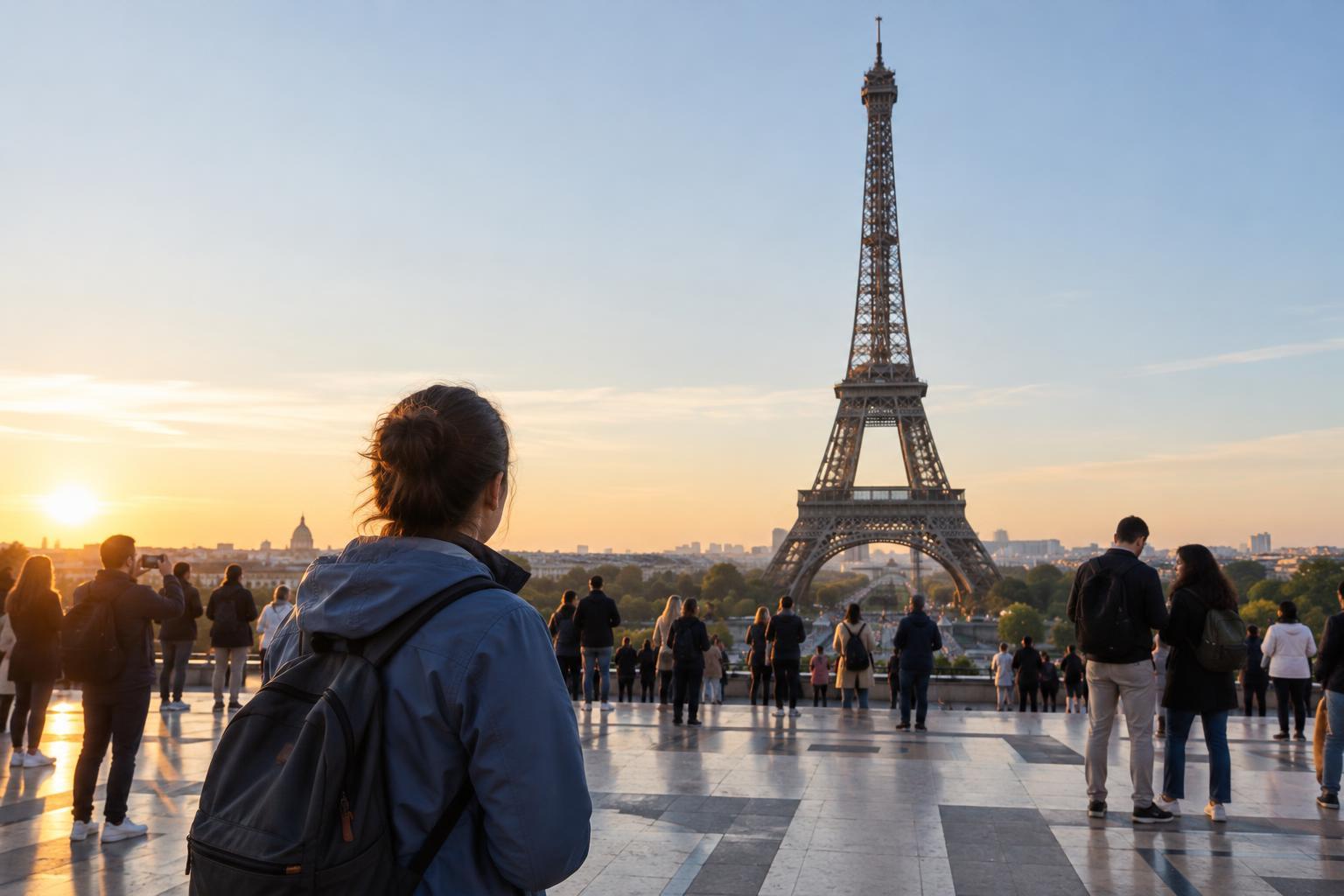
An opening image should invite the viewer into the essay and establish a point of view. A wide view can show where the story takes place, but it is not the only option. A hand lifting a shop shutter, a passenger waiting beside luggage, or light reaching the first tables of a café might open a story more effectively if it introduces the activity you will follow.
As you shoot, look for a frame with a readable subject and enough context to orient someone who was not there. Pay attention to the edges: signs, doorways, roads, and gestures can help direct the eye toward the next image. Try making three possible openings—one wide, one medium, and one close. You can decide later which creates the strongest invitation. The first photograph need not explain everything; it should make the viewer curious enough to continue.
Build the middle through variety and connection
The middle carries most of the essay’s information. Move between scales: a scene that shows the setting, a person engaged in an activity, and a detail that reveals texture or use. Photograph transitions as well as highlights. A delivery arriving, a pause between customers, or a change in weather can show how a place works rather than merely how it looks.
Variety alone is not enough. Give neighboring photographs a connection, such as a repeated color, a shared direction of movement, or an action continued in the next frame. Change your camera position when you can do so safely: photograph from across the street to show context, then step closer to isolate a meaningful detail. If you are making portraits, ask permission when appropriate and respect a refusal. People should contribute to the story, not function as decoration.
Equipment choices can support this approach without driving it. One versatile lens may make it easier to react quickly, while a smaller, lighter kit may help you stay attentive during a long walk. Use what you can carry comfortably and operate confidently. For practice, spend twenty minutes in one location and make five distinct frames without repeating the same subject distance.
Find an ending that offers resolution
An ending does not have to be a sunset or a departure. It might show a space after an activity has finished, a worker closing a door, or a quiet detail that echoes the opening image. Look for a change the viewer can recognize. If the first frame shows a street before its stalls open, an emptied counter or folded awning may give the essay a natural close.
Avoid choosing the final photograph only because it is your most dramatic. Ask what feeling or idea should remain after the viewer reaches it. Try placing two or three candidates at the end of a draft sequence and read through the essay each time. The best ending may be understated, provided it makes the preceding images feel connected.
Edit for story, then add only the context needed
Make a broad selection first, then arrange the images in the order a viewer will see them. You do not have to follow the order in which you took them, but avoid implying a sequence of events that did not happen. Remove near-duplicates and images that are attractive yet pull attention away from your subject. If the middle feels repetitive, look for a missing change in scale, action, or mood rather than adding more photographs of the same kind.
Keep your editing treatment reasonably consistent so shifts in color or brightness do not distract from the story. A short title and a few factual captions can provide context that the photographs cannot: a location, an activity, or a detail that might otherwise be misunderstood. As a final exercise, show the sequence to someone unfamiliar with the trip and ask what they think happens. Their answer can reveal where your beginning needs clarity, your middle needs a bridge, or your ending arrives too soon.